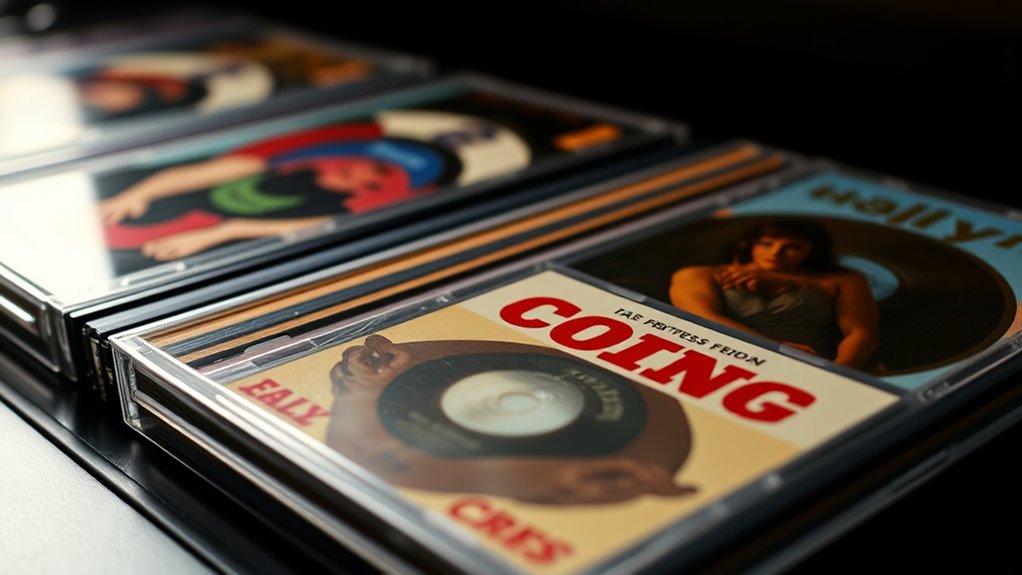

Early-’90s first-press CDs are spiking in price because collectors and fans seek authentic, vintage music experiences that digital formats can’t match. Their rarity, limited production, and unique packaging make them highly desirable, especially when kept in good condition. The nostalgia for the era also boosts demand. Remastered reissues may be more common now, but original pressings hold more value for authenticity and sound. To find out more, keep exploring what makes these discs so sought after.
Key Takeaways
- Scarcity of limited-production early-’90s first-press CDs increases their rarity and desirability among collectors.
- Authentic first-press discs retain original sound quality and packaging, boosting their value over reissues or digital copies.
- Rare packaging variants, such as exclusive artwork or fragile digipaks, enhance collectibility and market demand.
- Nostalgic appeal and emotional connections to the era drive collector interest and willingness to pay premium prices.
- Market trends favor physical formats, making early-’90s first-press CDs sought after for their historical and cultural significance.
The Rise of Nostalgia and Vintage Appeal

As digital music dominates, many listeners are turning back to first-press CDs because they evoke a sense of nostalgia and authenticity that digital formats often lack. When you hold a first-press CD, you’re connecting with a piece of music history, feeling the physicality and craftsmanship involved in its creation. These discs remind you of a time when music was experienced through tangible objects, adding a personal touch to your collection. The vintage appeal taps into a longing for the past, making these discs more than just music—they’re nostalgic artifacts. For many, owning these early pressings sparks memories of childhood or earlier musical discoveries, creating a deeper emotional connection that digital files simply can’t replicate. Additionally, color accuracy in the printing and packaging of these discs enhances their collectible value, making them prized items for enthusiasts and collectors alike. This emotional resonance, combined with collectible appeal, fuels their rising popularity and value, as collectors often seek out rare editions to complete their collections.
Limited Production and Scarcity Factors
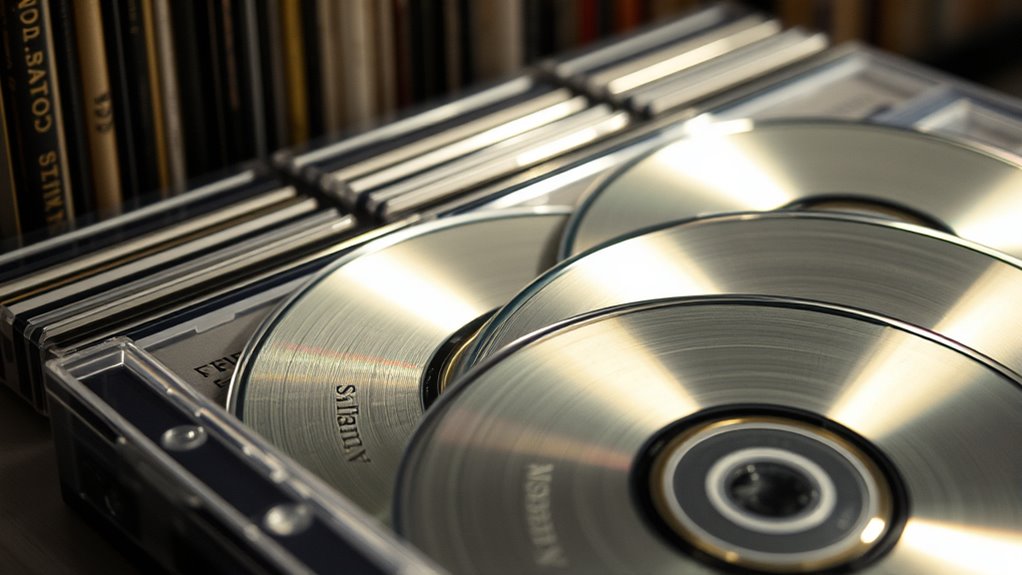
You notice that first-press CDs often come in limited numbers, making them highly sought after. These scarcity factors turn them into collector’s items, especially when paired with rare packaging variants. As a result, their value can increase considerably over time. Scarcity factors can be further emphasized by the fact that limited editions often include unique artwork or bonus content, enhancing their desirability. Ethical Hacking techniques used to assess the security of these rare items can help protect their digital representations from theft or counterfeiting.
Limited Run Numbers
Why do limited run numbers matter when it comes to first-press CDs? Because fewer copies mean higher demand and rarity. When a record label produces only a small batch, it creates a sense of exclusivity that collectors crave. This scarcity fuels emotional attachment and drives prices skyward. Consider these points:
- You’re holding a piece of music history that few others possess.
- The limited quantity amplifies its desirability, making it more valuable over time.
- Owning a rare CD can give you a sense of pride and connection to a bygone era.
- Limited run numbers directly influence the collectibility and potential future value of the discs. Additionally, the perceived authenticity of early-’90s discs enhances their collectible status, further driving up prices.
- The vintage appeal of these discs often attracts enthusiasts who value authenticity and nostalgic significance, increasing their desirability among collectors.
Collector’s Item Status
Have you ever wondered what makes a CD a true collector’s item? It often comes down to limited production and scarcity. Early‑press CDs from the early ’90s, especially first editions, were produced in smaller quantities compared to later releases. This limited run means fewer copies are available today, increasing their rarity. Over time, these discs became harder to find, especially if they were popular or sought-after titles. The scarcity boosts their desirability among collectors, fueling higher prices. Additionally, some labels intentionally kept production tight to create exclusivity. If you come across a first‑press CD that was produced in limited numbers, chances are it’s on the path to becoming a sought-after collector’s item, especially if it’s still in good condition. Scarcity truly elevates the value and appeal of these discs.
Rare Packaging Variants
Rare packaging variants considerably boost a CD’s rarity and appeal, especially when produced in limited quantities. When a label releases a special edition or unique design, it instantly becomes a sought-after collector’s item. Scarcity fuels demand and drives up value, making these variants highly desirable. You might find yourself captivated by:
- Limited-run jewel cases with exclusive artwork or metallic finishes, adding visual allure.
- Special packaging like digipaks or fold-outs, which are harder to find and often more fragile.
- Unique inserts, such as custom booklets or bonus items, that enhance the overall collectible experience.
These factors create a sense of exclusivity and rarity, making early‑press CDs with rare packaging variants a prized possession for collectors and investors alike. Celebrity lifestyle insights can influence the perception and desirability of certain collectibles, adding an extra layer of allure for enthusiasts.
The Impact of Remastering and Reissues
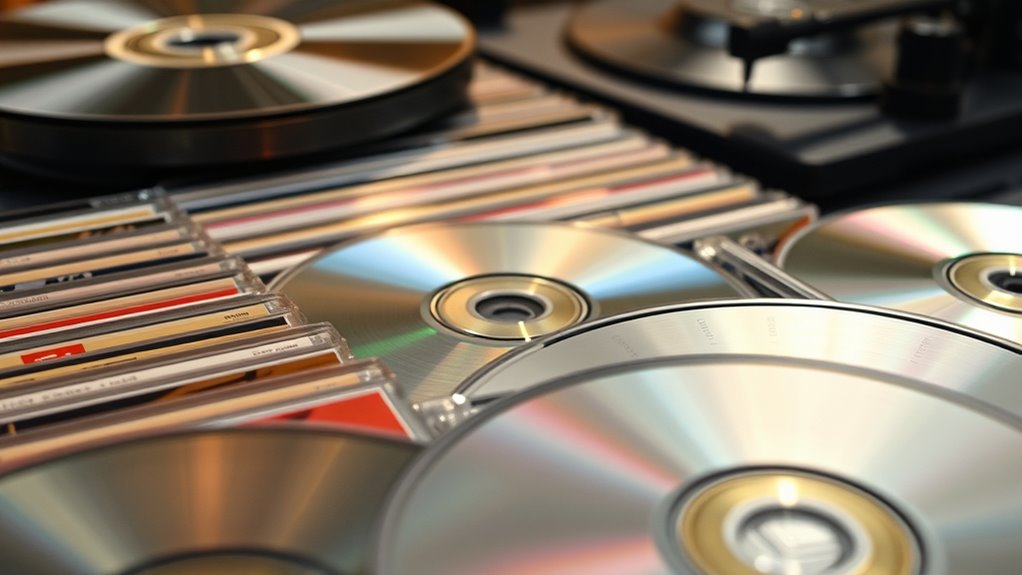
Remastering and reissues have considerably shaped the way you experience classic albums today. When labels re-release albums with new mastering, it often updates the sound, making it clearer or more dynamic. These reissues can introduce improved technology, but they also risk altering the original’s character. As a collector, you might find yourself drawn to early pressings because they preserve the initial sound quality and packaging. However, remasters can boost a record’s appeal with louder, more polished audio, sometimes at the expense of authenticity. Reissues also make it easier to access albums that are out of print or scarce, driving up their value. While remastering can enhance listening, it’s essential to weigh whether the new version maintains the integrity of the original recording you seek.
Enhancements in Sound Quality of Early Pressings
Early pressings of CDs often deliver noticeably clearer audio, making individual instruments more distinct. You’ll also notice a broader dynamic range that brings quieter details forward and enhances loud passages. These improvements give you a richer, more immersive listening experience right from the start.
Improved Audio Clarity
Because of the meticulous production methods used in initial pressings, many first-press CDs offer noticeably clearer and more detailed sound quality compared to later copies. You can hear every nuance, from subtle instrument tones to vocal textures, with remarkable precision. This enhanced clarity creates a more immersive listening experience that can transport you back to the original recording sessions.
Consider these points:
- Crisp, well-defined highs that reveal details others miss.
- Clearer separation between instruments, making each element stand out.
- A natural, authentic sound that captures the artist’s intent perfectly.
This superior audio quality is what makes early pressings stand out, giving you a richer, more engaging listening experience unlike any later reissue.
Richer Dynamic Range
When you listen to a first-press CD, you’ll notice its richer dynamic range, which allows the music to breathe more fully. This means you experience a wider difference between the quietest whispers and the loudest peaks, giving the recording a more natural, lifelike quality. Early pressings often captured more detail, preserving the artist’s original intent. This enhanced variation creates emotional impact, making each note feel more alive. The clarity and depth draw you into the music, deepening your connection.
| Aspect | Effect | Emotional Impact |
|---|---|---|
| Wide Range | Greater contrast | Feeling of space |
| Clearer Transients | Sharp, precise attacks | Excitement, energy |
| Less Compression | Authentic dynamics | Authenticity, warmth |
| Natural Decay | Realistic instrument tails | Intimacy, depth |
| Overall Presence | Enhanced realism | Immersive experience |
The Role of Collectors and Market Dynamics

Collectors play a crucial role in shaping the market for first-press CDs, often driving demand and influencing prices through their passion and expertise. Their enthusiasm creates a sense of scarcity and value, pushing prices higher. When you see a rare first-press, it’s not just about the music—it’s about the story behind the disc. As collectors chase after these items, it fuels market activity and price spikes. Consider these key points:
- Your desire to find rare discs can increase their market value.
- Limited editions or unique pressings become highly sought after.
- The collective passion of collectors sustains a competitive market, maintaining high prices.
- The influence of market dynamics and technological trends can further impact prices and availability.
Your interest directly impacts how these discs are valued and traded in the marketplace.
Comparing CD Prices to Other Formats

First-press CDs often command higher prices than their digital or streaming counterparts, but they generally fall short of the value seen in rare vinyl records. Digital files and streaming offer convenience and instant access but lack the tactile and collectible appeal of physical formats. Vinyl records, especially rare or early pressings, tend to fetch much higher prices because of their tangible nature, larger artwork, and perceived sound quality. CDs, while initially more affordable, have become prized for their rarity and historical significance, especially first-press editions. However, their value remains lower compared to sought-after vinyl, which continues to dominate the high-end collectible market. If you’re comparing formats, remember that rarity, condition, and cultural desirability drive prices, and vinyl often outpaces CDs in collector value. Additionally, wall organization systems and creative display methods can enhance the presentation of physical media collections, increasing their aesthetic appeal and perceived value.
Tips for Identifying Authentic First-Press Discs
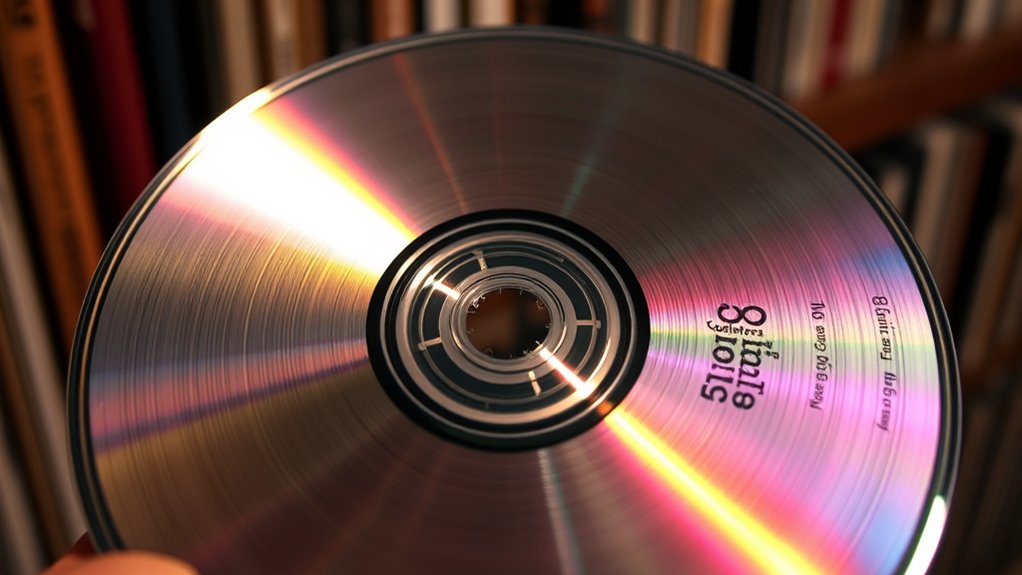
To verify if a disc is an authentic first-press, start by examining the label and packaging carefully. Look for subtle clues that distinguish early pressings from later reissues.
- Check the catalog number: Ensure it matches the original release, often printed on the spine or in the booklet.
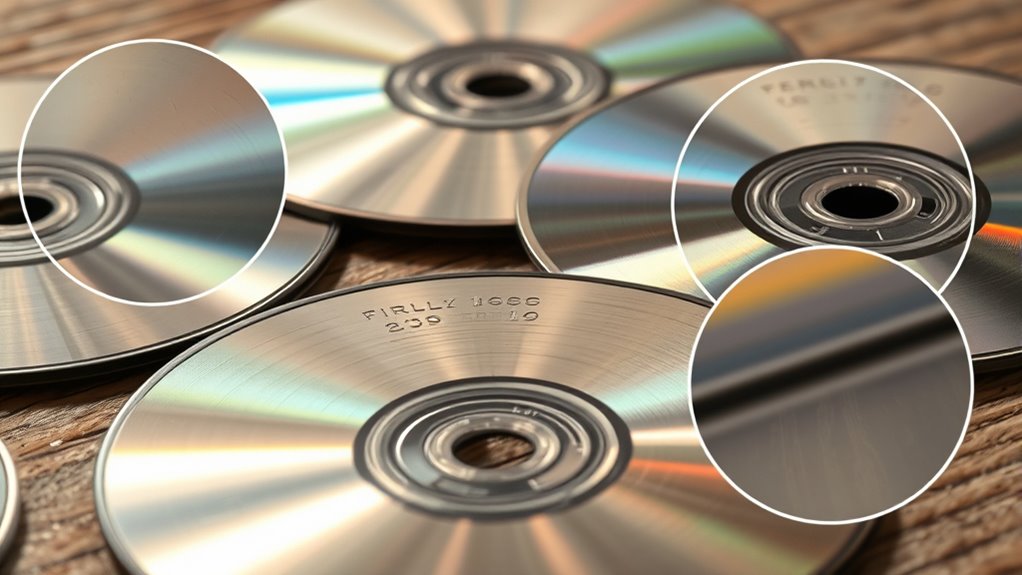
- Inspect the CD matrix code: Located on the inner ring, authentic first-press discs usually have specific codes or engravings unique to the initial pressings.
- Review the packaging details: First-press editions often feature specific artwork, printing quality, or liner notes that differ from subsequent reissues.
Being attentive to these details can help you confidently identify genuine first-press discs and avoid fakes or reprints.
Frequently Asked Questions
What Are the Key Differences Between First-Press CDS and Later Editions?
When you compare first-press CDs to later editions, you’ll notice that first-press versions are typically more valuable. They feature original manufacturing details, such as specific catalog numbers, unique printing, and sometimes limited runs. Later editions often have subtle differences like updated barcodes, different packaging, or remastered tracks. Collectors prize the original pressings because they’re seen as authentic and often have better sound quality, making them more desirable and costly.
How Do Regional Releases Affect the Value of First-Press Discs?
Regional releases can considerably impact the value of first-press discs. If your disc is a limited or unique regional edition, it often becomes more desirable to collectors. Variations in packaging, artwork, or track listings add rarity and appeal. You should research the specific regional version to gauge its rarity, as these differences can boost your disc’s worth, making it a valuable addition to your collection.
Are There Specific Genres or Artists More Likely to Have Valuable First-Pressings?
Think of the vinyl market as a treasure map—you’ll find that limited-edition genres like jazz, punk, or indie often hold hidden gems. Artists with dedicated fanbases, such as Nirvana, Pearl Jam, or Radiohead, also tend to have more valuable first-pressings. These discs are like rare coins; their value skyrockets when scarcity meets passionate collectors. So, focus on iconic artists and niche genres to spot the most valuable early‑’90s discs.
How Does the Condition of a CD Influence Its Market Price?
You should know that the condition of a CD substantially impacts its market value. If your disc is in mint or near-mint condition, with minimal scratches, clean surface, and intact case and artwork, it commands a higher price. Conversely, any scratches, warping, or damage lowers its worth. Collectors prioritize pristine items, so keeping your CDs well-maintained can boost their resale value and make them more desirable.
Can Digital or Streaming Formats Impact the Value of Original CDS?
Imagine shiny digital streams flowing past, while your original CDs sit untouched. Digital and streaming formats can devalue your physical discs by offering instant access and convenience. But, for collectors, these formats often don’t match the tangible appeal and rarity of first-press CDs. So, even as digital dominates, your original discs can still hold or increase their value, especially if they’re rare or in pristine condition.
Conclusion
As the allure of the past gently beckons, you might find yourself intrigued by the subtle whispers of early ’90s CDs. Their rising value hints at a quiet appreciation for craftsmanship and history. If you listen closely, you’ll sense that these discs hold more than just music—they capture a moment in time. Embrace the journey of discovery, and perhaps, you’ll uncover a hidden treasure that resonates beyond the music itself.