
Start your band’s archive early by consistently recording gigs, writing songs, and documenting your progress. Use digital storage services like Google Drive or Dropbox to keep everything organized and accessible from anywhere. Label files clearly and keep detailed logs of licensing and rights to stay compliant and protect your work. Regularly back up everything and digitize physical memorabilia. Staying disciplined with organization from the beginning guarantees your history stays safe and manageable as you grow—there’s more to discover ahead.
Key Takeaways
- Establish a digital storage system early, using cloud services for centralized, accessible, and secure file management.
- Consistently record and organize gigs, songwriting, and promotional materials from the beginning.
- Implement clear labeling and a master spreadsheet to track licensing, recording details, and usage rights.
- Digitize physical memorabilia and back up the entire archive regularly to prevent data loss.
- Maintain routine updates and organization to ensure the archive remains comprehensive and easy to navigate.
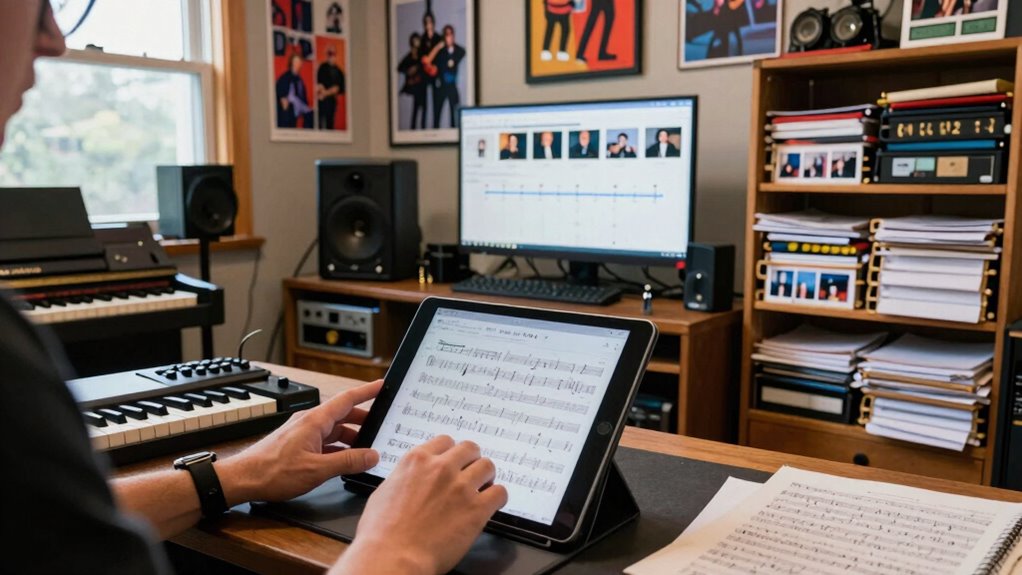
Starting a band archive from day one might seem intimidating, but it’s essential for preserving your group’s history and growth. As you start to record gigs, write songs, and build your reputation, keeping everything organized from the beginning guarantees you won’t face chaos later. One of the smartest steps you can take is establishing a digital storage system. Cloud services like Google Drive or Dropbox provide a centralized place to upload and categorize your recordings, photos, setlists, and promotional materials. This way, you can access your archive from anywhere and avoid the risk of losing important files due to hardware failure or accidental deletion.
Start your band archive early with cloud storage to keep all recordings, photos, and materials safe and organized from day one.
Along with digital storage, understanding music licensing is fundamental. When you record original music, it’s imperative to secure the right licenses to protect your songs and ensure you’re compliant with copyright laws. This early focus on licensing not only safeguards your creative work but also makes future publishing or licensing opportunities smoother. Keep detailed records of your licensing agreements and registration dates. This step avoids legal complications down the line and helps you prove ownership if disputes arise. Incorporating licensing data into your digital archive simplifies management, especially as your catalog grows. Additionally, resale value of your recordings can be maintained or even increased through proper licensing and documentation.
As your band evolves, you’ll generate a variety of media—live recordings, promotional videos, press releases, and more. Label each file clearly with dates, event names, and relevant keywords. Consistent naming conventions make it easier to locate specific tracks or documents later. You might also consider creating a master spreadsheet to log details about each piece of content, including licensing info, recording details, and usage rights. Incorporating high-quality audio files into your archive ensures your recordings maintain optimal sound fidelity for future use. Regularly updating and organizing your archive will help you manage this expanding collection efficiently. It’s also wise to stay aware of potential pest issues like insects or mold that can damage physical memorabilia stored alongside digital files.
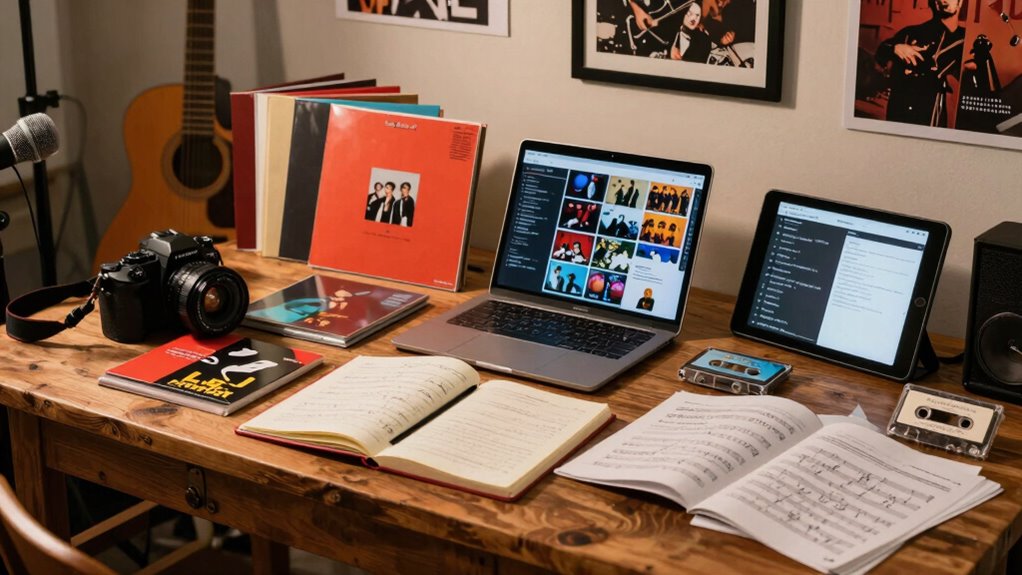
Another smart move is digitizing old physical memorabilia, such as flyers, posters, or handwritten lyrics. Adding these to your digital archive preserves your history and provides a visual story of your journey. Keeping physical items organized in conjunction with your digital archive can also help in building your band’s legacy, making it easier to share your story with fans and media. Regularly backing up your entire archive prevents data loss and keeps your collection safe. Automate backups where possible, so you don’t have to remember to do it manually.
Finally, stay disciplined about maintaining your archive. Make it part of your routine to upload new recordings, update licensing records, and organize files. Starting this process early might seem overwhelming, but the benefits—organized growth, legal peace of mind, and a complete history—far outweigh the effort. With digital storage and a solid understanding of music licensing in place, you’re establishing a smart, sustainable foundation for your band’s future.

My Music Cloud: storage & sync
Offers a seamless, cross-platform solution
As an affiliate, we earn on qualifying purchases.
As an affiliate, we earn on qualifying purchases.
Frequently Asked Questions
What Are the Best Tools for Organizing a Band Archive?
You should use tools that combine digital metadata with cloud storage, like Google Drive or Dropbox, to organize your band archive effectively. Tag your files with detailed metadata—such as song titles, dates, and recordings—to make searching easier. Cloud storage guarantees your files are accessible from anywhere and backed up. Use music-specific apps like BandLab or SoundCloud for audio management, keeping everything organized, secure, and easy to update as your archive grows.
How Can I Ensure the Long-Term Preservation of Digital Files?
Did you know that over 90% of digital data is lost within a decade? To guarantee your files last, focus on metadata management and data redundancy. Regularly update metadata to keep files organized and accessible. Use multiple backup copies in different locations to protect against hardware failures or theft. By actively managing metadata and maintaining redundant copies, you safeguard your band’s digital history for the long term.
What Legal Considerations Should I Keep in Mind When Archiving?
You should guarantee you have the proper licensing agreements in place to avoid copyright issues, especially concerning performance rights. Always verify you have permission to archive and distribute recordings, and keep detailed records of licenses. Be aware of copyright laws that may restrict use or sharing of certain content. Regularly review your legal obligations, and consult a legal expert if you’re uncertain about performance rights or licensing requirements to stay compliant.
How Do I Handle Copyright Issues With Archived Material?
Imagine you find a legendary live recording of your band. To handle copyright issues, you guarantee proper music licensing and copyright clearance before archiving. You contact rights holders or use licensing agencies to secure permissions. This proactive approach prevents legal troubles later. Always keep detailed records of all licenses and permissions obtained, so your archive remains legally sound and ready for future use or distribution.
What’s the Ideal Format for Storing Audio Recordings?
You should store audio recordings in a lossless format like WAV or FLAC to preserve quality. Implement consistent file naming conventions to keep things organized, and include relevant metadata such as date, session, and track info. Proper metadata management guarantees easy retrieval and clarity, while standardized file formats prevent quality loss over time. This approach keeps your archive accessible, organized, and future-proof.

MECCALINE Sheet Music Folder (1 Pack, Black) – 40 Sleeves Display 80 Pages Spiral Binder Organizer for Music Stand – Fits Letter Size 8.5 x 11 Inch – Direct Page Writing with Detachable Name Tag
🎹 Give Your Rehearsals A Professional Look: Tired of loose printed sheets or messy binder folders for your…
As an affiliate, we earn on qualifying purchases.
As an affiliate, we earn on qualifying purchases.
Conclusion
Now that you’re set to build your band archive from day one, imagine the stories it’ll tell years down the line. Every photo, setlist, and recording becomes a piece of your journey, waiting to be uncovered. But what if there’s one essential tip you’re still missing? Stay tuned—because the smartest move you make today could be the key to preserving your band’s legacy forever. Are you ready to take that next step?

Music Studio 11 – Music software to edit, convert and mix audio files – Eight music programs in one for Windows 11, 10
Music software to edit, convert and mix audio files
As an affiliate, we earn on qualifying purchases.
As an affiliate, we earn on qualifying purchases.

High Fidelity Audio CD Player with Ripping Function, CD Player for Home,External CD Drive,CD Ripper,CD Transport,USB Portable CD Player – One-Click Ripping
Lossless CD-to-WAV Conversion:Preserve original audio quality by ripping CDs into WAV format—perfect for audiophiles and music archivists.
As an affiliate, we earn on qualifying purchases.
As an affiliate, we earn on qualifying purchases.