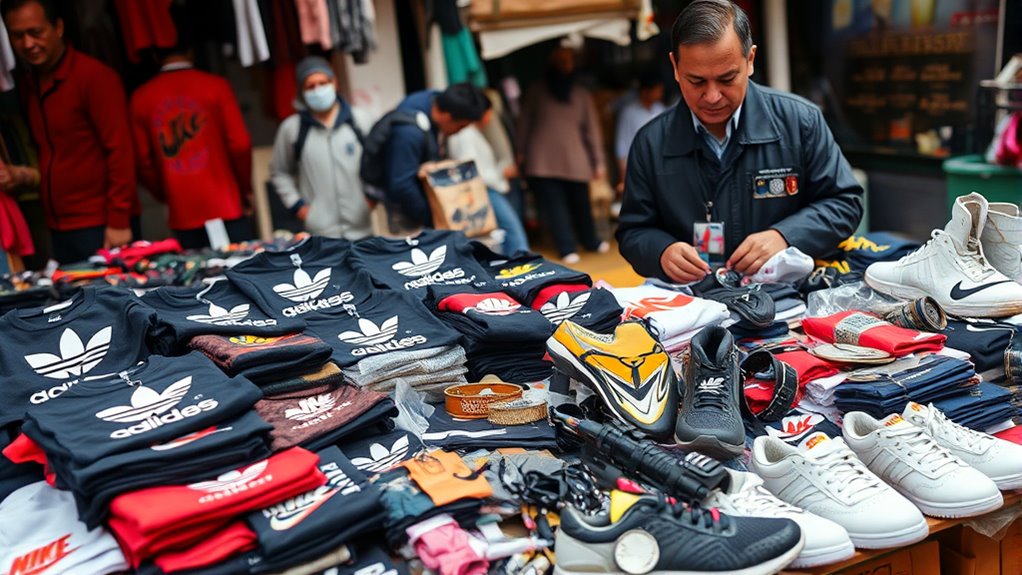

To protect your brand from bootleg merchandise, actively monitor online marketplaces, social media, and physical stores for counterfeit products. Register your trademarks and use authentication tools like QR codes or RFID tags to help identify genuine items. Educate your customers about spotting authentic products and encourage them to verify before purchasing. Swiftly take legal action against infringers and collaborate with authorities to intercept counterfeit goods. Continuing with these strategies will help you stay one step ahead of counterfeiters and safeguard your reputation.
Key Takeaways
- Monitor online and offline markets regularly to detect unauthorized copies and counterfeit products early.
- Register trademarks, patents, and copyrights internationally to strengthen legal protection against infringers.
- Use authentication methods like QR codes, holograms, or RFID tags to verify genuine products for consumers.
- Educate customers on identifying authentic products and the risks associated with bootleg merchandise.
- Collaborate with law enforcement, customs, and digital platforms to enforce IP rights and seize counterfeit goods.

Have you ever wondered how to spot and prevent the spread of bootleg merchandise? If so, you’re not alone. Bootlegging remains a significant challenge for brands trying to protect their reputation and revenue. Counterfeit markets are thriving in many regions, making it easier than ever for unauthorized copies of popular products to circulate. These illegal markets often operate discreetly, selling everything from clothing and accessories to electronics and luxury goods. Recognizing these sources is vital because they undermine your brand’s value and damage consumer trust. To combat this issue, you need to understand the importance of safeguarding your intellectual property. Your trademarks, logos, design elements, and patents are the legal tools that give your brand its unique identity. When these rights are infringed upon or copied without permission, it not only dilutes your brand but also fuels counterfeit markets. Vigilance is key—regularly monitoring online platforms, marketplaces, and physical shops can help you identify counterfeit products early. Some counterfeit markets operate openly, especially in areas with weak enforcement, but many hide behind online shops and social media pages, making detection trickier. Using digital tools such as brand monitoring software can alert you to unauthorized listings or suspicious activity. Once identified, acting swiftly by issuing takedown notices or working with law enforcement can help curb sales. Educating your customers about the risks of counterfeit products is equally essential. When consumers recognize the difference between genuine and fake items, they’re less likely to unknowingly support counterfeit markets. Providing clear information about how to verify authentic products—such as checking serial numbers, holograms, or official retail channels—empowers them to make informed decisions. Additionally, collaborating with customs authorities and international agencies can help intercept counterfeit goods before they reach consumers. Implementing unique identifiers like QR codes or RFID tags on your products adds another layer of security, making it easier for buyers and authorities to authenticate items. Protecting your intellectual property also involves legal action when necessary. Registering trademarks and patents in key markets provides a strong legal foundation to fight infringers. Enforcing these rights through cease-and-desist orders or lawsuits discourages counterfeiters from copying your products. Remember, the fight against bootleg merchandise isn’t a one-time effort—it requires ongoing vigilance and proactive measures. By understanding the dynamics of counterfeit markets and the importance of intellectual property rights, you can better defend your brand. Staying ahead of counterfeiters not only preserves your reputation but also ensures your customers receive genuine, high-quality products they trust. The more you invest in protecting your intellectual property and educating your audience, the harder it becomes for counterfeit markets to thrive around your brand. Regular monitoring of online marketplaces and necessary cookies can help you stay informed about potential infringements before they escalate.
Frequently Asked Questions
How Can I Identify Authentic Versus Counterfeit Products?
To identify authentic products, start with brand verification by checking official packaging and labels. Look for consistent logos, stitching, and material quality, which are key indicators of genuine items. Trust your senses—feel the texture and inspect the craftsmanship. If something seems off, it might be counterfeit. Always buy from authorized retailers and verify authenticity through the brand’s quality assurance processes to guarantee you’re getting the real deal.
What Legal Actions Can I Take Against Counterfeiters?
You can take legal action by sending a cease and desist letter to the counterfeiters, demanding they stop infringing on your trademark. If they ignore it, you can pursue legal action for trademark infringement, which may lead to court orders to halt production and seize counterfeit goods. Acting swiftly protects your brand’s reputation and deters future infringement, making it essential to consult an attorney specializing in intellectual property law.
How Effective Are Digital Watermarking Methods?
Digital watermarking methods are quite effective when used properly. You can embed digital signatures into your images or videos, which helps verify authenticity through watermark analysis. This makes it easier to detect counterfeit products and prove ownership. By regularly analyzing watermarks, you can quickly identify unauthorized copies and take action. Overall, digital watermarking provides a strong, non-intrusive layer of protection for your brand against bootleg merchandise.
What Role Do Social Media Platforms Play in Enforcement?
Social media platforms are your frontline soldiers in enforcement. They enable you to conduct brand monitoring, spot counterfeit listings quickly, and act swiftly. Partnering with influencers can amplify your message, creating a united front against bootleggers. While it’s not a silver bullet, staying active and vigilant on these platforms helps you catch the bad guys early and protect your reputation—don’t put all your eggs in one basket.
How Can I Educate Consumers About Genuine Merchandise?
You can boost your brand awareness by actively engaging consumers through social media and your website, highlighting what makes your genuine merchandise unique. Share behind-the-scenes content, tell your brand story, and educate your audience about identifying authentic products. Use clear visuals and descriptions, and encourage customers to ask questions. Consumer education builds trust, helps distinguish your brand from fake items, and ultimately reduces bootleg merchandise in the marketplace.
Conclusion
So, next time you spot a fake, remember it’s more than just a scam—it’s a chance to protect what you’ve built. Sometimes, it feels like those bootleggers are just copying your style, but it’s a sign you’re making waves. Stay vigilant, keep your brand authentic, and you’ll find that even in the chaos, your genuine fans will always know the difference. After all, success often comes when you least expect it—just like a surprise sale or a lucky break.