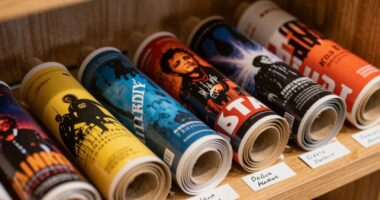
Archive labels and dates are key to verifying the authenticity and provenance of your music memorabilia. They help you track the origin, recording details, and release information, ensuring your collection maintains its value and integrity. Accurate labels and dates also support organization, making it easier to find items and assess their historical significance. By understanding these details, you can protect your collection from fakes and misinformation—if you keep exploring, you’ll discover more ways to enhance its worth.

Get audio and creator gear delivered free with Prime
- Fast, free delivery on millions of items
- Prime Video, Amazon Music and more included
- Member-only deals all year
Key Takeaways
- Archive labels and dates establish the provenance and authenticity of music memorabilia.
- Accurate dating helps trace an artist’s career timeline and genre evolution.
- Proper records facilitate efficient digital cataloging and quick retrieval of items.
- Clear labels and dates preserve historical context and support collection credibility.
- They help detect counterfeit items and maintain the overall value of the collection.
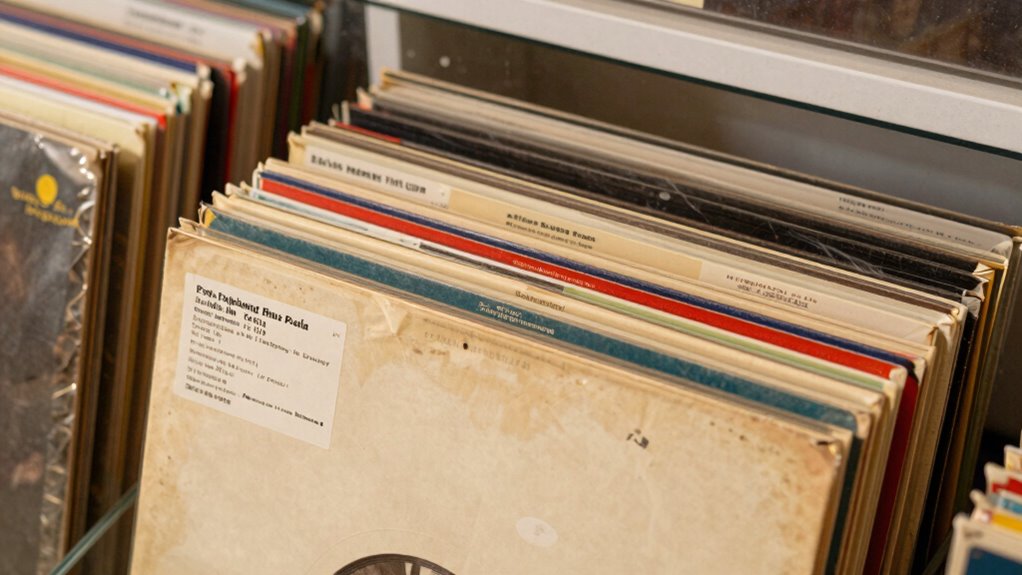
When it comes to preserving music memorabilia, understanding archive labels and dates is crucial. These details aren’t just about organization; they’re essential for maintaining the integrity and value of your collection. Archive labels often contain important information such as the origin, recording session, or release details, which help you track the provenance of each item. Dates, on the other hand, establish a clear timeline, allowing you to see the progression of an artist’s career or the evolution of a particular genre. Without this foundational knowledge, your collection risks becoming a jumble of indistinct pieces, making it difficult to verify authenticity or appreciate historical context. Accurate content formats and detailed records support effective digital cataloging, ensuring your collection remains well-organized and easily navigable. Digital cataloging plays a significant role in managing music memorabilia efficiently. By meticulously recording labels and dates in a digital database, you create a searchable, organized system that simplifies retrieval and cross-referencing. This process not only saves time but also reduces the risk of misplacing or losing valuable items. When you assign accurate labels and dates to each piece, digital cataloging becomes a powerful tool for quick access to detailed information, which is especially useful during authentication or appraisal processes. It turns a potentially overwhelming assortment into a well-structured archive, enhancing both your appreciation and the collection’s overall value. Proper recordkeeping practices also help preserve the historical context of each item, supporting long-term preservation. Recognizing authenticity markers can greatly improve your ability to identify genuine items and protect your collection from potential fakes. Additionally, understanding the significance of label variations can assist collectors in dating and authenticating memorabilia more effectively. Properly recorded dates also help detect inconsistencies, such as a vinyl pressing labeled with a date outside its production year. This scrutiny, combined with knowledge of technological differences like DLP versus LCD projectors, ensures your collection remains credible and can appreciate in value over time, especially if you decide to sell or showcase it.
music memorabilia archive labels
As an affiliate, we earn on qualifying purchases.
As an affiliate, we earn on qualifying purchases.
Frequently Asked Questions
How Do I Verify the Authenticity of Archive Labels?
You verify the authenticity of archive labels by comparing them to known examples through label comparison, checking for consistent fonts, logos, and placement. Additionally, review provenance documentation to trace the item’s history and confirm its origin. Authentic labels usually match documented details, so cross-referencing these elements helps verify the label’s legitimacy. Always consult reputable experts or archives when in doubt to avoid counterfeit or misrepresented memorabilia.
Can Digital Records Replace Physical Archive Labels and Dates?
Think of digital records as a vast library, but physical archive labels and dates are your treasured map guiding you through it. Digital backups can store information, but they can’t replace the personal touch of label customization and physical markers. You maintain authenticity and context by keeping those labels and dates, ensuring your memorabilia stays well-organized and meaningful, even as digital records grow more advanced and all-encompassing.
What Are Common Mistakes When Dating Music Memorabilia?
You often mistake the date or misidentify memorabilia due to poor label design or neglecting historical accuracy. Rushing to date items without verifying details can lead to errors, and using inconsistent label styles or fonts causes confusion. Always guarantee your labels are clear, historically accurate, and consistent, so you accurately preserve the item’s origin. Avoid assumptions, double-check dates, and research label designs to prevent common mistakes.
How Often Should I Update or Review Archive Labels?
You should review your archive labels annually, like tending a delicate garden. Over time, label aging can obscure details, so using proper archival techniques helps maintain clarity. Regular updates ensure your music memorabilia stays accurately documented, preventing fading memories or damaged labels. Imagine your collection as a timeless story; periodic reviews keep that story vivid and authentic, safeguarding your treasures for generations to come.
Are There Specific Storage Conditions for Preserving Labels and Dates?
You should store labels and dates in a controlled environment with proper storage humidity and temperature control. Aim for a humidity level around 40-50% to prevent mold or warping, and keep the temperature steady between 65-70°F to avoid deterioration. Avoid direct sunlight and fluctuations in climate, as these can damage your memorabilia over time. Consistent conditions help preserve your collection’s labels, dates, and overall condition.
music memorabilia digital cataloging software
As an affiliate, we earn on qualifying purchases.
As an affiliate, we earn on qualifying purchases.
Conclusion
Without proper labels and dates, your music memorabilia risks losing its story—like a song without a melody or a concert without a crowd. They’re the silent narrators, providing context amid chaos, turning chaos into clarity. Think of labels as the album covers of your collection, revealing the past while shaping its future. When you preserve your memorabilia with care, you’re not just holding objects—you’re safeguarding history, memories, and the magic of music itself.
vinyl record label identification kit
As an affiliate, we earn on qualifying purchases.
As an affiliate, we earn on qualifying purchases.
music memorabilia authenticity verification tools
As an affiliate, we earn on qualifying purchases.
As an affiliate, we earn on qualifying purchases.
Halloween Picks
halloween
As an affiliate, we earn on qualifying purchases.