
Starting in 2025, TikTok is enforcing stricter music licensing rules to better align with copyright laws. You’ll notice some songs or genres become restricted or unavailable, and it’s important to understand which tracks are licensed and under what conditions. TikTok will provide clearer guidelines and tools to identify licensed music, helping you stay compliant and avoid copyright issues. Keep exploring to discover how you can adapt and create within these new licensing boundaries.
Key Takeaways
- TikTok will tighten licensing agreements in 2025 to comply with copyright laws and rights holder demands.
- Some songs and genres may become restricted or unavailable due to new licensing terms.
- The platform will clarify which music is licensed and under what conditions to ensure transparency.
- Users must stay informed about licensing updates to avoid copyright issues and takedowns.
- Proper licensing becomes essential for creators to legally use music in their TikTok videos.
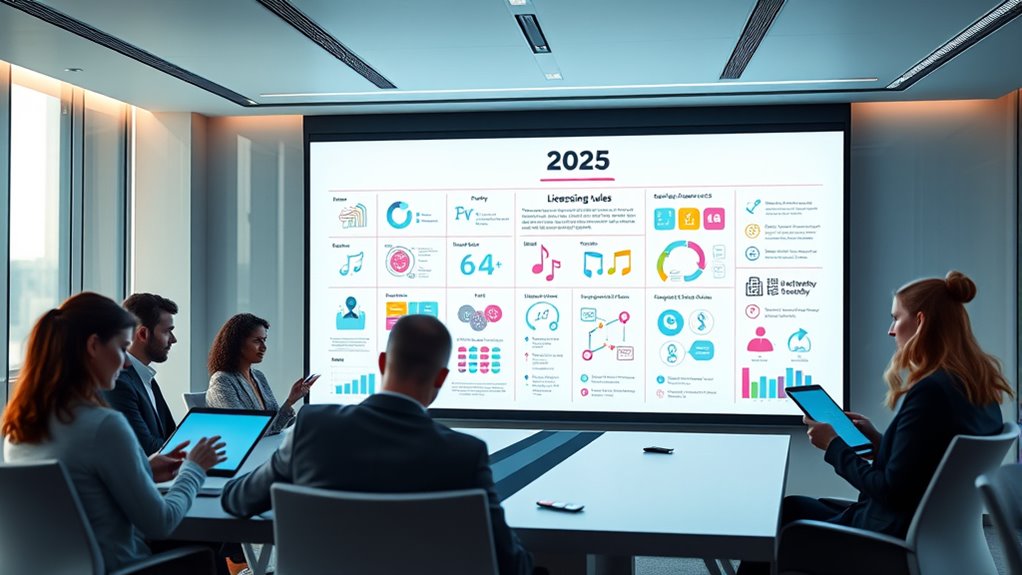
Previously, TikTok had a broad library of licensed music that made it easy for creators to add popular songs without worrying about copyright issues. However, starting in 2025, TikTok is tightening its licensing agreements to better align with copyright laws and rights holder demands. This means the platform is working more closely with record labels, publishers, and artists to secure extensive licenses for the music available on TikTok. As a user, you’ll notice this shift in the form of more restrictions on certain songs or genres, especially those with complex rights or licensing disputes.
These licensing agreements are designed to clarify who owns the rights to each piece of music and how that music can be used on TikTok. When TikTok secures these licenses, it gains the legal right to host, stream, and let users incorporate music into their videos. However, the scope of each agreement can vary, sometimes limiting the duration, geographical availability, or specific uses of particular tracks. For you, this means that some songs you previously used freely might now be unavailable or require you to seek alternative music or licensing options.
TikTok’s new licensing approach also emphasizes transparency. The platform is expected to provide clearer guidelines about what music is licensed and under what conditions. This transparency helps protect creators from potential copyright strikes or takedown notices, which can happen if you upload copyrighted music without proper licensing. If you want to stay compliant, you’ll need to pay close attention to TikTok’s music library updates and understand which tracks are covered by licensing agreements. Additionally, TikTok might introduce new tools or features to help you identify licensed music and avoid infringing copyright. Recognizing the importance of music rights and the evolving licensing landscape will be essential for creators to navigate these changes successfully.
Frequently Asked Questions
How Will Licensing Fees Impact Tiktok Creators Financially?
Licensing fees are likely to increase your costs as a TikTok creator because of new royalty structures and licensing negotiations. You might have to pay more if you use popular music, which could cut into your earnings or force you to choose different content. However, some creators could benefit from clearer rules, making it easier to understand what’s allowed and avoid costly copyright issues.
What Changes Will Users Experience With Music Availability?
Imagine trying to add your favorite song to a TikTok video, only to find it’s no longer available. With the new licensing rules, your access to certain music in TikTok’s catalog will be limited, affecting your user experience. You might see fewer popular tracks or encounter restrictions on music use. Overall, these changes aim to balance content creativity with licensing compliance, impacting how easily you can find and use music.
Will Independent Artists Be Affected by New Licensing Rules?
Yes, independent artists will feel the licensing impact. The new rules may limit how they can share their music on TikTok, making it harder to gain exposure. You might find that some of your favorite indie tracks are less available or require additional licensing permissions. This change could reduce your ability to discover and promote independent artists easily. Stay informed about licensing updates to support and connect with independent creators effectively.
How Will These Rules Influence Tiktok’s International Markets?
You’ll notice TikTok’s new rules impact its international markets through stricter cross border licensing, which means content sharing across countries may face limitations. Regional restrictions could prevent you from using certain songs outside specific areas, affecting your ability to create globally appealing videos. These changes aim to guarantee proper licensing, but they might also restrict your creative freedom, especially if your audience spans multiple regions.
Are There Any Penalties for Violating the New Licensing Regulations?
You face serious consequences if you violate the new licensing regulations. Enforcement measures are strict, and legal repercussions can include hefty fines or account bans. While enforcement aims to protect artists and rights holders, it also underscores the importance of compliance. Ignoring these rules risks not just penalties but also damaging your reputation. Staying informed and adhering to licensing agreements helps you avoid these legal repercussions and ensures your content remains accessible worldwide.
Conclusion
You might think these new licensing rules will limit your creativity, but they actually protect artists and guarantee fair use. By 2025, you’ll still be able to enjoy and share your favorite music on TikTok, just with clearer guidelines. This benefits everyone—creators, fans, and musicians alike—making the platform a safer space for authentic expression. So, embrace the change; it’s designed to keep TikTok fun, fair, and sustainable for years to come.