Inaccurate or outdated music metadata can cost you money by causing royalties to be missed, earnings to be split, or your music to be misclassified. Small errors like misspelled titles, incorrect genre tags, or inconsistent artist names can confuse rights organizations and platforms, leading to revenue loss. Maintaining your metadata current guarantees proper attribution and better discoverability. Continue exploring to discover how proper metadata management can protect your income and improve your online presence.
Key Takeaways
- Inconsistent or outdated metadata splits earnings across multiple versions, reducing total royalties.
- Incorrect genre tags or missing information hinder discoverability and limit potential streaming income.
- Failure to update metadata during collaborations causes incomplete royalty reports and missed payments.
- Non-compliance with industry standards can lead to track rejection or misclassification, affecting revenue.
- Fragmented metadata across platforms results in attribution errors and overlooked earnings over time.
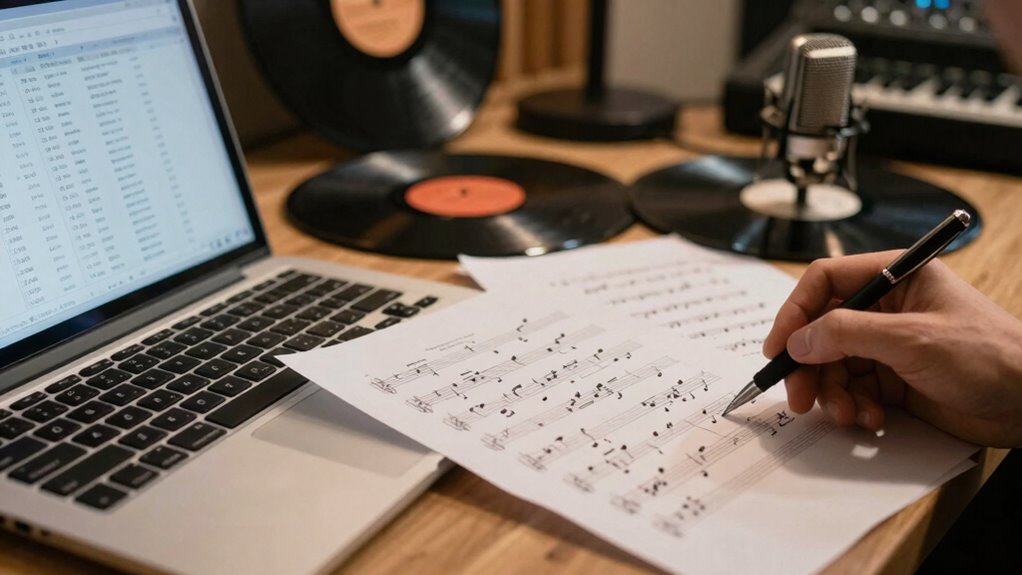
A common mistake artists make is neglecting to update metadata when changes occur, such as collaborations or remixes. If you don’t keep your metadata current, your royalty reports will be incomplete or inaccurate, affecting your overall income. *Additionally*, inconsistent metadata across different platforms creates confusion in royalty collection. For example, if your song appears under different spellings or aliases, rights organizations might treat these as separate works, splitting your earnings or preventing proper attribution. This fragmentation can be a silent money drain that’s easy to overlook but costly in the long run.
Another *key* aspect is ensuring your metadata adheres to industry standards. Many digital distribution channels have specific requirements for metadata fields, and failing to comply can cause your music to be rejected or misclassified. When that happens, your track might not be available in certain stores or streaming services, limiting your revenue potential. *Furthermore*, incorrect genre tags or mislabeling can hinder your music’s discoverability, reducing plays and, consequently, your royalty income. Properly managing audio metadata can also improve your music’s visibility in algorithms and search results. Regularly verifying that your metadata aligns with industry standards helps prevent issues that could hinder your music’s success. Additionally, understanding the importance of metadata consistency across platforms can ensure your earnings are accurately tracked and consolidated. Consistently updating your metadata not only enhances your online presence but also helps maintain accurate royalty payments, especially as your catalog expands. Keeping your metadata up to date is also vital for maintaining your music’s relevance in a rapidly evolving digital landscape.
In essence, taking the time to accurately input and regularly update your metadata isn’t just about proper cataloging; it’s a *fundamental* step in protecting your income. When your metadata is precise and consistent, digital distribution becomes smoother, and royalty collection becomes more reliable. You get paid faster, and your music gains the recognition it deserves. Conversely, overlooking these details can quietly erode your earnings over time, making meticulous metadata management an essential part of your career.
![WavePad Free Audio Editor – Create Music and Sound Tracks with Audio Editing Tools and Effects [Download]](https://m.media-amazon.com/images/I/B1HPw+BmlXS._SL500_.png)
WavePad Free Audio Editor – Create Music and Sound Tracks with Audio Editing Tools and Effects [Download]
Easily edit music and audio tracks with one of the many music editing tools available.
As an affiliate, we earn on qualifying purchases.
As an affiliate, we earn on qualifying purchases.
Frequently Asked Questions
How Can I Recover Lost Royalties Due to Metadata Errors?
To recover lost royalties caused by metadata errors, you should first identify the discrepancies through thorough metadata validation. Contact your distributor or rights organization to dispute any royalty disputes and provide correct information. Keep detailed records of all communications. Regularly review your metadata to prevent future issues. Precise metadata guarantees proper royalty payments, so staying proactive helps you recover what’s owed and avoids ongoing revenue loss.
What Tools Are Best for Verifying Music Metadata Accuracy?
Think of verifying your music metadata like tuning an instrument—you want perfect harmony. You should use tools that prioritize metadata standards and data validation, such as TuneCore, DistroKid, or MusicBrainz Picard. These platforms help guarantee your info aligns with industry standards, catching errors before they cost you royalties. By regularly validating your data, you keep your royalties flowing smoothly and avoid costly mistakes.
How Often Should Artists Review and Update Their Metadata?
You should review and update your metadata at least quarterly, following metadata best practices to guarantee accuracy. Regular artist self-auditing helps catch errors early, preventing potential revenue loss or licensing issues. Keep track of any changes in your music catalog, collaborations, or releases, and update your metadata accordingly. Staying proactive with these reviews ensures your music stays properly credited and monetized across all platforms.
Can Incorrect Metadata Affect Streaming Platform Algorithms?
Think of streaming algorithms as a skilled guide through a dense forest. Incorrect metadata is like a misplaced signpost, confusing the guide and leading your music astray. Algorithm bias can cause your work to get lost or overlooked. Proper metadata optimization guarantees your music finds the right path, boosting visibility. Yes, incorrect metadata can negatively influence streaming platform algorithms, limiting your reach and revenue. Keep your metadata accurate to stay on course.
What Are the Legal Implications of Metadata Inaccuracies?
You could face legal issues if metadata inaccuracies lead to copyright disputes or licensing problems. Incorrect metadata might cause unauthorized use of your music, resulting in copyright infringement claims. Licensing issues may arise if rights aren’t properly documented, risking legal penalties or loss of revenue. Ensuring accurate metadata helps protect your rights, prevents legal disputes, and keeps your music legally compliant across streaming platforms and distribution channels.

MECCALINE Sheet Music Folder (1 Pack, Black) – 40 Sleeves Display 80 Pages Spiral Binder Organizer for Music Stand – Fits Letter Size 8.5 x 11 Inch – Direct Page Writing with Detachable Name Tag
🎹 Give Your Rehearsals A Professional Look: Tired of loose printed sheets or messy binder folders for your…
As an affiliate, we earn on qualifying purchases.
As an affiliate, we earn on qualifying purchases.
Conclusion
So, next time you update your music files, think of it like planting seeds in a shared garden—mistakes can grow into tangled weeds, choking your earnings. A simple typo or missing info might seem minor, but it can block your song’s path to listeners and royalties alike. Like a chance encounter in a crowded street, a small detail could be the coincidence that either brings your music into the spotlight or keeps it hidden in the shadows.
WavePad Free Audio Editor – Create Music and Sound Tracks with Audio Editing Tools and Effects [Download]
Easily edit music and audio tracks with one of the many music editing tools available.
As an affiliate, we earn on qualifying purchases.
As an affiliate, we earn on qualifying purchases.
digital music catalog management tools
As an affiliate, we earn on qualifying purchases.
As an affiliate, we earn on qualifying purchases.