To master your stage plot, focus on clear communication and careful organization. Create a detailed blueprint that shows where all your gear, instruments, and microphones go, helping you avoid technical issues. Use labels and easy-access spots for cables and pedals to save time. Pay attention to venue acoustics to adjust your setup accordingly. By mastering these secrets, you’ll guarantee smoother performances and a more professional image. Keep exploring to discover even more tips for a standout live show.

Get audio and creator gear delivered free with Prime
- Fast, free delivery on millions of items
- Prime Video, Amazon Music and more included
- Member-only deals all year
Key Takeaways
- Clearly outline equipment placement and connections to streamline setup and soundcheck processes.
- Use detailed labels on cables and gear to prevent confusion during quick adjustments.
- Incorporate visual elements like lighting and decor to enhance stage presence and audience engagement.
- Adjust your setup based on venue acoustics to optimize sound quality and balance.
- Prepare a stage plot that communicates technical needs to venue staff for smooth collaboration.
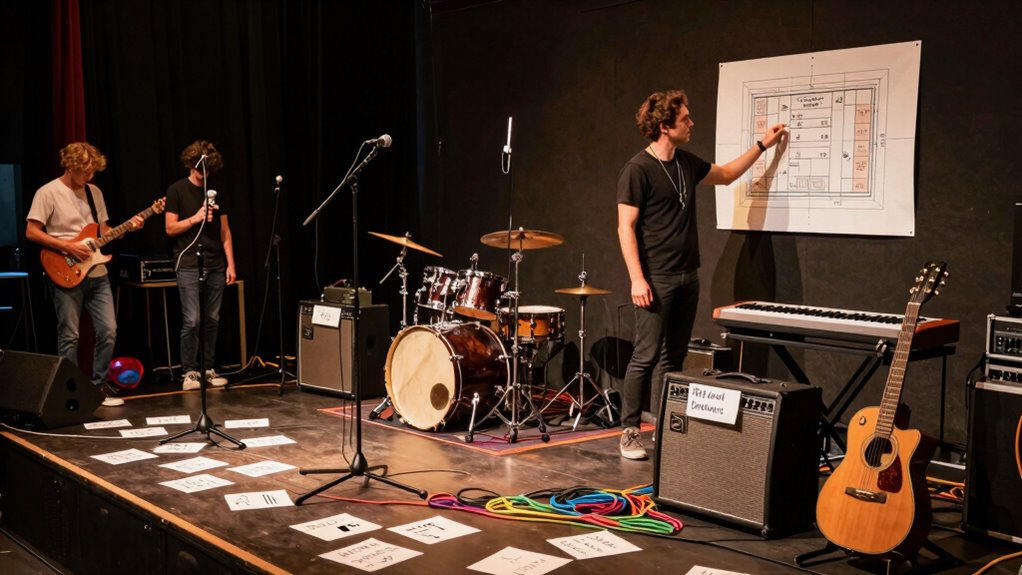
When it comes to delivering a memorable live performance, understanding the ins and outs of your stage plot can make all the difference. Your stage plot acts as the blueprint for your setup, ensuring everything runs smoothly from soundcheck to showtime. One crucial aspect is being prepared with soundcheck tips that help you optimize your sound early on. Before the audience arrives, you want to spend time confirming your equipment setup. Make sure your instruments, microphones, and amps are correctly connected and functioning. Double-check that each instrument and vocal mic is positioned properly to avoid feedback or volume issues during the show. Keep a list of your preferred settings for each piece of gear, so you can quickly dial in your sound without wasting time fiddling with knobs during soundcheck.
Effective equipment setup is about more than just plugging things in. It’s about understanding how to organize your gear for easy access and quick adjustments. For example, place your pedals, cables, and spare parts within reach so you’re not scrambling when something needs tweaking. Label your cables and connections to avoid confusion, especially if you’re sharing the stage with other bands or techs. This way, you can troubleshoot swiftly if any issues arise during soundcheck. Remember, a well-organized setup not only saves time but also reduces stress, allowing you to focus on your performance rather than technical frustrations. Additionally, incorporating natural elements like plants or outdoor decor can enhance the overall stage presence and create a more engaging visual experience for your audience. Understanding how to read your sound environment can also help you adapt quickly to different venues and lighting conditions, ensuring your stage presence remains impactful. Being familiar with common venue acoustics and adjusting your approach accordingly can make a noticeable difference in your live sound. Properly managing your sound environment is essential for achieving a balanced and professional mix, especially when dealing with auditory processing challenges that some band members or crew might experience.
As an affiliate, we earn on qualifying purchases.
Frequently Asked Questions
How Early Should I Send My Stage Plot to Venues?
You should send your stage plot at least 2-4 weeks before the show. This gives the venue enough time to review your stage layout and consider venue acoustics. Early communication helps guarantee your technical needs are met, preventing last-minute surprises. Including details about your stage setup and sound requirements allows the venue to prepare properly, leading to a smoother performance and better sound quality for everyone.
What Size Should My Stage Plot Be?
Your stage plot should be clear and concise, typically fitting on one or two pages. Include details about your lighting setup and specific instrument placements, which help during sound check. Keep it visually organized with simple diagrams or labels. This guarantees venue staff quickly understand your needs, streamlining the sound check process. Avoid overly complex designs, so everyone can easily follow your setup, making your performance smoother.
How Detailed Should My Stage Plot Include Equipment?
Your stage plot should include detailed equipment information to guarantee clarity for all venue setups. Be specific about each instrument, microphone, and amp to avoid confusion. This level of detail helps with equipment clarity and makes you adaptable to different venues, which may have varying space and technical resources. The more precise your stage plot, the smoother your setup process, allowing you to focus on performance rather than technical issues.
Should I Include Setlist or Song Order in the Stage Plot?
You should include your setlist or song order in the stage plot, especially during setlist planning, to help the crew understand your song arrangement and prepare accordingly. Clearly marking the sequence guarantees smooth progressions and minimizes confusion during the show. It also helps sound engineers adjust levels for each song. Keep it simple and visible, so everyone knows the flow, making your performance seamless and professional.
How Do I Customize My Stage Plot for Different Venues?
Think of your stage plot as a living document, adaptable like a chameleon to different venues. You should customize it by considering soundcheck tips—like mic placement—and lighting considerations, which vary based on the space’s size and layout. Adjust your setup to fit each venue’s unique features, ensuring the best sound and lighting. This flexibility allows you to deliver a flawless performance, no matter the stage.
As an affiliate, we earn on qualifying purchases.
Conclusion
Mastering your stage plot isn’t just about logistics; it’s the secret ingredient that transforms a good performance into an unforgettable experience. Think of it as the compass guiding your band through the chaos, ensuring every note hits the right spot. Embrace these secrets, and you’ll find your shows flow smoother than ever. After all, a well-planned stage is the stage where magic happens—so plan wisely and let your music take flight!
As an affiliate, we earn on qualifying purchases.
stage lighting and decor for bands
As an affiliate, we earn on qualifying purchases.
As an affiliate, we earn on qualifying purchases.
Halloween Picks
halloween
As an affiliate, we earn on qualifying purchases.