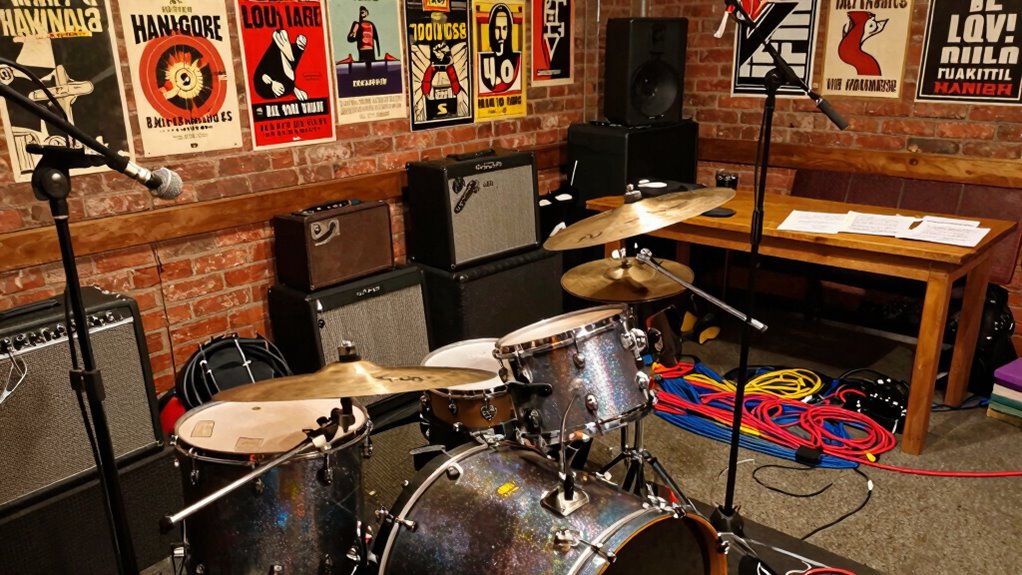

To create a great rehearsal setup, focus on optimizing sound quality and organization. Use strategic acoustic treatments like bass traps and absorption panels to improve sound without over-foam. Keep your space tidy with designated zones, labeled gear, and cable management to boost efficiency. Prioritize good lighting, ventilation, and soundproofing to stay comfortable and prevent noise issues. Investing in quality equipment and maintaining it regularly guarantees smooth rehearsals. Continue exploring ways to elevate your space to enable your band’s full potential.

Get audio and creator gear delivered free — and shop member deals
- Fast, free delivery on millions of items
- Access to Prime Big Deal Days deals on October 6–7
- Prime Video, Amazon Music and more included
Key Takeaways
- Optimize acoustics with targeted treatment to ensure clear, balanced sound during rehearsals.
- Maintain an organized space with designated zones and labeled equipment for efficiency.
- Ensure adequate room size, good lighting, and ventilation for comfort during long sessions.
- Implement effective soundproofing to minimize noise leakage and protect community relations.
- Invest in reliable, well-maintained equipment to enhance sound quality and prevent technical issues.
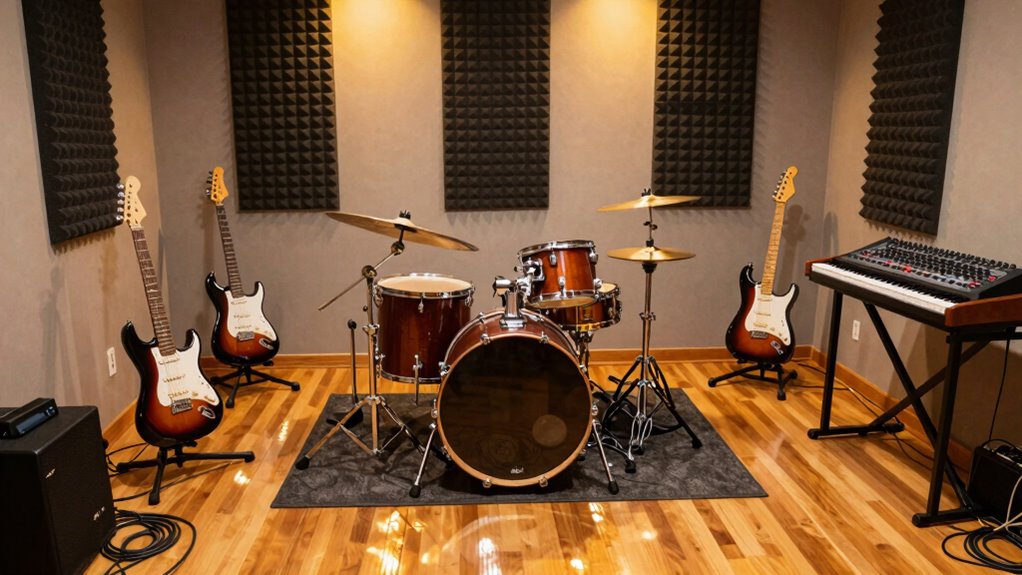
Setting up an effective rehearsal space is essential for a band’s success, as it directly impacts your sound quality and productivity. When you create a space that’s well-designed, you set the stage for better performances and more efficient practice sessions. The first step is paying attention to acoustic treatment. Without proper acoustic treatment, your sound can become muddled or overly echoey, making it difficult to hear individual parts clearly. You don’t need to cover every wall with foam panels, but strategically placing bass traps, diffusers, and some absorption panels can markedly improve the room’s acoustics. This helps you hear your instruments and vocals more accurately, which is vital for tight rehearsals and developing your sound. Proper acoustic treatment is a crucial aspect that often gets overlooked but can dramatically enhance your rehearsal quality. Being mindful of sound reflection can further help you optimize the room’s acoustics for clarity. Additionally, testing the room’s acoustics by recording and listening back can reveal problematic areas that need further treatment. Incorporating acoustic analysis tools can assist in creating a more balanced sound environment.
Alongside acoustic treatment, equipment organization is key. When your gear is cluttered or disorganized, you waste valuable time searching for cables, pedals, or microphones. To avoid this, dedicate specific areas for different equipment and keep everything labeled. Use shelves, racks, and cable organizers to streamline your setup and teardown process. An organized space allows you to focus more on playing and less on hunting down gear, keeping rehearsals efficient and productive. It also prevents accidental damage to equipment, which can happen when things are piled up or stored haphazardly.
Organize your gear with labeled zones, shelves, and cable organizers for efficient, damage-free rehearsals.
Your rehearsal space should also be designed with comfort and practicality in mind. Make sure there’s enough room for everyone to move freely without knocking into equipment. Good lighting and ventilation will keep the space comfortable during long practice sessions. Soundproofing is another consideration; even if you’re practicing at home, minimizing sound leakage will keep neighbors happy and help you maintain a good relationship with your community. Simple measures like weatherstripping doors or using soundproof curtains can make a big difference.
Finally, invest in quality equipment that suits your band’s needs. While you don’t have to buy the most expensive gear, choosing reliable instruments and amplification will make your rehearsals smoother. Regularly check and maintain your equipment to avoid technical hiccups. When your space combines effective acoustic treatment with well-organized gear, you’ll notice a boost in your overall sound and efficiency. This foundation allows your band to focus on what really matters: playing tight, creating great music, and growing together.
acoustic treatment bass traps absorption panels
As an affiliate, we earn on qualifying purchases.
As an affiliate, we earn on qualifying purchases.
Frequently Asked Questions
How Can I Soundproof My Rehearsal Space Effectively?
To soundproof your rehearsal space effectively, start by adding acoustic treatments like foam panels and bass traps to absorb sound reflections. Install noise barriers, such as mass-loaded vinyl or double drywall, on walls and doors to block sound transmission. Seal gaps around windows and doors with weatherstripping, and consider adding carpets or rugs to reduce sound reflections on the floor. These steps will greatly minimize noise leakage and improve your rehearsals.
What Are the Best Portable Rehearsal Setups for Traveling Bands?
For traveling bands, the best portable rehearsal setups include lightweight, battery-powered portable speakers and compact amplifiers. You want gear that’s easy to carry, quick to set up, and versatile enough for different venues. Opt for durable, reliable equipment that offers good sound quality and volume. This way, you can rehearse efficiently wherever you go, ensuring your sound remains consistent and your setup remains hassle-free.
How Do I Balance Sound Levels for a Large Band?
Balancing sound levels for a large band feels like juggling flaming torches—dangerous but essential. You’ll want to focus on strategic microphone placement to capture each instrument’s nuance, then delve into sound mixing to prevent chaos or silence. Keep everyone’s levels in check, making sure vocals aren’t drowned out by drums, and trust your ears. With patience and careful adjustments, you’ll turn chaos into harmony without losing your sanity.
What Safety Precautions Should I Consider During Rehearsals?
During rehearsals, you should prioritize safety by regularly inspecting equipment to prevent accidents, ensuring all gear is well-maintained and properly set up. Keep emergency preparedness in mind, like having a first aid kit accessible and clear exit routes. Communicate safety protocols with your band members, and avoid overloading circuits. These precautions help create a safe environment, allowing you to focus on playing without unnecessary risks.
How Often Should Bands Change Their Rehearsal Equipment?
You should change your rehearsal equipment regularly to keep sound quality high and avoid breakdowns. Equipment maintenance isn’t just for repairs; it’s about ensuring your gear performs at its best consistently. Incorporate scheduled equipment checks into your rehearsal routine, perhaps every few months or after intense sessions. This keeps your gear reliable, and your rehearsals smooth, and prevents surprises during performances. Regular updates help your band stay sharp and sound professional.
musician cable organizer and storage rack
As an affiliate, we earn on qualifying purchases.
As an affiliate, we earn on qualifying purchases.
Conclusion
Remember, setting up a great rehearsal space doesn’t mean you need the fanciest gear or a perfect room. Focus on creating a comfortable environment where everyone feels inspired and can focus on playing. Don’t let worries about equipment or space hold you back—your passion and teamwork matter most. With a little planning and creativity, you’ll find that any space can become a place where your band truly thrives and grows.
soundproof curtains for rehearsal room
As an affiliate, we earn on qualifying purchases.
As an affiliate, we earn on qualifying purchases.
professional microphone and instrument stands
As an affiliate, we earn on qualifying purchases.
As an affiliate, we earn on qualifying purchases.
Fall Picks
fall essentials
As an affiliate, we earn on qualifying purchases.