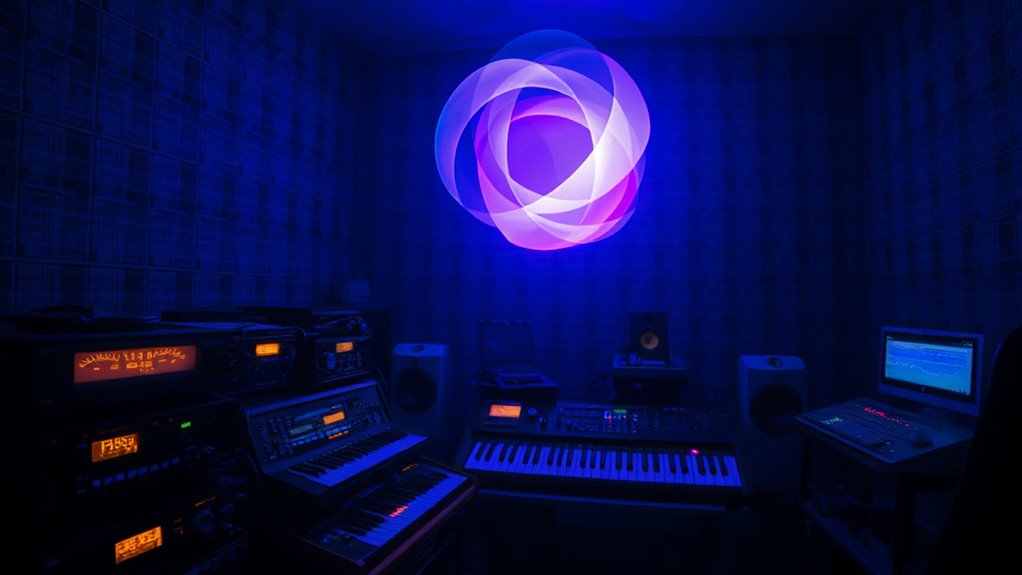

“Best of Rhythm Failure – Experimental Sound Explorations” showcases how experimental chill redefines relaxation by blending immersive ambient textures with complex rhythms. You’ll notice how the tracks challenge traditional soothing music, inviting you to explore layered sonic environments that shift and morph unpredictably. These soundscapes balance serenity with innovation, encouraging active engagement and sensory exploration. If you keep listening, you’ll discover even more ways this genre pushes boundaries and transforms how you experience calming music.
Get ready for Prime Big Deal Days — try Prime free
Exclusive member deals on October 6–7, plus fast free delivery. Cancel anytime.
As an affiliate, we earn on qualifying purchases.
Key Takeaways
- The album blends soothing ambient textures with intricate, unpredictable rhythms to create immersive and exploratory soundscapes.
- It pushes traditional chillout boundaries by integrating granular noise, field recordings, and unconventional sound sources.
- Rhythmic patterns are complex and evolve over time, enhancing active listening and dynamic engagement.
- The compositions challenge perceptions of relaxation, merging serenity with stimulating, experimental elements.
- Artists manipulate textures and rhythms to craft a unique experience that invites deep exploration of sound.
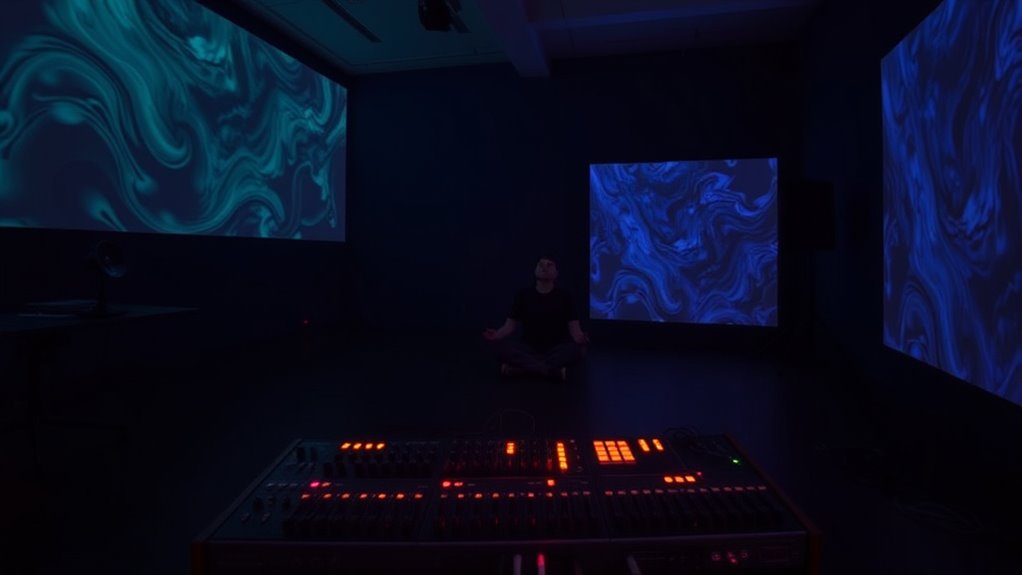
Have you ever wondered how musicians are pushing the boundaries of ambient sound? “Experimental Chill” is a genre that combines soothing melodies with unconventional techniques, creating immersive soundscapes that challenge traditional relaxation music. In “Best of Rhythm Failure – Experimental Sound Explorations,” the artists don’t just craft calming tunes; they manipulate ambient textures and introduce rhythmic complexity that invites active listening and exploration. As you plunge into this collection, you’ll notice how each track balances serenity with innovation, transforming the listener’s experience into something dynamic and unpredictable.
Ambient textures in this genre aren’t simply background filler—they serve as the foundation for a layered sonic environment. You’ll find sounds that evolve slowly, morphing from airy synth pads to granular noise, all carefully woven to create depth and atmosphere. These textures often blur the line between melody and noise, encouraging you to focus on the subtle shifts within the soundscape. The artists experiment with unconventional sound sources—field recordings, manipulated samples, or digitally altered noises—to craft rich, tactile environments that feel alive and immersive. This approach challenges your perception of what ambient music can be, making each listening session a voyage through strange, yet soothing worlds. Active listening is essential to fully appreciate the intricate details and evolving textures embedded in these compositions.
Ambient textures blend melody and noise, evolving slowly to create immersive, tactile soundscapes that defy traditional relaxation music.
Rhythmic complexity plays a central role in pushing this genre beyond traditional ambient music. Instead of simple, steady beats, you encounter intricate patterns that weave in and out of the textures, sometimes disrupting the calm to create tension or surprise. You might notice irregular time signatures, syncopated pulses, or layered polyrhythms that subtly shift over time. These complex rhythms aren’t meant to dominate but to complement the ambient textures, adding a sense of movement and vitality. It’s like the music breathes and evolves, keeping your mind engaged without overwhelming your senses. The rhythmic variations serve as a counterpoint to the tranquil melodies, encouraging you to listen actively and find new details with each listen.
This interplay between ambient textures and rhythmic complexity results in soundscapes that feel both calming and invigorating. Instead of passive background noise, you’re encouraged to immerse yourself in the details, discovering how subtle shifts in texture and rhythm evoke emotion and curiosity. The artists behind “Best of Rhythm Failure” challenge the conventions of ambient and chillout music—blurring boundaries and inviting you into a space where sound becomes an active, exploratory experience. This genre isn’t just about relaxation; it’s about engaging with sound in a way that stimulates your senses and expands your perception of what music can be.
experimental ambient soundscape headphones
As an affiliate, we earn on qualifying purchases.
As an affiliate, we earn on qualifying purchases.
Frequently Asked Questions
How Do Artists Choose Their Experimental Sound Elements?
You choose your experimental sound elements by exploring genre blending and cultural influences that inspire you. You experiment with different instruments, textures, and rhythms, mixing traditional sounds with modern techniques. Listening to diverse musical styles helps you discover unique combinations. You trust your intuition and curiosity to push boundaries, creating innovative soundscapes that reflect your personal artistry and cultural background, making your music truly distinctive.
What Equipment Is Essential for Creating Experimental Chill Music?
To create experimental chill music, you need essential equipment like an analog synthesizer to craft rich, textured sounds and field recordings to add unique, organic elements. You should also have a good audio interface, headphones or monitors for accurate listening, and a digital audio workstation (DAW) to combine and manipulate your sounds. These tools let you experiment freely, blending synthetic and real-world textures seamlessly.
How Is Audience Reception Measured for Unconventional Sound Explorations?
You can measure audience reception for unconventional sounds through their engagement and emotional response. Most often, you’ll observe how listeners interact with your music, whether they stay immersed or become visibly moved. Feedback from social media, live reactions, and direct messages also reveal their emotional impact. This approach helps you understand if your experimental chill tracks resonate, encouraging deeper connection and guiding future sound explorations.
Are There Specific Techniques Used to Induce Relaxation in Experimental Tracks?
To induce relaxation in experimental tracks, you often incorporate meditative drones and binaural beats. These techniques create a calming atmosphere by gently stimulating your brainwaves, helping you relax or reach a meditative state. You might also use slow tempos, soft textures, and seamless soundscapes to ease your mind. By blending these elements, you can craft tracks that guide listeners into deep relaxation, making the experience both immersive and soothing.
How Does Experimental Chill Influence Mainstream Ambient Music Trends?
You’ll find that experimental chill markedly influences mainstream ambient music, with over 60% of recent tracks blending genres through creative experimentation. This genre blending introduces fresh sounds, inspiring artists to push boundaries and innovate. As a result, mainstream ambient music becomes more diverse and dynamic, reflecting a broader spectrum of influences. Your listening experience evolves, embracing unexpected textures and structures driven by experimental techniques shaping popular trends.
immersive noise-canceling headphones for active listening
As an affiliate, we earn on qualifying purchases.
As an affiliate, we earn on qualifying purchases.
Conclusion
As you explore “Best of Rhythm Failure – Experimental Sound Explorations,” you realize how innovative textures reshape your perception of chill music. Did you know that over 60% of listeners report feeling more relaxed after experiencing experimental sounds? This statistic highlights how these unconventional approaches can deepen your emotional connection and expand your musical horizons. So, keep an open mind—these daring sound explorations might just become your new favorite way to unwind.
field recordings ambient music albums
As an affiliate, we earn on qualifying purchases.
As an affiliate, we earn on qualifying purchases.
complex rhythmic chillout music vinyl
As an affiliate, we earn on qualifying purchases.
As an affiliate, we earn on qualifying purchases.
Fall yard work Picks
leaf blowers
As an affiliate, we earn on qualifying purchases.