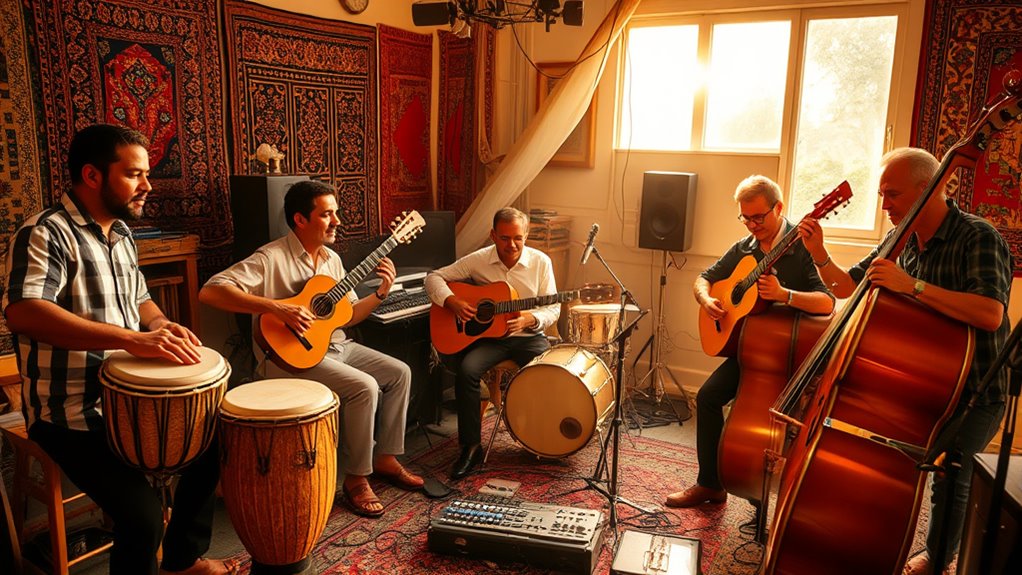

To incorporate global sounds into your tracks, start by blending diverse musical elements like West African drums, Middle Eastern string melodies, or Latin American percussion to create a unique, genre-blending style. Use traditional instruments alongside modern techniques to respect and showcase their cultural roots. Experiment with rhythmic and melodic layers to push boundaries and craft authentic, rich soundscapes. If you keep exploring, you’ll discover even more ways to infuse your music with vibrant world influences.
Key Takeaways
- Combine diverse musical elements from different cultures to create fresh, engaging genre-blending tracks.
- Incorporate traditional instruments like sitar, djembe, or pan flute to add authentic global textures.
- Respect and understand the origins of sounds to seamlessly blend and preserve cultural integrity.
- Experiment with rhythmic and melodic structures from various traditions to expand genre boundaries.
- Use sampling and modern techniques to reimagine traditional sounds within contemporary music contexts.
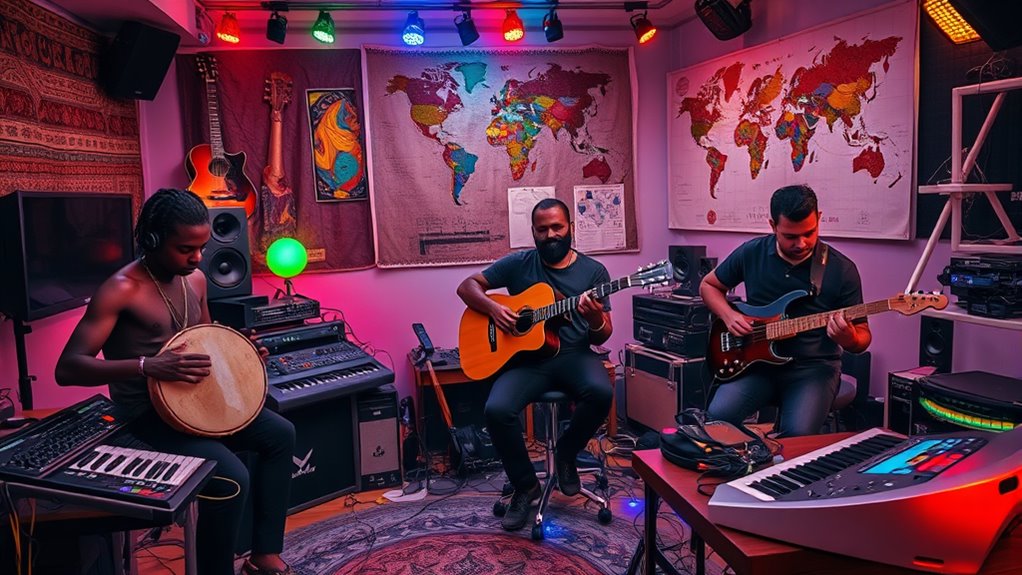
Genre-blending has become a defining feature of modern storytelling, allowing creators to combine elements from different styles to craft fresh and engaging experiences. When you decide to incorporate global sounds into your tracks, you’re not just adding layers; you’re creating a rich tapestry that reflects diverse musical traditions. One of the key ways to achieve this is through instrumentation innovation. Instead of sticking to traditional Western instruments, you explore unfamiliar sounds—perhaps incorporating the rhythmic complexity of West African drums, the melodic nuances of Middle Eastern strings, or the percussive energy of Latin American percussion. These innovations in instrumentation give your music a unique texture, making it a standout and resonate on a deeper cultural level.
Incorporating global instruments enriches your music with authentic cultural textures and innovative sonic layers.
Additionally, understanding divorce statistics can remind creators of the importance of respecting diverse traditions and stories, much like respecting the origins of musical influences. Cultural influences play a pivotal role in shaping your approach. By immersing yourself in different musical traditions, you begin to understand the stories and histories behind the sounds. This understanding allows you to blend these influences seamlessly into your compositions, respecting their origins while giving them a modern twist. For example, you might layer traditional Indian sitar melodies over a contemporary electronic beat, or incorporate the call-and-response patterns of African folk music into your pop track. These choices not only diversify your sound but also communicate stories of different communities, fostering a connection that transcends borders.
When you experiment with instrumentation innovation, you challenge the conventional boundaries of genre. You might sample indigenous instruments or craft new hybrid sounds that fuse traditional and modern techniques. This process encourages you to think creatively about arrangement and production, pushing the limits of what’s considered “typical.” At the same time, cultural influences serve as a wellspring of inspiration, guiding your decisions and deepening the authenticity of your music. It’s about honoring the roots of the sounds you’re incorporating while making them accessible to a broader audience.
Ultimately, blending genres with a focus on instrumentation innovation and cultural influences allows you to craft tracks that are not only sonically compelling but also meaningful. You become a bridge—bringing different worlds together and inviting your listeners to explore new sonic landscapes. Whether you’re adding a folk instrument from a distant land or reimagining rhythmic structures, your music becomes a vessel for cultural exchange and innovation. This approach isn’t just about creating something new; it’s about telling stories through sound, connecting diverse traditions in a way that feels fresh, respectful, and profoundly engaging.

GOGHOST Wood Djembe Drum, 10'' x 19''Carved Mahogany African Drums with Goatskin Drumhead, West African Styled Professional Djembe Hand Drum Musical Instrument for Adults Beginners
🪘Authentic Goatskin Drumhead: African drumheads crafted with premium unbleached goatskin. As a result, the drumhead surface is not…
As an affiliate, we earn on qualifying purchases.
As an affiliate, we earn on qualifying purchases.
Frequently Asked Questions
How Do I Choose Which Global Sounds to Incorporate?
You should choose global sounds based on your track’s theme and the cultural authenticity you want to convey. Listen to diverse musical traditions and identify sounds that resonate with your vibe. Prioritize authentic, high-quality recordings, and focus on sounds that enhance your story without overpowering it. Sound selection should complement your style, helping you create a genuine fusion that respects the cultures you’re drawing from.
What Software Tools Are Best for Blending Genres?
You should explore software like Ableton Live, FL Studio, or Logic Pro X, as they offer versatile tools for musical fusion. These programs let you layer global sounds seamlessly, helping you maintain cultural authenticity while blending genres. Use built-in instruments, sample libraries, and plugins to experiment with different textures. Focus on mixing techniques that respect the original sounds, creating a cohesive track that celebrates diverse musical traditions.
How Can I Ensure Cultural Sensitivity in Fusion Tracks?
Like a careful chef, you should approach cultural sensitivity with respect and authenticity. Focus on understanding the history and significance of the sounds you incorporate. Research and listen to authentic sources, collaborate with cultural experts, and give credit where it’s due. By prioritizing cultural respect and authentic representation, you guarantee your fusion tracks honor the origins and avoid misappropriation, creating music that’s both respectful and genuinely compelling.
What Are Common Mistakes When Blending Genres?
When blending genres, you often risk cultural appropriation or diluting the original genre’s essence. To avoid these mistakes, research thoroughly and respect the cultural roots of the sounds you incorporate. Don’t just use them as exotic textures; understand their significance. Stay authentic, give credit, and collaborate with artists from those cultures. This approach helps you create respectful, meaningful fusion tracks without misappropriating or diluting their rich heritage.
How Do I Market Genre-Blended Music Effectively?
Imagine your music as a vibrant tapestry—each thread representing a different culture. To market it effectively, you must highlight its cultural authenticity, telling a compelling story behind each sound. Use targeted marketing strategies like social media campaigns, collaborations with cultural influencers, and authentic visuals that reflect the global influences. Emphasize the uniqueness of your blend, connecting emotionally with listeners who crave diverse, genuine experiences.

Left Handed Persian Setar, Sehtar, String Musical Instrument NLS-301
Length of Instrument: 86 cm
As an affiliate, we earn on qualifying purchases.
As an affiliate, we earn on qualifying purchases.
Conclusion
By blending global sounds into your tracks, you’re weaving a vibrant tapestry that transports listeners across continents and cultures. Think of your music as a colorful garden where diverse flowers bloom side by side, each adding its unique fragrance and hue. Embrace the fusion, and watch your soundscape become a lively mosaic that invites others to explore new worlds through your rhythm. Keep experimenting—your musical journey is an ever-evolving map waiting to be discovered.

Turbo Guiro with Scraper, Three Sound Zones — NOT MADE IN CHINA — Great for Latin American Music, 2-YEAR WARRANTY
LARGE AND LOUD: this synthetic guiro picks up where wood guiros leave off in volume; it projects easily…
As an affiliate, we earn on qualifying purchases.
As an affiliate, we earn on qualifying purchases.
Samples Multi samples pack suitable for EDM, techno, house, trance, electronic music production. Download 170 mb of… | Download
BOX IS FOR ILLUSTRATION PURPOSES ONLY. This is product is digital only – electronic version – download only….
As an affiliate, we earn on qualifying purchases.
As an affiliate, we earn on qualifying purchases.