
Using cloud-based DAWs and real-time sessions, you can collaborate remotely with ease. These tools let you access and share project files instantly, ensuring everyone works on the latest version. With integrated version control, you track changes and revert if needed. Real-time collaboration enables simultaneous editing, making remote teamwork feel like you’re in the same studio. Exploring these workflows helps you discover new levels of flexibility and creativity—more insights await if you continue.
Key Takeaways
- Cloud-based DAWs enable instant access to project files, facilitating seamless remote collaboration and reducing reliance on physical transfers.
- Version control features track changes, ensure up-to-date files, and allow easy rollback to previous project states.
- Real-time sessions support simultaneous editing, recording, and listening, mimicking in-studio collaboration with minimal latency.
- Cloud workflows remove geographic and time barriers, fostering spontaneous feedback and faster creative iterations.
- High-quality audio streaming and low-latency connections ensure smooth, interactive remote sessions that enhance teamwork and project quality.
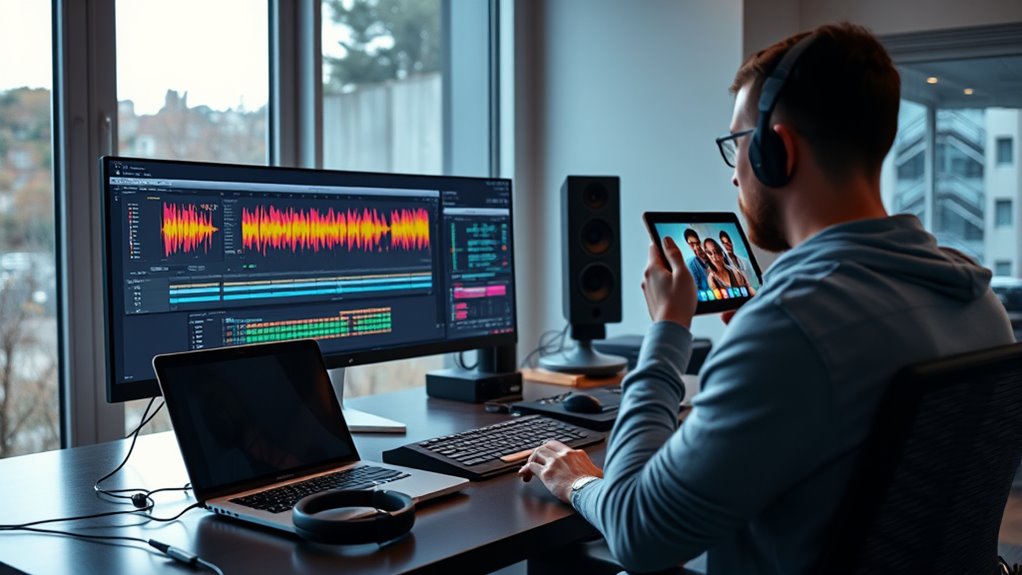
Have you ever wondered how teams manage to work seamlessly across different locations? It all starts with effective remote collaboration workflows, especially when using cloud-based digital audio workstations (DAWs) and real-time sessions. These tools enable musicians, producers, and engineers to stay connected, edit, and refine projects without being in the same room. Central to this process are reliable file sharing and robust version control systems. File sharing allows everyone involved to access the latest project files, stems, and samples instantly, regardless of their physical location. Instead of exchanging massive files through email or physical drives, you upload your work to a cloud platform, making it accessible to your collaborators with just a click. This not only saves time but also minimizes the risk of outdated or lost files.
Effective remote collaboration relies on seamless file sharing and version control for smooth, real-time music production.
However, when multiple people are editing or adding to a project, version control becomes critical. Without it, you might find yourself confused about which version is the most recent or risking overwriting someone else’s work. Version control systems track every change made to a project, creating a clear history of edits and allowing you to revert to previous versions if needed. This ensures that everyone stays on the same page, reduces errors, and maintains the integrity of the project. Many cloud-based DAWs incorporate integrated version control features, making it easier to manage revisions without extra tools. You can compare different versions, annotate changes, and see who made specific edits—all within the same platform.
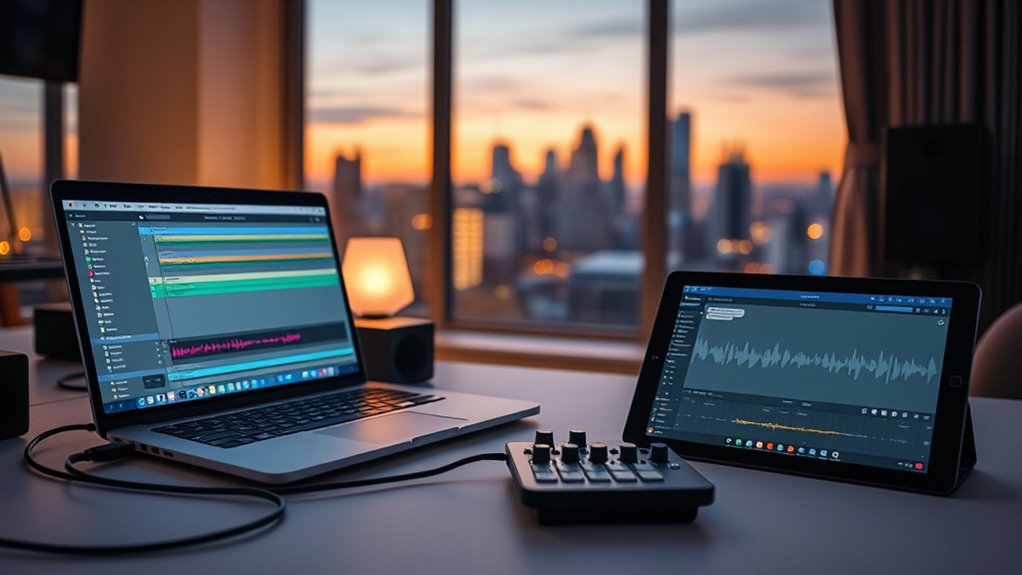
Using these workflows, you can jump straight into real-time sessions, where multiple users collaborate simultaneously. During a live session, you and your team can listen, record, and adjust tracks in real-time, as if you were in the same studio. The cloud syncs every change instantly, ensuring everyone has access to the most current version. This setup eliminates the lag and communication barriers that often slow down remote projects. Plus, with high-quality audio streaming and low-latency connections, you can experience a seamless, interactive session, making remote collaboration feel almost as natural as being face-to-face.
In addition to these technical benefits, cloud-based workflows foster a more flexible, dynamic creative process. You’re no longer bound by geographic or time constraints, which opens up new possibilities for spontaneous ideas and instant feedback. As long as you have a stable internet connection, your team can work together efficiently, sharing files, controlling versions, and collaborating in real-time. This approach not only streamlines your workflow but also fuels creativity by enabling faster iterations and more cohesive teamwork. Incorporating high refresh rates and low-latency connections further enhances the quality of live sessions, making remote collaboration more effective.

REOLINK 4K LTE Cellular Security Camera Wireless Outdoor, No WiFi, 3G/4G LTE, Solar Powered, SIM Card+32GB SD Card Included, Color Night Vision, Local/Cloud Storage, Go PT Ultra+SP, Updated Version
- Ultra HD 4K Image Quality: Clear images and videos day and night
- 4G LTE & Solar Power: No WiFi needed, powered by solar energy
- Includes SIM & 32GB SD Card: Ready for immediate use with storage
As an affiliate, we earn on qualifying purchases.
As an affiliate, we earn on qualifying purchases.
Frequently Asked Questions
How Secure Are Cloud-Based DAW Collaborations?
Cloud-based DAW collaborations are generally secure, but you should stay aware of cloud data security and user privacy concerns. Providers use encryption and strong security measures to protect your work, though no system is completely foolproof. To minimize risks, choose reputable services, enable two-factor authentication, and regularly update your passwords. Staying informed about privacy policies helps guarantee your creative data remains private and protected during remote collaborations.
What Are the Best Internet Requirements for Real-Time Sessions?
For real-time sessions, you need at least 20-50 Mbps bandwidth to guarantee smooth audio and data transfer. Prioritize a stable connection, avoiding Wi-Fi interruptions or fluctuations, which can cause latency or dropouts. Wired Ethernet connections are preferable for reliability. Keep your network free from heavy downloads or streaming during sessions, so your bandwidth and connection stability stay optimized for seamless collaboration.
Can Remote Collaboration Workflows Accommodate Large Audio Files?
Sure, remote workflows can handle large audio files, but don’t be fooled—audio file transfer and storage limitations often make it a headache. You might think cloud-based DAWs are magic, yet massive files slow down upload speeds and strain storage. So, while it’s possible, you’ll spend more time managing files than creating. Irony hits hard when technology promises seamless collaboration, but storage constraints remind you otherwise.
How Do Latency Issues Impact Real-Time Music Production?
Latency issues caused by network latency can considerably impact your real-time music production. When there’s high latency, you might experience audio synchronization problems, leading to delays between your input and the sound you hear. This can make playing or recording in real time frustrating. To minimize these issues, optimize your internet connection, use low-latency hardware, and choose cloud solutions designed for real-time audio, ensuring smoother collaboration and better synchronization.
Are There Any Costs Associated With Cloud-Based DAW Platforms?
You’ll find that cloud-based DAW platforms often come with costs, like a ticket to a concert—you pay for the experience. Cost considerations include subscription fees or pay-as-you-go plans, and platform compatibility can influence expenses if you need specific software or hardware. While some platforms offer free tiers, premium features usually require investment. Be sure to evaluate what fits your budget and setup to keep your creative flow uninterrupted.
real-time music collaboration software
As an affiliate, we earn on qualifying purchases.
As an affiliate, we earn on qualifying purchases.
Conclusion
So, next time you’re tangled in a cloud-based session, remember: nothing beats the thrill of battling lag, version conflicts, and lost files—all from the comfort of your pajamas. With remote collaboration, you’re genuinely pushing the boundaries of musical innovation… or just testing your patience. Embrace the chaos, because in this digital age, even your perfect mix might be made in the cloud—and somehow, that’s supposed to make everything better. Happy collaborating!
low latency audio streaming device
As an affiliate, we earn on qualifying purchases.
As an affiliate, we earn on qualifying purchases.
As an affiliate, we earn on qualifying purchases.