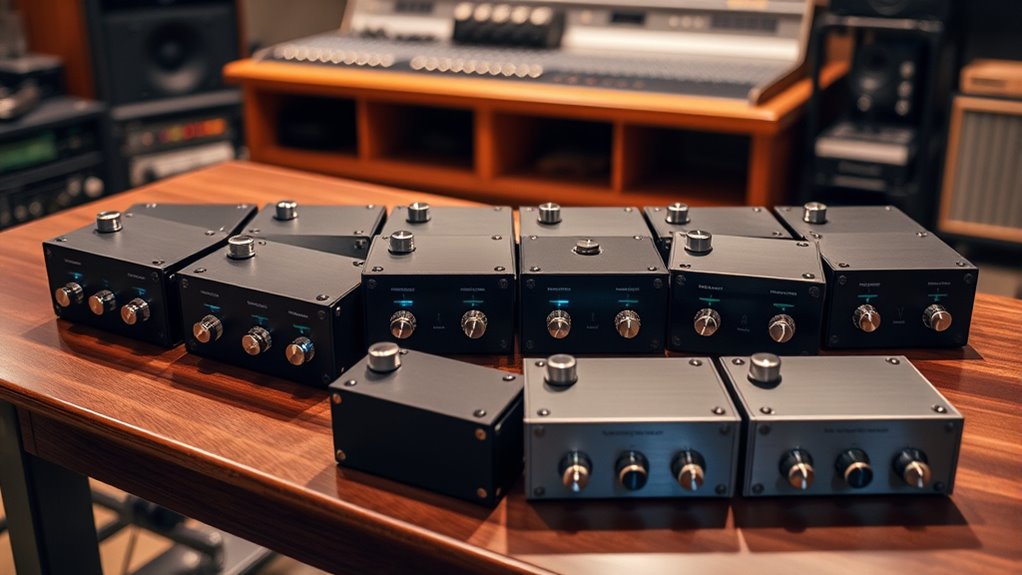

Choosing a passive reamping box requires understanding its role in converting signals cleanly and transparently. The Radial ProRMP stands out as the best overall due to its reliable build and versatile features, making it suitable for most studio setups. For budget-conscious users, the ART PDB4 offers solid performance without breaking the bank, while the Radial Reamp HP provides premium sound quality for demanding engineers. The main tradeoffs involve balancing cost against build quality, transparency, and ease of use. Continue reading for a detailed breakdown of each option and what makes them unique.

Get audio and creator gear delivered free with Prime
- Fast, free delivery on millions of items
- Prime Video, Amazon Music and more included
- Member-only deals all year
Complete the kit



Key Takeaways
- The top picks excel in transparency, minimizing signal coloration during reamping.
- Build quality varies significantly, impacting durability and long-term reliability.
- Price often correlates with features, but the best value balances cost and performance.
- Many models include multiple channels, offering versatility for different studio workflows.
- Ease of use and cable management can influence setup speed and workflow efficiency.
| Radial Engineering ProRMP Bundle, Studio Reamper Direct Box |  | Best Overall Passive Reamping Box | Includes: ProRMP Direct Box, Pig Hog Mic Cable, Liquid Audio polishing cloth | Isolation: Transformer isolated | Features: On-board level control, impedance matching | VIEW ON AMAZON | See Our Full Breakdown |
| ART PDB4 Four Channel Passive Direct Box |  | Best for Multi-Channel Passive Applications | Item Weight: 2.2 pounds | Product Dimensions: 5.98 x 19.02 x 1.75 inches | Model Number: PDB4 | VIEW ON AMAZON | See Our Full Breakdown |
| Radial ProRMP 1-Channel Passive Re-Amping Device Direct Box with 18.6ft Instrument Cable |  | Best for Creative Re-Amping with a Single Channel | Type: Passive Re-Amping Device | Channels: 1 | Included Cable: 18.6 ft instrument cable | VIEW ON AMAZON | See Our Full Breakdown |
| ART Dual RDB Reamping Direct Box |  | Best for Stereo and Multi-Source Reamping | Inputs: Dual 1/4-inch TRS and XLR balanced line level | Features: Variable input pad, stereo/dual direct box | VIEW ON AMAZON | See Our Full Breakdown | |
| Radial Reamp HP Passive Reamping Device |  | Best Compact Passive Reamp for Line-Level Signals | Input: 1/4″ | Features: Isolation transformer, ground lift switch | Additional Input: 3.5mm | VIEW ON AMAZON | See Our Full Breakdown |
| Radial Engineering JCR Studio Reamper Passive Reamp with 2 Cables |  | Best for Studio Professionals Requiring Versatile Inputs | Inputs: 1/4″ TRS / XLR | Construction: Rugged steel | Phase invert: 180 degrees | VIEW ON AMAZON | See Our Full Breakdown |
| Radial ProRMP 1-Channel Passive Re-Amping Direct Box |  | Best for On-the-Go Reamping in Professional Setups | Subcategory: Reamping Box | Design: Compact | VIEW ON AMAZON | See Our Full Breakdown |
More Details on Our Top Picks
Radial Engineering ProRMP Bundle, Studio Reamper Direct Box
The Radial ProRMP Bundle stands out as the most versatile passive reamp solution thanks to its transformer isolation and onboard level control, making it suitable for both studio and live use. Compared to the Radial ProRMP 1-Channel, this bundle offers more comprehensive features, including an included cable and cleaning cloth, providing a ready-to-go package. Its ability to eliminate buzz and hum ensures clean, interference-free reamping, which is critical for professional recordings. The tradeoff is that this unit requires some understanding of reamping techniques, so it’s not ideal for beginners or casual users. Overall, it’s best suited for serious producers and engineers who want reliable, high-quality sound with flexible control options.
Pros:- Eliminates buzz and hum for pristine sound quality
- Includes comprehensive accessories for immediate use
- On-board level control allows precise gain adjustment
- Transformer isolation prevents ground loop issues
Cons:- Requires knowledge of reamping techniques to operate effectively
- May be overkill for simple recording setups
Best for: Professional studios and engineers needing a reliable, all-in-one reamping solution.
Not ideal for: Home recording enthusiasts or beginners who want a simple, plug-and-play solution without technical setup.
- Includes:ProRMP Direct Box, Pig Hog Mic Cable, Liquid Audio polishing cloth
- Isolation:Transformer isolated
- Features:On-board level control, impedance matching
Our verdict“This bundle is perfect for advanced users seeking a complete, high-quality passive reamping solution with flexible control.”
ART PDB4 Four Channel Passive Direct Box
The ART PDB4 is a robust four-channel passive DI designed for multi-instrument setups, offering maximum channel separation with transformer-isolated inputs. Unlike the Radial ProRMP bundle, which excels in reamping, this unit is tailored to connect multiple instruments simultaneously to mixers or amps in live settings or complex studio configurations. Its fully passive design means it lacks active electronics, which can be a limitation in gain-sensitive scenarios, but it ensures simplicity and durability. The switchable input attenuation adds versatility, yet it may require careful gain staging for optimal sound. This makes the PDB4 a smart choice for engineers needing a rugged, multi-channel solution but less suited for those seeking precise reamping control.
Pros:- Four fully isolated channels for multiple instruments
- Transformer isolation minimizes ground loop hum
- Switchable input attenuation for flexible use
- Rugged, rack-mountable build
Cons:- No active electronics limits gain flexibility
- Less suited for single-channel reamping tasks
Best for: Live sound engineers and studio setups requiring multiple passive channels with isolation.
Not ideal for: Casual home users or those needing active control features, as it focuses solely on passive operation.
- Item Weight:2.2 pounds
- Product Dimensions:5.98 x 19.02 x 1.75 inches
- Model Number:PDB4
- Color:Black
- Voltage:240 volts
Our verdict“Ideal for multi-instrument or multi-channel applications where durability and isolation are priorities.”
Radial ProRMP 1-Channel Passive Re-Amping Device Direct Box with 18.6ft Instrument Cable
Compared to the ProRMP Bundle, the Radial ProRMP 1-Channel focuses solely on reamping a single track, making it a straightforward tool for adding creative amp and pedal effects. Its onboard level control allows fine-tuning of the signal after recording, but it lacks the comprehensive features of the bundle, such as multiple channels or built-in isolation, making it more suitable for solo projects or experimental work. The included 18.6-foot instrument cable adds flexibility for studio or stage setups. The passive design keeps it simple, yet this means it requires external gain staging to match levels properly. It’s a smart choice for guitarists or producers seeking an affordable, dedicated reamping device.
Pros:- Enables creative re-amping with prerecorded tracks
- Includes long instrument cable for versatile setup
- Onboard level control for precise adjustments
- Simple, reliable passive design
Cons:- Limited to passive operation, less flexible in gain control
- Single-channel focus may not suit complex setups
Best for: Guitarists and producers wanting a dedicated, simple reamp box for creative tone shaping.
Not ideal for: Users needing multi-channel or studio-level isolation, as this is limited to one channel and passive operation.
- Type:Passive Re-Amping Device
- Channels:1
- Included Cable:18.6 ft instrument cable
Our verdict“Best suited for guitarists and producers who want a straightforward, dedicated reamping tool for creative sound design.”
ART Dual RDB Reamping Direct Box
The ART Dual RDB offers the versatility of stereo reamping with dual inputs and outputs, making it more complex than the Radial ProRMP for single-channel use. Its variable input pads and balanced line level inputs support multiple sources, including stereo audio and video, giving it an edge for multi-source setups. However, it lacks the detailed specs and simplicity of dedicated reamping boxes like the Radial ProRMP, which might require additional gear to fully utilize. Its focus on stereo and multi-source applications makes it less ideal for straightforward reamping tasks but perfect for more advanced, multi-track projects or live multi-amp setups.
Pros:- Supports stereo and multiple sources
- Includes variable input pad for flexible gain control
- Balanced line level inputs for professional use
- Supports complex, multi-source reamping setups
Cons:- More complex to operate than simple mono reamp boxes
- Limited detailed specifications may require extra gear
Best for: Producers and engineers working with stereo sources or multiple signals requiring reamping.
Not ideal for: Single-instrument users or those seeking a simple, passive reamp box without stereo or multi-source features.
- Inputs:Dual 1/4-inch TRS and XLR balanced line level
- Features:Variable input pad, stereo/dual direct box
Our verdict“Best for multi-source or stereo reamping scenarios in professional environments needing flexibility.”
Radial Reamp HP Passive Reamping Device
The Radial Reamp HP is a minimalistic, passive reamp designed specifically for converting line-level signals into instrument-level signals for reamping guitars or bass. Its simple construction, featuring an input, an isolation transformer, and ground lift, makes it a reliable, no-fuss option. Compared to the Radial ProRMP, which offers more features like onboard level control, the Reamp HP is more limited but extremely compact and straightforward. Its lack of active electronics means it’s less flexible in gain adjustment but ideal for users who prefer a simple, high-quality passive device that reduces hum and ground loop issues. It’s best for those who need a dedicated, compact reamp tool without extra bells and whistles.
Pros:- Simple, high-quality passive design
- Includes ground lift switch to minimize hum
- Compact size for easy placement
- Effective at reducing ground loop hum
Cons:- Limited to line-level signals, not suitable for instrument outputs directly
- No active electronics for gain adjustment
Best for: Musicians or engineers needing a simple, high-quality passive reamp for line-level signals in tight spaces.
Not ideal for: Producers who want detailed gain control or active features, or those working with low-level signals requiring active buffering.
- Input:1/4″
- Features:Isolation transformer, ground lift switch
- Additional Input:3.5mm
Our verdict“A straightforward, space-saving passive reamp ideal for converting line signals with minimal fuss.”
Radial Engineering JCR Studio Reamper Passive Reamp with 2 Cables
The Radial JCR Studio Reamper stands out for its rugged steel construction and flexible input options, making it well-suited for studio environments where durability and versatility matter. Compared to the Radial ProRMP, which is more compact and portable, the JCR offers more input flexibility with both 1/4″ TRS and XLR connections, plus a three-way filter and phase invert features that enhance control during reamping. However, the JCR’s design is somewhat less straightforward for quick setup, and the lack of detailed user feedback leaves some uncertainty about long-term reliability. Its inclusion of cables makes it convenient for studio use, but the absence of detailed specs like power requirements or user reviews limits clarity on its performance in complex setups. Overall, this reamp is best suited for professionals who need a durable, versatile unit with multiple input options and are less concerned about portability or quick setup.
Pros:- Durable steel construction ensures longevity
- Versatile input options for different gear
- Includes cables for immediate setup
Cons:- Limited description details reduce clarity on full capabilities
- No information about power requirements or ongoing support
- No user reviews to gauge real-world performance
Best for: Studio engineers working on high-end recordings needing robust, flexible reamping tools
Not ideal for: Home studio owners with limited space or those seeking a simple, plug-and-play reamp solution
- Inputs:1/4″ TRS / XLR
- Construction:Rugged steel
- Phase invert:180 degrees
- Filter:Three-way
Our verdict“This reamp is ideal for professionals who prioritize durability and input flexibility over portability or quick setup.”
Radial ProRMP 1-Channel Passive Re-Amping Direct Box
The Radial ProRMP offers a compact, straightforward solution for reamping needs, making it especially appealing to musicians and engineers who require mobility without sacrificing fidelity. Its passive circuitry ensures minimal noise and a transparent signal, similar to the Radial Reamp HP, but with a focus on portability and ease of use. The limited to a single channel, however, makes it less suitable for multi-signal setups or complex studio environments. Its lack of active circuitry might be a drawback when reamping certain signals that need more gain, but the high-quality passive design keeps noise levels low. Weighing its small size against the need for multiple channels, this model excels for live or field reamping but falls short for larger, multi-mic or multi-instrument scenarios. It’s best for users who prioritize portability and high-fidelity single-channel reamping, not for those needing multi-channel or active features.
Pros:- Compact and portable for easy transport
- High-quality passive circuitry for minimal noise
- Simple to connect and use in any setup
Cons:- Limited to 1 channel, restricting versatility
- Lacks active circuitry for boosting weaker signals
- No additional features like filters or phase controls
Best for: Musicians or engineers needing a portable, high-fidelity reamp box for live or location work
Not ideal for: Studio setups requiring multiple reamp channels or active circuitry for complex signal chains
- Subcategory:Reamping Box
- Design:Compact
Our verdict“This reamp is a strong choice for mobile musicians and engineers focused on high-fidelity, single-channel reamping, but not ideal for complex multi-channel needs.”

How We Picked
The products in this roundup were evaluated based on their audio transparency, build quality, usability, and value. I considered how well each device preserved the original signal, since passive reampers should not color the sound. Durability and ease of setup also played key roles, especially for studio environments and live use. The ranking reflects a balance between performance and price, prioritizing models that deliver reliable, transparent results without unnecessary complexity or expense.Factors to Consider When Choosing Reamping Boxes Passive
Selecting a passive reamping box involves understanding several key factors that influence performance and usability. While many options look similar, subtle differences can significantly impact your workflow and sound quality. Considering these factors helps ensure you choose a device that fits your studio setup and budget, avoiding common pitfalls like underpowered units or overly complex designs.Signal Transparency and Impedance Matching
The primary role of a passive reamp box is to convert high-level line signals into instrument-level signals without adding coloration. Look for models with high-quality transformers that ensure minimal signal loss and coloration. Proper impedance matching prevents tone loss and preserves the character of your original recordings, which is especially important in professional mixing and tracking scenarios.
Build Quality and Durability
Since reamping often involves frequent connections, durability matters. Metal enclosures with robust connectors tend to last longer and withstand the rigors of studio or live environments. Cheaper plastic units may save money initially but can be prone to damage or unreliable connections over time, risking your workflow and investment.
Number of Channels and Versatility
Consider whether you need a single-channel device or multiple channels for more flexibility. Multi-channel models can streamline workflows by handling several reamping tasks simultaneously, but they may come with higher costs and complexity. Single-channel units are often more straightforward and cost-effective for smaller projects or focused use.
Ease of Use and Setup
Simple, clearly labeled controls and straightforward cabling contribute to faster setup and fewer mistakes. Some models include features like ground lift switches or multiple input/output options, which can help troubleshoot issues quickly. Avoid overly complex units if you prefer quick, plug-and-play operation, especially for live or fast-paced studio environments.
Price and Value
While passive reamping boxes are generally affordable, there’s a range in pricing based on features and build quality. Investing a little more can lead to better sound transparency and durability, which matter in professional settings. Conversely, budget options may suffice for hobbyists or occasional use but might lack the longevity or precision required for critical work.
Frequently Asked Questions
Do I need a passive reamping box if I already have a DI box?
Yes, a passive reamping box serves a different purpose than a DI box. While a DI box is designed to convert instrument signals for recording or live use, a reamp box takes a recorded line-level signal and converts it back to instrument level for amplifiers or pedals. Passive reampers are valued for their transparency and simplicity, making them ideal for maintaining signal integrity during reamping sessions.
Can I use a passive reamp box for both guitar and bass signals?
Absolutely, passive reamp boxes are versatile and suitable for both guitar and bass signals. They provide a clean, transparent conversion that preserves the tone of your instrument. Just ensure the device can handle the impedance and level requirements of your specific instruments and amplifiers for optimal results.
How important is transformer quality in a passive reamp box?
Transformer quality is a key factor because it directly impacts the transparency and noise floor of the signal. High-quality transformers minimize signal coloration and provide better impedance matching. Choosing a model with a proven transformer design ensures your reamping process maintains the original tone without introducing unwanted artifacts or noise.
Are passive reampers suitable for live performance?
Many passive reampers work well in live settings, particularly for musicians who need to send recorded signals back through amplifiers or effects. Their simplicity and durability make them reliable on stage. However, for very high-power or complex setups, ensure the device can handle the demands and provides proper grounding options to avoid hum or noise issues.
Should I prioritize affordability or premium features in my reamp box?
It depends on your use case. For casual or home studio work, budget models often suffice, providing transparent conversion at a lower cost. For professional recording or critical applications, investing in a higher-end unit with superior transformer design and build quality can deliver more consistent results and longer lifespan. Balancing your needs and budget will help determine the right choice.
Conclusion
For most users seeking a reliable, transparent passive reamping experience, the Radial ProRMP offers a balanced mix of performance and value, making it the best overall choice. Budget-conscious studios or hobbyists might prefer the ART PDB4, which provides solid performance without a hefty price tag. Professionals demanding the highest fidelity should consider the Radial Reamp HP for its premium build and sound clarity. Beginners or home recorders will find the simplicity and affordability of basic models appealing, while those with multi-channel needs should look for units that offer added versatility. Matching your specific workflow and budget ensures you pick the right device for your reamping tasks.
Halloween Picks
halloween
As an affiliate, we earn on qualifying purchases.