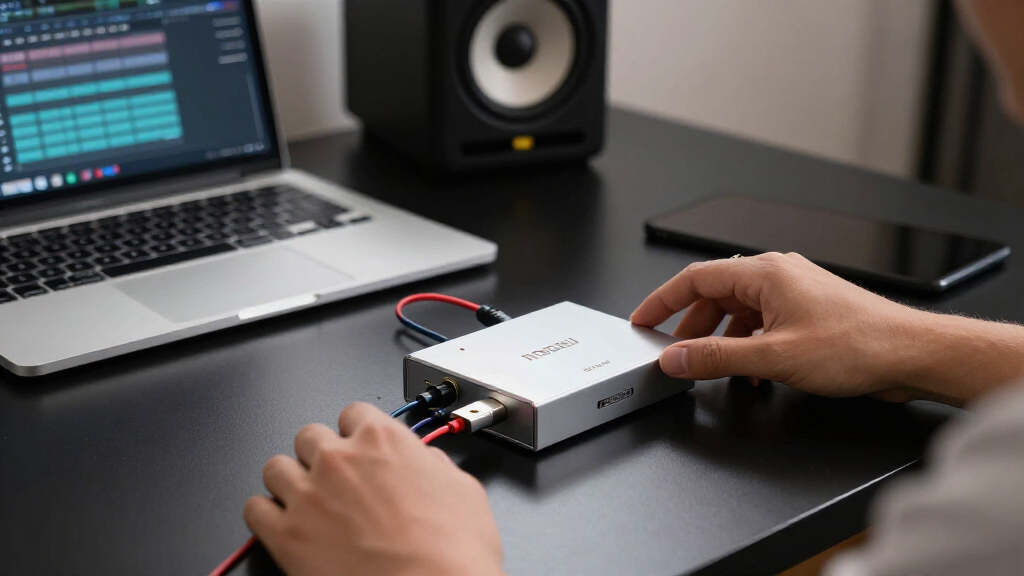

Portable USB audio interfaces are essential tools for musicians, podcasters, streamers, and content creators who need high-quality sound on the go. The Focusrite Scarlett Solo 4th Gen stands out as the best overall choice for its balanced performance and user-friendly design. For those on a budget, the M-Audio M-Track Solo offers solid features at a lower price, while the IK Multimedia iRig USB is ideal for mobile guitarists. These devices often trade off between sound quality, portability, and features like phantom power or multiple inputs. Keep reading to see how these options compare and find the perfect fit for your needs.
Complete the kit


Key Takeaways
- Top picks balance portability with sound quality, with the Focusrite Scarlett Solo 4th Gen leading overall performance.
- Budget options like M-Audio M-Track Solo provide good value but may lack advanced features like multiple inputs or high-resolution recording.
- Mobile-friendly interfaces such as IK iRig excel for guitarists and streamers needing easy connectivity on the go.
- Build quality and ease of use vary significantly; more durable models often come with simplified controls to enhance portability.
- The best device depends heavily on your intended use—whether for casual streaming, professional recording, or live performances.
| Focusrite Scarlett Solo 3rd Gen USB Audio Interface for Guitarists, Vocalists, Podcasters, and Producers |  | Best Overall | Number of Inputs: 2 | Mic Preamp: 1 XLR | Instrument Input: 1 Hi-Z | VIEW LATEST PRICE | See Our Full Breakdown |
| M-AUDIO M-Track Duo USB Audio Interface |  | Best Value Pick | Inputs: 2 combo XLR/Line/Instrument | Phantom Power: Yes | Audio Resolution: 48kHz | VIEW LATEST PRICE | See Our Full Breakdown |
| Focusrite Scarlett Solo 4th Gen USB Audio Interface |  | Best for High-Quality Solo Recording | Number of Inputs: 2 (1 XLR, 1 Hi-Z) | Bit Depth: 24-Bit | Sample Rate: 192kHz | VIEW LATEST PRICE | See Our Full Breakdown |
| USB C Audio Interface for Recording Music, Streaming, Podcasting with XLR, Line Input, 24bit/48kHz, 48V Phantom Power, 2-channel, Silver |  | Best Compact Multi-Function | Sampling Rate: 24bit/48kHz | Power: 48V Phantom Power | Channels: 2-channel | VIEW LATEST PRICE | See Our Full Breakdown |
| Guitar Audio Interface Pocket Internal Recording Sound Card with Bluetooth, Compatible with iPhone, Mac, Laptop, Android |  | Best for Mobile Live Streaming | Latency: Less than 5ms | Sound Quality: 24-bit/48kHz | Bluetooth: Built-in | VIEW LATEST PRICE | See Our Full Breakdown |
| M-Audio M-Track Solo USB Audio Interface |  | Best Overall for Basic Recording and Streaming | Inputs: XLR, Line, DI | Outputs: Stereo RCA, 1/8″ headphone | Sample Rate: 48kHz | VIEW LATEST PRICE | See Our Full Breakdown |
| MAONO P2 Hybrid USB Audio Interface Dual XLR for PC, Phone, iPad, Guitar |  | Best for Flexible Device Compatibility and Mobile Use | Gain: 56dB | Connectivity: Dual USB-C, MFi-certified | Sample Rate: 24-bit/192kHz | VIEW LATEST PRICE | See Our Full Breakdown |
| Guitar Audio Interface Pocket Internal Recording Sound Card with Type-C & Lightning for Live Streaming |  | Best for Smartphone and Tablet Live Streaming | Sound Quality: 24bit/48KHz | Compatibility: Type-C USB for Android and laptops, Lightning for iOS | Input/Output: 1/4″ guitar/bass, 3.5mm headphone | VIEW LATEST PRICE | See Our Full Breakdown |
| MAONO PS22 Lite USB Audio Interface for PC, Guitar & Vocals Streaming |  | Best for High-Resolution Streaming and Basic Recording | Resolution: 24-bit/192kHz | Dynamic Range: 106dB | Preamp Gain: up to 56dB | VIEW LATEST PRICE | See Our Full Breakdown |
| Ueteto Audio Interface for Guitar – Portable Internal Recording Sound Card for Live Streaming |  | Best for Guitarists Seeking Easy Mobile Recording | Compatibility: iPhone, iPad, Android with USB-C and Lightning | Power: No charging required | Recording: High-quality audio | VIEW LATEST PRICE | See Our Full Breakdown |
| XTUGA USB Audio Interface for PC, 2-Channel Recording Studio Sound Card with XLR and 3.5mm Microphone Jack, Ultra-low Latency, Plug & Play |  | Best Budget-Friendly for Beginners | Resolution: 16-Bit/48kHz | Inputs: XLR and 3.5mm microphone jack | Phantom Power: 48V | VIEW LATEST PRICE | See Our Full Breakdown |
| IK Multimedia iRig USB Guitar Audio Interface |  | Best for Portable Guitar Practice and Recording | Resolution: 24-bit/48kHz | Compatibility: Mac, PC, iPad, iPhone 15 | Connectivity: USB-C | VIEW LATEST PRICE | See Our Full Breakdown |
| Shure MVX2U Gen 2 XLR-to-USB-C Audio Interface |  | Best for Professional Podcasters and Streamers | Connectivity: XLR to USB-C | Power: 48V phantom power | Gain: +60 dB | VIEW LATEST PRICE | See Our Full Breakdown |
| portable USB audio interface | Compatibility |
|---|---|
| Focusrite Scarlett Solo 3rd Ge | macOS, Windows, iPadOS |
| M-AUDIO M-Track Duo USB Audio | — |
| Focusrite Scarlett Solo 4th Ge | PC, Mac, iPad |
| USB C Audio Interface for Reco | — |
| Guitar Audio Interface Pocket | iPhone, Android, Mac, Laptop |
| M-Audio M-Track Solo USB Audio | — |
| MAONO P2 Hybrid USB Audio Inte | — |
| Guitar Audio Interface Pocket | Type-C USB for Android and laptops, Lightning for iOS |
| MAONO PS22 Lite USB Audio Inte | Mac, Windows, iPad |
| Ueteto Audio Interface for Gui | iPhone, iPad, Android with USB-C and Lightning |
| XTUGA USB Audio Interface for | — |
| IK Multimedia iRig USB Guitar | Mac, PC, iPad, iPhone 15 |
| Shure MVX2U Gen 2 XLR-to-USB-C | Desktop, tablet, smartphone |
More Details on Our Top Picks
Focusrite Scarlett Solo 3rd Gen USB Audio Interface for Guitarists, Vocalists, Podcasters, and Producers
The Focusrite Scarlett Solo 3rd Gen earns its top spot by combining high-quality pre-amps with user-friendly features, making it ideal for solo musicians and podcasters seeking studio-grade sound. Compared to the 4th Gen version, it offers slightly fewer connectivity options but remains highly reliable and affordable. The Air mode adds clarity to vocals and guitars, which is a big advantage for those prioritizing tone richness. Its compact size and included software suite make it a versatile choice for home studios and mobile setups. However, its limited inputs might restrict larger recording projects, and it relies on compatible software for full functionality. This interface suits solo artists and content creators who want professional sound without complexity.
Pros:- High-quality mic pre-amps with Air mode for added clarity
- High-resolution recording at 24-bit/192kHz
- Includes professional recording software and tools
- Compact and versatile for various recording setups
Cons:- Limited to two inputs, restricting multi-mic recordings
- Requires compatible software and hardware for full features
Best for: Solo musicians, podcasters, and home studio producers seeking high-quality, portable recording.
Not ideal for: Larger bands or multi-mic recording setups that require more inputs and outputs.
- Number of Inputs:2
- Mic Preamp:1 XLR
- Instrument Input:1 Hi-Z
- Sample Rate:192kHz
- Bit Depth:24-bit
- Compatibility:macOS, Windows, iPadOS
Our verdict“This is a strong choice for solo artists and podcasters prioritizing professional sound in a compact form.”
M-AUDIO M-Track Duo USB Audio Interface
The M-AUDIO M-Track Duo stands out for offering versatile inputs and decent audio resolution at an accessible price point. Unlike the Focusrite options, it provides dual combo inputs with phantom power, making it suitable for both microphones and instruments, which broadens its use case. Its 48kHz resolution is adequate for streaming and casual recording but falls short of the higher fidelity offered by Focusrite models. Its inclusion of MPC Beats software and zero-latency monitoring makes it appealing for beginners and hobbyists. The main tradeoff is its limited resolution and basic feature set, which might not satisfy those aiming for professional-grade audio. This model makes sense for entry-level users or those on a tight budget wanting reliable recording capabilities.
Pros:- Versatile combo XLR/Line/Instrument inputs with phantom power
- Crystal-clear preamps for good sound quality
- Zero-latency monitoring with USB/Direct switch
- Includes basic production software
Cons:- Limited to 48kHz audio resolution, less suitable for high-fidelity projects
- No additional input/output options for expansion
Best for: Beginner musicians, streamers, and podcasters who need versatile inputs at a budget-friendly price.
Not ideal for: Producers requiring high-resolution audio or multiple inputs for complex setups.
- Inputs:2 combo XLR/Line/Instrument
- Phantom Power:Yes
- Audio Resolution:48kHz
- Outputs:1/4″ headphone and stereo 1/4″ outputs
- Included Software:MPC Beats
Our verdict“Best suited for beginners and budget-conscious users looking for reliable, versatile audio input options.”
Focusrite Scarlett Solo 4th Gen USB Audio Interface
The Focusrite Scarlett Solo 4th Gen advances the company’s reputation for superior sound with a 120dB dynamic range, making it ideal for soloists and producers seeking detailed, professional results. Compared to the 3rd Gen, it offers improved circuitry and a more refined design, with enhanced Air mode for richer vocals and guitar tones. Its comprehensive software bundle adds value for those starting out or upgrading. Its main limitation remains its two-input setup, which may not suit multi-mic or band recordings. Nonetheless, its focus on high dynamic range and clarity makes it a top choice for serious solo performers. This interface is best for solo artists and producers who prioritize ultimate fidelity in a portable form.
Pros:- Exceptional dynamic range of 120dB for clear recordings
- Includes industry-standard software and plugins
- Enhanced Air mode for more expressive tones
- Compact, portable design
Cons:- Limited to two inputs, not ideal for multi-mic recordings
- Requires compatible software for full features
Best for: Solo musicians, vocalists, and producers focused on high-fidelity recordings and mobile studio setups.
Not ideal for: Multitrack recording projects requiring more inputs or larger interface setups.
- Number of Inputs:2 (1 XLR, 1 Hi-Z)
- Bit Depth:24-Bit
- Sample Rate:192kHz
- Dynamic Range:120dB
- Compatibility:PC, Mac, iPad
Our verdict“This is perfect for solo artists and producers seeking professional-grade sound in a compact, portable device.”
USB C Audio Interface for Recording Music, Streaming, Podcasting with XLR, Line Input, 24bit/48kHz, 48V Phantom Power, 2-channel, Silver
The Synido 2×2 USB C Audio Interface offers a well-rounded, portable solution for content creators on the go, with 24-bit/48kHz sound quality. Its standout feature is the inclusion of three monitoring modes, which help tailor audio for different scenarios like streaming or live recording. While it doesn’t match the high resolution of Focusrite’s offerings, its compact size and multiple input options make it a flexible choice. The need for third-party drivers could be a hurdle for some, and its 2-channel limit may restrict more complex recording setups. Still, its versatility and user-friendly design make it a worthwhile pick for mobile creators. This interface is ideal for streamers, podcasters, and mobile musicians who need adaptable features in a lightweight package.
Pros:- Low-latency sound with 24-bit/48kHz quality
- Multiple monitoring modes for different recording scenarios
- Compact, lightweight, easy to carry
- Supports professional microphone input with phantom power
Cons:- Limited to 2 channels, not suitable for multi-mic setups
- Requires third-party drivers for full DAW compatibility
Best for: Streamers, mobile podcasters, and remote content creators needing flexible monitoring modes and portable design.
Not ideal for: Studio engineers or multi-mic recording projects needing more inputs or higher resolution.
- Sampling Rate:24bit/48kHz
- Power:48V Phantom Power
- Channels:2-channel
- Input Types:XLR, Line, Instrument
- Dimensions:14 x 11.5 x 4.5 cm
Our verdict“This interface fits mobile creators and streamers who need flexible features in a highly portable form.”
Guitar Audio Interface Pocket Internal Recording Sound Card with Bluetooth, Compatible with iPhone, Mac, Laptop, Android
The Guitar Audio Interface Pocket emphasizes ultra-low latency and seamless mobile connectivity, making it ideal for live musicians and streamers. Its Bluetooth sync feature allows internal audio capture directly from devices, which is a distinct advantage over typical USB interfaces. While it delivers professional 24-bit/48kHz sound, it’s limited to this resolution, which might not satisfy high-end recording needs. Its small size and included accessories make it a convenient option for mobile use, but its reliance on compatible devices and Bluetooth pairing can introduce some setup complexity. This device is best for mobile performers and live streamers who need rapid, real-time audio without sacrificing quality.
Pros:- Ultra-low latency less than 5ms for real-time recording
- High-quality 24-bit/48kHz sound output
- Bluetooth sync for easy internal audio capture
- Lightweight, with a back clip for portability
Cons:- Limited to 24-bit/48kHz resolution, not suitable for high-res projects
- Dependent on compatible devices and Bluetooth pairing for full functionality
Best for: Mobile musicians, live streamers, and content creators prioritizing ultra-low latency and portability.
Not ideal for: Studio professionals or multi-mic recording setups requiring higher resolution or multiple channels.
- Latency:Less than 5ms
- Sound Quality:24-bit/48kHz
- Bluetooth:Built-in
- Compatibility:iPhone, Android, Mac, Laptop
- Includes:USB-C cable, Lightning to USB-C adapter
Our verdict“This is suited for mobile performers and streamers needing rapid, low-latency audio in a compact form.”
M-Audio M-Track Solo USB Audio Interface
The M-Audio M-Track Solo stands out for its simplicity and solid audio resolution, making it a reliable choice for entry-level musicians and podcasters. Compared with the Maono PS22 Lite, it offers more versatile inputs, including XLR and line options, which are essential for connecting microphones and instruments. Its 48kHz audio quality strikes a good balance between affordability and sound clarity, but it’s limited to just two inputs, which might restrict more complex recording setups. The inclusion of zero latency monitoring enhances workflow without extra gear, and the bundled MPC Beats software provides immediate access to production tools. However, its basic features mean it lacks some advanced controls found in higher-end devices, and it may fall short for users needing multi-mic configurations.
Pros:- Versatile input options for microphones and instruments
- High-quality 48kHz audio resolution
- Zero latency monitoring with USB/Direct switch
- Includes professional production software
Cons:- Limited to 2 inputs, restricting multi-mic recordings
- Basic feature set compared to more advanced interfaces
Best for: Beginners and content creators who need a straightforward, reliable interface for solo recording or streaming.
Not ideal for: Producers or musicians requiring multi-mic setups or extensive input options, as it only provides two inputs and basic features.
- Inputs:XLR, Line, DI
- Outputs:Stereo RCA, 1/8″ headphone
- Sample Rate:48kHz
- Phantom Power:Yes
- Software Included:MPC Beats
Our verdict“This interface makes the most sense for beginners or solo streamers seeking straightforward, reliable audio quality.”
MAONO P2 Hybrid USB Audio Interface Dual XLR for PC, Phone, iPad, Guitar
The MAONO P2 excels in supporting multiple devices—PC, phone, and iPad—with dual XLR inputs, making it ideal for creators who work across different platforms. Unlike the M-Audio M-Track Solo, which is more fixed in setup, the P2 offers hybrid connectivity via USB-C and MFi certification for Apple devices, adding to its versatility. Its low latency and studio-grade 24-bit/192kHz audio ensure high fidelity, suitable for professional streaming or recording. The aluminum build provides durability for mobile use, while the included software adds effects and routing options. However, its need for some setup for advanced routing and lack of multiple XLR inputs limit its use in large-mic setups, and its software might overwhelm beginners.
Pros:- Supports simultaneous connection to PC, phone, and iPad
- High-quality audio with low latency and studio-grade features
- Compact and durable aluminum design
- Includes software for effects, noise reduction, and routing
Cons:- Requires additional setup for advanced routing
- Limited to two XLR inputs, not suitable for multi-mic recordings
- Software might be complex for new users
Best for: Content creators and mobile musicians who need a portable, all-in-one interface compatible with multiple devices.
Not ideal for: Users with complex multi-mic recording needs or those seeking plug-and-play simplicity without software configuration.
- Gain:56dB
- Connectivity:Dual USB-C, MFi-certified
- Sample Rate:24-bit/192kHz
- Inputs:Dual XLR
- Loopback:Yes
- Build Material:Aluminum-alloy
Our verdict“This pick is perfect for creators needing flexible device compatibility and portable, studio-quality sound.”
Guitar Audio Interface Pocket Internal Recording Sound Card with Type-C & Lightning for Live Streaming
The Guitar Audio Interface Pocket is designed for guitarists and live streamers who need a compact solution for high-quality recording on the go. Compared with the Ueteto Audio Interface, this device emphasizes ease of use with a simple 24bit/48KHz recording quality, sufficient for streaming and basic recording. Its pocket-sized design makes it ideal for mobile musicians, with a straightforward setup via Type-C or Lightning adapters. While it’s highly portable, it’s limited to recording only — no editing or mixing capabilities—which might be a drawback for users seeking more comprehensive functionality. Compatibility depends heavily on the apps used, and some devices may encounter issues, limiting its universal use.
Pros:- High sound quality for live streaming and recording
- Compact and pocket-sized for portability
- Plug & play with no driver installation needed
- Compatible with a wide range of mobile devices
Cons:- Limited to recording functions, no editing or mixing
- Potential compatibility issues with some devices
- Requires compatible apps for streaming
Best for: Guitarists and mobile streamers who want an ultra-portable interface for quick, high-quality recordings directly into smartphones or tablets.
Not ideal for: Users needing multi-track editing or complex production workflows, as it focuses solely on straightforward recording.
- Sound Quality:24bit/48KHz
- Compatibility:Type-C USB for Android and laptops, Lightning for iOS
- Input/Output:1/4″ guitar/bass, 3.5mm headphone
- Features:Low latency, plug & play, volume control
- Design:Back clip, pocket-sized
Our verdict“This device is ideal for guitarists and streamers seeking a portable, simple recording solution for smartphones and tablets.”
MAONO PS22 Lite USB Audio Interface for PC, Guitar & Vocals Streaming
The MAONO PS22 Lite offers high-resolution 24-bit/192kHz audio, making it suitable for musicians and streamers who prioritize quality. Its compact design and simple setup resemble the M-Audio M-Track Solo, but with a focus on higher fidelity and more software compatibility, supporting popular DAWs like Pro Tools and Ableton. While it provides solid preamps and phantom power for microphones, its feature set remains basic, lacking advanced routing or effects. This makes it a good choice for users who want high-quality audio without complex features, though it may not satisfy those needing extensive customization or multi-mic configurations.
Pros:- High-resolution audio at 24-bit/192kHz
- Compact, lightweight, and easy to set up
- Supports microphones and instruments with phantom power
- Includes routing software compatible with major DAWs
Cons:- Limited to basic features without advanced controls
- Requires software drivers for optimal performance
- No built-in effects or processing
Best for: Intermediate musicians and streamers seeking high-res audio quality in a compact, easy-to-use interface.
Not ideal for: Producers or multi-mic setups requiring extensive inputs and advanced routing features, as it is designed for simpler use.
- Resolution:24-bit/192kHz
- Dynamic Range:106dB
- Preamp Gain:up to 56dB
- Phantom Power:48V
- Compatibility:Mac, Windows, iPad
- Inputs:XLR, instrument
Our verdict“Ideal for users who need high-quality, straightforward recording and streaming on a budget without complex routing.”
Ueteto Audio Interface for Guitar – Portable Internal Recording Sound Card for Live Streaming
The Ueteto Audio Interface is tailored for guitarists wanting quick, high-quality recordings directly into mobile devices. Its plug-and-play nature with no drivers required makes it accessible for beginners, and the headphone monitoring adds convenience for live play and streaming. Compared with the Guitar Audio Interface Pocket, it emphasizes internal recording quality and device compatibility, though it offers fewer features beyond basic recording and monitoring. Its simple indicator light helps prevent overloads, but it lacks the more advanced features like multiple inputs or editing capabilities, making it suitable primarily for straightforward, on-the-move guitar recording and streaming.
Pros:- Portable, compact design for easy carrying
- Plug and play with no driver installation
- Supports high-quality audio recording
- Headphone monitoring for live play
Cons:- Limited to recording without editing or mixing
- Device compatibility depends on apps and OTG setup
- No advanced features or multi-track support
Best for: Guitarists and mobile streamers needing an easy, portable recording device compatible with smartphones and tablets.
Not ideal for: Users who want multi-track editing or complex live mixing, as it only supports basic recording and monitoring functions.
- Compatibility:iPhone, iPad, Android with USB-C and Lightning
- Power:No charging required
- Recording:High-quality audio
- Monitoring:Headphone jack
- Indicator:Green to red overload light
Our verdict“This device suits guitarists and mobile streamers looking for a simple, portable recording solution for smartphones and tablets.”
XTUGA USB Audio Interface for PC, 2-Channel Recording Studio Sound Card with XLR and 3.5mm Microphone Jack, Ultra-low Latency, Plug & Play
This interface stands out for its simplicity and affordability, making it an excellent choice for newcomers who want decent audio quality without complex setup. Compared to the Focusrite Scarlett Solo 3rd Gen, it offers similar 16-Bit/48kHz resolution but with fewer features, which might limit room for future upgrades. Its dual inputs, including XLR and 3.5mm jack, cover basic recording needs, and the plug-and-play setup simplifies use for those just starting out. However, its limited to 2 channels and lacks advanced controls or external power options, restricting its flexibility for more complex recordings. The durable build adds confidence for home studio use, but the basic feature set could frustrate more advanced users. This pick makes the most sense for beginners or casual streamers who prioritize ease and affordability.
Pros:- Affordable price point for entry-level users
- Supports condenser mics with 48V phantom power
- Easy to set up with plug-and-play operation
- Durable build suitable for beginner studios
Cons:- Limited to 2 input channels, not suitable for multi-mic setups
- Basic features lacking for professional use
- No external power supply, which may limit power for some devices
Best for: Beginners setting up their first home studio or podcasting setup
Not ideal for: Professional musicians needing multi-mic recording or advanced studio features
- Resolution:16-Bit/48kHz
- Inputs:XLR and 3.5mm microphone jack
- Phantom Power:48V
- Latency:Zero latency
- Power:USB powered
- Build:Durable
Our verdict“This interface is ideal for novices looking for simple, reliable recording on a tight budget.”
IK Multimedia iRig USB Guitar Audio Interface
This model excels for guitarists seeking high-quality sound in a portable form, offering 24-bit/48kHz resolution that surpasses many similar devices like the M-AUDIO M-Track Duo. Its compatibility with Mac, PC, iPad, and iPhone 15 makes it versatile across devices, and the included software enhances creative possibilities. The direct monitoring and amp out with FX options are perfect for practice and quick recording sessions. However, its focus on guitar input limits its use for multi-instrument setups, and it requires a USB-C connection, which could be a hurdle for users with older devices or Lightning-only ports. Its compact, rugged design makes it easy to carry but may not satisfy those wanting multiple inputs or more studio features. This pick makes the most sense for guitar players who need a portable, high-quality interface for practicing and recording on the go.
Pros:- High-quality 24-bit/48kHz audio for professional sound
- Universal compatibility across devices including iPad and iPhone 15
- Portable, durable design ideal for on-the-go use
- Includes recording software and effects for creative flexibility
Cons:- Limited to guitar input only, not suited for multi-instrument recording
- Requires USB-C connection, incompatible with Lightning cables
- Additional equipment needed for full studio setup
Best for: Guitarists and musicians who need a portable recording solution for practice and quick captures
Not ideal for: Multi-instrument recording studios or users with older Apple devices lacking USB-C
- Resolution:24-bit/48kHz
- Compatibility:Mac, PC, iPad, iPhone 15
- Connectivity:USB-C
- Includes:USB-C cable, recording software, plug-ins
- Features:Headphone output, direct monitoring, amp out with FX
- Build:Portable and durable
Our verdict“This interface is perfect for guitarists who want portable, high-quality recording with device versatility.”
Shure MVX2U Gen 2 XLR-to-USB-C Audio Interface
This interface is tailored for podcasters and streamers who require seamless XLR microphone integration, with advanced digital processing that delivers clear, professional sound. Its auto gain, real-time denoising, and digital pop stopper distinguish it from simpler options like the XTUGA Q-12, offering a more refined audio experience. Its compatibility with MOTIV apps allows for deep customization, appealing to users who want control over their tone. The downside is that it exclusively works with XLR microphones, making it less flexible for those relying on USB mics or other inputs. Its compact size and digital features make it a strong choice for portable professional setups, though it lacks built-in microphones or speakers. This pick makes the most sense for serious podcasters and streamers seeking professional-grade XLR audio processing.
Pros:- High-quality digital audio processing for studio clarity
- Plug-and-play with wide device compatibility including tablets and smartphones
- Customizable tone with onboard DSP and app support
- Auto gain and noise reduction features improve sound quality
Cons:- Limited to XLR microphones, no USB mic compatibility
- No built-in microphone or speakers, requiring external gear
- Requires compatible XLR microphones to function
Best for: Podcasters, streamers, and portable content creators requiring XLR microphone quality
Not ideal for: Users with USB microphones or those looking for an all-in-one recording device with built-in mics
- Connectivity:XLR to USB-C
- Power:48V phantom power
- Gain:+60 dB
- Audio Processing:Auto Level Mode, Real-Time Denoiser, Digital Popper Stopper
- Compatibility:Desktop, tablet, smartphone
- App Support:MOTIV Mix, MOTIV Audio, MOTIV Video
Our verdict“This interface is ideal for professionals who prioritize XLR mic quality and digital processing in a portable format.”
How We Picked
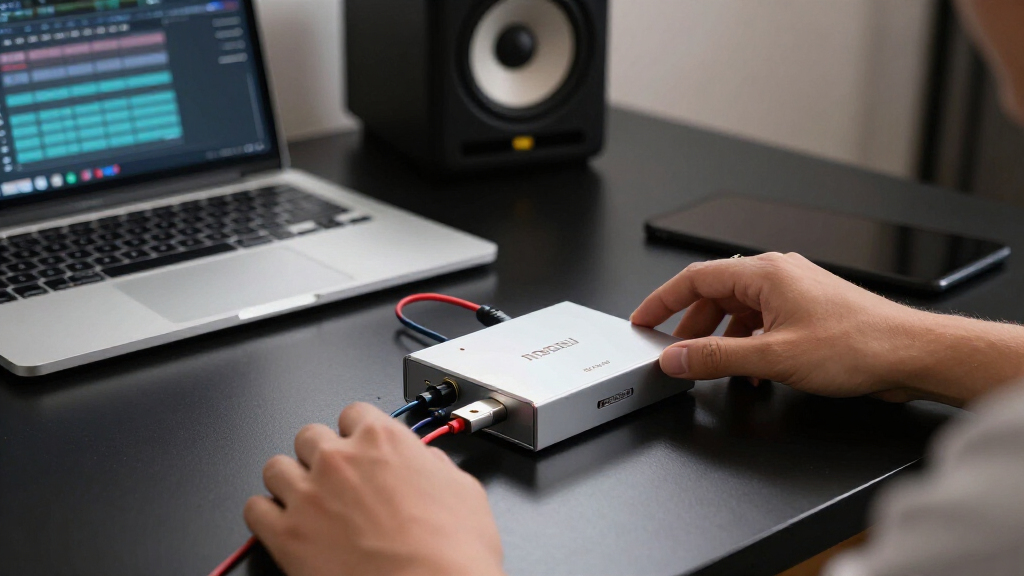
These products were selected based on their performance, usability, build quality, and versatility in portable settings. Priority was given to interfaces that balance size and weight with audio fidelity, making them practical for mobile recording and streaming. We assessed features like input/output options, power options (bus-powered vs. external power), compatibility across devices, and user reviews highlighting long-term reliability. Devices that offered a clear advantage in specific use cases or provided exceptional value also ranked higher. Our goal was to identify options that cater to different budgets and skill levels while maintaining core quality standards.Factors to Consider When Choosing Portable USB Audio Interfaces
Choosing the right portable USB audio interface involves considering several key factors that impact your recording quality and convenience. Beyond basic features, understanding the nuances of connectivity, compatibility, and build quality can save you frustration and money. Here are some critical aspects to think about before making your decision.Connectivity and Compatibility
It’s vital to ensure the interface works seamlessly with your devices, whether that’s a Windows PC, Mac, iPhone, or Android device. Some interfaces use USB-C, while others rely on USB-A or Lightning connectors, affecting compatibility and convenience. Check if the device supports bus power, so you don’t need external power supplies, which enhances portability. Also, verify if it works with your preferred recording or streaming software—plug-and-play ease can save time and reduce setup headaches.
Input and Output Options
Consider what instruments or microphones you’ll be connecting. Interfaces with XLR inputs are essential for professional microphones, while 3.5mm or line-in options suit casual use or multiple sources. If you plan to record multiple sources simultaneously, look for models with more than one input. Keep in mind that more inputs often mean larger size and complexity, so balance your needs with portability goals.
Sound Quality and Resolution
Look for interfaces supporting at least 24-bit/48kHz recording, which provides clear, detailed audio suitable for most professional and hobbyist needs. Cheaper models might compromise on bit depth or sample rate, leading to lower fidelity. High-quality converters and preamps also make a difference, especially if you’re recording vocals or instruments that require transparency. Remember, a more refined audio signal can significantly improve your final output, but it often comes with a higher price.
Size, Weight, and Power
Portability hinges on size and weight—compact devices fit easily into backpacks or pockets. Bus-powered interfaces are preferable for on-the-go use because they eliminate the need for external power supplies, reducing clutter. However, bus power can sometimes limit maximum gain or processing power, so consider your specific needs. Durability is also key; bump-proof construction helps protect your investment during travel.
Additional Features and Future-Proofing
Features like phantom power, MIDI support, direct monitoring, or bundled software can add value, especially if you plan to expand your setup later. Think about whether you’ll need multiple inputs, digital outputs, or compatibility with future devices. While extra features add cost, they can also extend the useful life of your interface and accommodate evolving recording needs.
Frequently Asked Questions
Can I use a portable USB audio interface for live streaming?
Absolutely. Many portable interfaces are designed with streaming in mind, offering direct monitoring and quick setup. Devices like the Focusrite Scarlett Solo 4th Gen provide clean, low-latency audio that’s ideal for live content. However, check if the interface supports your streaming platform and whether it has features like headphone outputs for monitoring. Choosing a model with a simple, reliable connection will ensure smooth, uninterrupted streams.
Do I need external power for a portable USB audio interface?
Most compact interfaces are bus-powered via USB, meaning they draw power directly from your computer or mobile device. This makes them highly portable and convenient for on-the-go use. However, some models with multiple inputs or higher power demands may require an external power supply for optimal operation. Always verify power requirements based on your specific setup and portability needs.
Is higher sample rate always better for portable audio interfaces?
Higher sample rates, like 96kHz or 192kHz, can capture more detail, but the benefits are often subtle and may not be noticeable in casual or streaming applications. They also consume more system resources and storage. For most portable recording and streaming scenarios, 24-bit/48kHz or 96kHz provides excellent quality without sacrificing performance. Decide based on your use case—professional recording might benefit from higher rates, while casual use does not.
Are budget interfaces suitable for professional recordings?
While budget options like the M-Audio M-Track Solo can deliver decent sound quality, they might lack advanced preamps, higher resolution support, or robust build quality found in pricier models. For casual recording, podcasts, or streaming, these can be perfectly adequate. However, if you aim for professional-grade recordings, investing in a higher-end model with better converters and preamps will yield noticeably cleaner results and greater durability.
What should I prioritize if I record multiple instruments or microphones?
In that case, look for an interface with multiple inputs and outputs, ideally with XLR and line-level options. Features like direct monitoring and low latency are also important to keep your recordings synchronized. While larger interfaces with more channels tend to be less portable, some compact models offer dual inputs suitable for small multi-source setups. Balance your need for expanded connectivity with portability to find the right fit.
Conclusion
For casual creators or streamers on the move, the IK Multimedia iRig USB offers excellent portability with sufficient features. Professionals seeking reliable, high-quality recordings should consider the Focusrite Scarlett Solo 4th Gen, which strikes a balance between performance and size. Budget-conscious users will find the M-Audio M-Track Solo a worthwhile choice, while those planning to expand their setup might prioritize models with more inputs and features. Beginners should look for simple, user-friendly interfaces, whereas advanced users might invest in premium models with higher resolution and additional connectivity options. Your ideal pick depends on your specific recording environment, budget, and future goals.