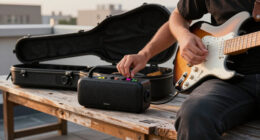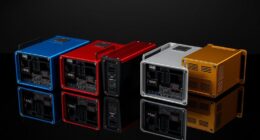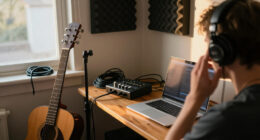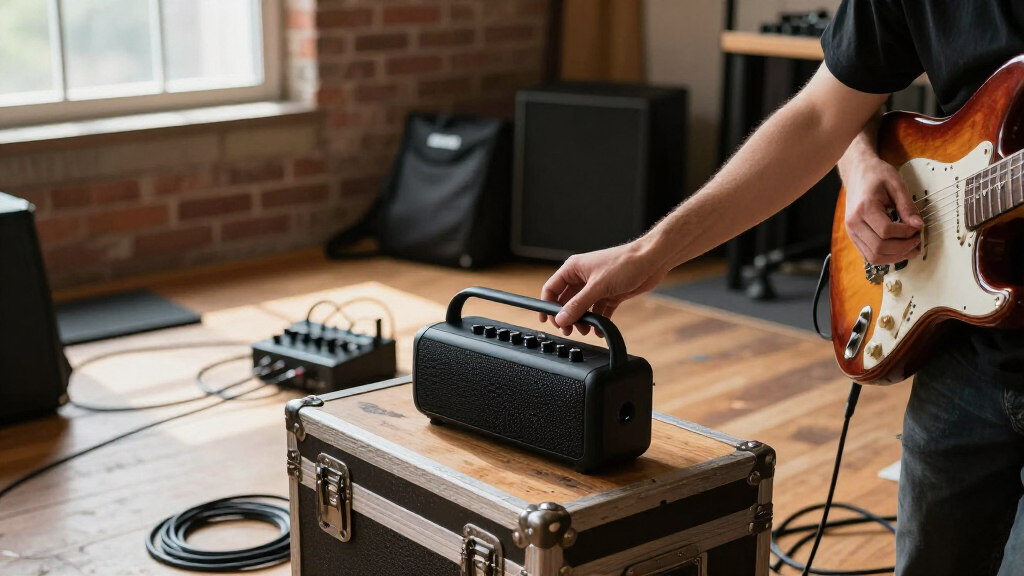
For musicians who need to rehearse, busk, or perform without a fixed sound system, the best overall pick is the JBL EON ONE Compact, thanks to its battery power, Bluetooth, and built-in four-channel mixer. The Bose S1 Pro+ is a strong alternative for performers prioritizing a polished, versatile portable PA, while the Peavey Solo is aimed at buskers who want an amp designed around solo performance. The main tradeoff is between a compact Bluetooth speaker and a performance-ready PA with instrument and microphone inputs: more live control can mean a larger, heavier setup. Battery runtime, audience size, and how many sources you need to connect also change the right choice. Continue reading for the full breakdown and a guide to matching these options to your setup.

Get audio and creator gear delivered free — and shop member deals
- Fast, free delivery on millions of items
- Access to Prime Big Deal Days deals on October 6–7
- Prime Video, Amazon Music and more included
Complete the kit


Key Takeaways
- The JBL EON ONE Compact stands out for source flexibility: its four-channel mixer makes it more useful for musicians connecting multiple instruments or microphones than a basic Bluetooth speaker.
- Battery-powered PA design matters more than Bluetooth alone: the Mackie Thump GO, Bose S1 Pro+, and ALTO Busker are aimed at performance situations where amplification and mobility need to work together.
- Busking-focused options serve different setups: Peavey Solo is geared toward solo performers, while the ALTO Busker offers a broader portable PA approach.
- The two Mackie Thump GO listings are the same speaker model: the extended protection-plan bundle is a coverage choice, not a separate acoustic or performance upgrade.
- The Fender ELIE 6 and ELIE 12 prioritize portable Bluetooth listening: musicians who need live inputs and PA-style control should compare their needs carefully against the mixer-equipped and performance-oriented models.
| Mackie Thump GO 8-Inch Portable Battery-Powered Loudspeaker |  | Best for Flexible Small Performances | Amplifier: Class-D | Woofer: 8-inch custom high-output | Driver: 1-inch compression | VIEW LATEST PRICE | See Our Full Breakdown |
| Mackie Thump GO 8-Inch Portable Battery-Powered Loudspeaker with 1-Year Extended Protection Plan |  | Best for Buyers Who Want Runtime and Coverage Details | Amplifier: 200W Class-D | Woofer and driver: 8-inch woofer and 1-inch compression driver | Battery: Included removable lithium-ion | VIEW LATEST PRICE | See Our Full Breakdown |
| Fender Audio ELIE 12 Portable Bluetooth Speaker |  | Best for Multi-Speaker Setups | Output wattage: 120 watts | Speaker size: 12 inches | Input channels: 4 | VIEW LATEST PRICE | See Our Full Breakdown |
| Peavey Solo Battery-Powered Portable PA and Busking Amp |  | Best for Buskers | Power output: 90 watts | Battery life: Up to 10 hours | Channels: 4 | VIEW LATEST PRICE | See Our Full Breakdown |
| JBL EON ONE Compact Portable Battery-Powered PA Speaker with Bluetooth and 4-Channel Mixer |  | Best for a Full Small-Gig Mix | Output: 114 dB | Woofer: 8-inch paper cone | Tweeter: 1-inch polymer diaphragm compression driver | VIEW LATEST PRICE | See Our Full Breakdown |
| Pyle PSBT125A Portable Bluetooth PA Speaker with Wireless Microphone |  | Best for Karaoke and Mic-First Practice | Power output: 1200 watts | Speaker configuration: 12-inch subwoofer and 3-inch tweeter | Bluetooth: Version 4.2; range up to 33 feet | VIEW LATEST PRICE | See Our Full Breakdown |
| JBL IRX108BT Powered PA Speaker, Portable Bluetooth Loudspeaker with 8″ Woofer, 1300W |  | Best for Feedback-Prone Small Gigs | Power output: 1300 watts | Woofer: 8 inches | Inputs: Two mic/line combo inputs | VIEW LATEST PRICE | See Our Full Breakdown |
| Bose S1 Pro+ Portable Wireless PA Speaker |  | Best Premium Compact PA | Channels: 3 | Output power: 150 watts | Battery life: Up to 11 hours | VIEW LATEST PRICE | See Our Full Breakdown |
| Fender Audio ELIE 6 Portable Bluetooth Speaker |  | Best for Multi-Speaker Listening | Output power: 60 watts | Drivers: Subwoofer, full-range driver, and tweeter | Audio channels: 4 | VIEW LATEST PRICE | See Our Full Breakdown |
| ALTO Busker 200W Portable PA Speaker System |  | Best for Long Battery-Powered Sets | Output power: 200 watts | Channels: 3 | Drivers: 6.5-inch woofer and 1-inch tweeter | VIEW LATEST PRICE | See Our Full Breakdown |
| portable Bluetooth speakers for musician | Dimensions | Weight | Battery life |
|---|---|---|---|
| Mackie Thump GO 8-Inch Portabl | — | — | — |
| Mackie Thump GO 8-Inch Portabl | 9.1 x 11.2 x 18 inches | 17.6 pounds | Up to 12 hours |
| Fender Audio ELIE 12 Portable | — | — | Up to 15 hours |
| Peavey Solo Battery-Powered Po | 14.5 x 10 x 11.25 inches | 15.4 pounds | Up to 10 hours |
| JBL EON ONE Compact Portable B | — | 17.6 pounds | Up to 12 hours |
| Pyle PSBT125A Portable Bluetoo | 15 × 12 × 23 inches | 8.29 kg | — |
| JBL IRX108BT Powered PA Speake | 10.2 × 12.3 × 19.1 inches | 17.4 pounds | — |
| Bose S1 Pro+ Portable Wireless | 10.98 × 9.37 × 13.07 inches | 14.4 pounds | Up to 11 hours |
| Fender Audio ELIE 6 Portable B | 4.8 × 4.1 × 7.7 inches | — | Listed as up to 18 hours; source information is inconsistent |
| ALTO Busker 200W Portable PA S | 8.62 × 11.77 × 10 inches | 5.4 kg | — |
More Details on Our Top Picks
Mackie Thump GO 8-Inch Portable Battery-Powered Loudspeaker
The Mackie Thump GO suits musicians who want a compact PA-style setup with controls that help manage a live mix. Its two-channel digital mixer, XLR mix output, feedback elimination, and music ducking make it more performance-focused than a Bluetooth speaker built mainly for playback. Four voicing modes, including outdoor mode, let you adapt the sound to different settings without changing speakers. Compared with the JBL EON ONE Compact, this Mackie offers fewer mixer channels, but its feature set still covers a straightforward vocal, instrument, and backing-track setup. The removable battery is useful for power-free gigs, though you will need to manage its charge for longer sessions. The supplied details do not state runtime or weight, which makes planning a full day of carrying and performing less predictable.
Pros:- Battery-powered design supports performances away from outlets
- Two-channel digital mixer and XLR mix output accommodate a simple live setup
- Feedback elimination and music ducking address common performance-mix problems
- Four voicing modes, including outdoor mode, offer useful sound adjustments
Cons:- Battery runtime is not specified in the supplied product details
- Weight is not specified, making portability harder to judge
- Two mixer channels offer less input capacity than the JBL EON ONE Compact’s four-channel mixer
Best for: Solo musicians and small duos who need Bluetooth playback, basic live inputs, and feedback-control tools for performances away from wall power
Not ideal for: Performers who need a confirmed long battery runtime or a stated carry weight before planning extended gigs
- Amplifier:Class-D
- Woofer:8-inch custom high-output
- Driver:1-inch compression
- Power source:Removable lithium-ion battery
- Connectivity:Bluetooth
- Mixer:2-channel digital mixer
- Output:XLR mix output
- Control:Thump GO Connect app
- Features:Music ducking, feedback eliminator, outdoor mode, four voicing modes
Our verdict“Choose the Thump GO for a feature-rich, small-gig PA setup, but pick the JBL EON ONE Compact if you need more mixer channels.”
Mackie Thump GO 8-Inch Portable Battery-Powered Loudspeaker with 1-Year Extended Protection Plan
This Thump GO bundle is a practical pick for musicians who want a portable PA and a clearer picture of its operating limits. The listed up-to-12-hour battery life, 17.6-pound weight, and stated dimensions help with gig planning in a way the standalone Thump GO listing does not. It retains Bluetooth, app control, a two-channel mixer, and an XLR mix output, so a performer can combine a simple live setup with backing tracks. Against the JBL EON ONE Compact, it has fewer mixer channels, but the extended protection plan is an added point of distinction. Neither listing describes this speaker as water resistant, and this bundle’s 10-meter Bluetooth range limits how far a phone or tablet can be from the speaker. The protection plan does not add performance features, so it matters most to buyers who value added coverage.
Pros:- Battery is rated for up to 12 hours of operation
- 17.6-pound weight and listed dimensions help with transport planning
- Two-channel digital mixer includes an XLR mix output
- Bundle includes a one-year extended protection plan
Cons:- Bluetooth range is limited to 10 meters
- Not water resistant
- Two mixer channels provide less input flexibility than the JBL EON ONE Compact
Best for: Gigging solo performers who want a stated battery runtime, defined carry dimensions, and an included one-year extended protection plan
Not ideal for: Musicians who need a four-channel mixer, water resistance, or wireless control from more than 10 meters away
- Amplifier:200W Class-D
- Woofer and driver:8-inch woofer and 1-inch compression driver
- Battery:Included removable lithium-ion
- Battery life:Up to 12 hours
- Mixer:2-channel digital mixer with XLR mix output
- Bluetooth range:10 meters
- Dimensions:9.1 x 11.2 x 18 inches
- Weight:17.6 pounds
- Bundle:One-year extended protection plan
Our verdict“Pick this bundle if the stated runtime and added protection plan matter more than extra mixer channels or outdoor weather resistance.”
Fender Audio ELIE 12 Portable Bluetooth Speaker
The Fender Audio ELIE 12 stands apart for musicians who may want to link speakers across a larger performance or event. Its Multi mode supports up to 100 speakers, while Single and Stereo modes cover simpler setups. Four-channel connectivity includes Bluetooth and an XLR-1/4-inch combo input, giving it more routing flexibility than the two-channel Mackie Thump GO. The listed up-to-15-hour battery life and USB-C reverse charging can also help keep a phone powered during a long session. This is not a direct substitute for a conventional guitar amp: the product data recommends a preamp or amp modeler for electric guitar and bass. Its listed dimensions are unusually compact for a 12-inch speaker, so I would verify the physical format before choosing it for a particular carrying or mounting setup.
Pros:- Four-channel connectivity includes Bluetooth and an XLR-1/4-inch combo input
- Multi mode can connect up to 100 speakers
- Battery life is listed at up to 15 hours
- USB-C reverse charging can supply power to a compatible device
Cons:- Electric guitars and basses need a preamp or amp modeler for best sound
- Listed dimensions are unusual for a 12-inch speaker and may need confirmation
- The multi-speaker feature may offer little value to musicians using a single speaker
Best for: Performers, instructors, and event musicians who want four input channels and the option to link speakers for wider coverage
Not ideal for: Guitarists seeking a plug-in-and-play guitar amp, or buyers who need conventional speaker dimensions clearly confirmed
- Output wattage:120 watts
- Speaker size:12 inches
- Input channels:4
- Connectors:6.35 mm jack and XLR
- Audio modes:Single, Stereo, Multi
- Multi-speaker connection:Up to 100 speakers
- Battery life:Up to 15 hours
- Charging:USB-C reverse charging
- Compatible devices:Electric guitars and basses; preamp or amp modeler recommended for best sound
Our verdict“Choose the ELIE 12 if expandable speaker linking and longer listed battery life matter more than direct guitar-amp use.”
Peavey Solo Battery-Powered Portable PA and Busking Amp
The Peavey Solo is geared toward musicians who want a portable rig for street performance, announcements, or informal sets rather than a speaker centered on linked-system features. Its four channels, guitar and microphone inputs, Bluetooth, reverb, and guitar input selector support a busking setup with several sound sources. At 15.4 pounds, it is lighter than the 17.6-pound JBL EON ONE Compact, though neither is a featherweight option for a long walk between locations. The Solo’s listed up-to-10-hour battery life is shorter than the ELIE 12’s stated maximum, so it better suits shorter outings or performers who can recharge between sets. Its published frequency response is incomplete, limiting how much the spec sheet says about its tonal range.
Pros:- Four channels support multiple performance sources
- Includes guitar and microphone inputs alongside Bluetooth
- Built-in reverb and guitar input selector suit busking use
- Listed weight is lower than the JBL EON ONE Compact’s 17.6 pounds
Cons:- Battery life is listed at up to 10 hours, less than the ELIE 12’s up-to-15-hour figure
- At 15.4 pounds, it may still feel heavy for frequent carrying
- Published frequency-response information is incomplete
Best for: Street performers and mobile musicians who need guitar and microphone inputs, reverb, Bluetooth playback, and several channels in a battery-powered system
Not ideal for: Musicians planning long, power-free sessions who want a longer stated runtime or a complete frequency-response specification
- Power output:90 watts
- Battery life:Up to 10 hours
- Channels:4
- Connectivity:Bluetooth, XLR, 1/4-inch
- Weight:15.4 pounds
- Dimensions:14.5 x 10 x 11.25 inches
- Power source:Battery-powered or wired
- Enclosure material:Metal and plastic
Our verdict“Choose the Solo for a busking-oriented combination of instrument inputs and reverb, but look to the ELIE 12 if longer stated battery life is the priority.”
JBL EON ONE Compact Portable Battery-Powered PA Speaker with Bluetooth and 4-Channel Mixer
The JBL EON ONE Compact makes the strongest case for musicians who need one portable unit to handle several live sources. Its four-channel mixer and built-in audio effects give more room for vocals, instruments, and playback than the two-channel Mackie Thump GO. The replaceable battery is rated for up to 12 hours, while Bluetooth control and speech-activated music ducking help when a performer needs to speak over backing tracks. At 17.6 pounds, it is not especially light; the Peavey Solo weighs less, though it has a shorter stated battery runtime. This JBL is also not water resistant, and its 10-meter Bluetooth range favors nearby device control rather than a phone kept far from the speaker. Pole and tripod mounting options add useful placement flexibility for gigs.
Pros:- Four-channel mixer and built-in audio effects suit a multi-source live setup
- Replaceable battery is rated for up to 12 hours
- Speech-activated music ducking lowers backing tracks when speech is detected
- Supports floor, pole, or tripod mounting
Cons:- At 17.6 pounds, it is heavier than the Peavey Solo
- Not water resistant
- Bluetooth range is limited to 10 meters
Best for: Solo acts and small groups who need four mixer channels, effects, Bluetooth control, and a battery-powered PA for indoor or sheltered performances
Not ideal for: Outdoor performers exposed to rain, or musicians who prioritize a lighter speaker for frequent carrying
- Output:114 dB
- Woofer:8-inch paper cone
- Tweeter:1-inch polymer diaphragm compression driver
- Mixer:4-channel
- Battery life:Up to 12 hours
- Weight:17.6 pounds
- Bluetooth range:10 meters
- Water resistance:Not water resistant
- Mounting:Floor standing, pole mount, or tripod mount
Our verdict“Choose the JBL for a more capable all-in-one small-gig mixer, provided its weight and lack of water resistance fit your performance locations.”
Pyle PSBT125A Portable Bluetooth PA Speaker with Wireless Microphone
The Pyle PSBT125A suits musicians who want a large-format PA setup with a microphone included, rather than a compact speaker for casual listening. Its 12-inch woofer, rechargeable battery, and 1/4-inch mic/guitar input cover basic outdoor practice or small gatherings, while USB and SD playback let you rehearse without a phone. Echo, bass, and treble controls offer simple adjustments, and the wireless microphone adds a vocal option without extra gear. Compared with the Bose S1 Pro+, the Pyle provides more playback options and a larger speaker, but the Bose has a more purpose-built three-channel mixer and a stated runtime of up to 11 hours. The Pyle’s 8.29 kg body is less convenient to carry, and its wireless mic needs separately purchased AA batteries. Its USB/SD limit is also 32 GB.
Pros:- Includes a UHF wireless microphone for vocals without a separate mic cable
- Rechargeable battery supports use away from an outlet
- USB and SD playback can provide backing tracks without a phone
- Echo, bass, and treble controls allow basic sound adjustments
Cons:- At 8.29 kg, it is heavier to transport than the Bose S1 Pro+
- The wireless microphone requires two AA batteries that are not included
- USB and SD card capacity is limited to 32 GB
Best for: Singers, karaoke hosts, and hobby musicians who want a rechargeable PA with a wireless microphone and direct USB or SD playback.
Not ideal for: Musicians who need a lightweight carry, a detailed multi-channel mixer, or clearly specified battery runtime.
- Power output:1200 watts
- Speaker configuration:12-inch subwoofer and 3-inch tweeter
- Bluetooth:Version 4.2; range up to 33 feet
- Playback formats:MP3, WMA, WAV
- Inputs:1/4-inch microphone/guitar, RCA line, 3.5 mm auxiliary
- Battery:Two 3.7 V, 2200 mAh rechargeable Li-ion batteries
- Dimensions:15 × 12 × 23 inches
- Weight:8.29 kg
Our verdict“Choose the Pyle if included wireless vocals and direct media playback matter more than lighter carrying weight or a more developed mixer.”
JBL IRX108BT Powered PA Speaker, Portable Bluetooth Loudspeaker with 8″ Woofer, 1300W
The JBL IRX108BT is a strong fit for musicians who prioritize intelligible sound and quick setup over an onboard battery. Its dbx DriveRack feedback suppression can help tame microphone squeal at higher levels, and one-touch ducking lowers music when someone speaks. Two mic/line combo inputs and an XLR loop-out make it more stage-oriented than the Pyle PSBT125A, whose included wireless microphone and USB/SD playback favor a simpler all-in-one setup. The JBL is also lighter at 17.4 pounds than the Bose S1 Pro+ listed here, though it still requires mains power according to the supplied input-voltage spec. That limits busking away from outlets. It is not water resistant, either, so outdoor performers need to protect it from rain and damp conditions.
Pros:- Automatic feedback suppression helps manage vocal mic squeal
- One-touch ducking can make speech easier to hear over music
- Two mic/line combo inputs and an XLR loop-out support PA connections
- 17.4-pound weight and pole-mount compatibility suit portable event setups
Cons:- The supplied specifications do not list a rechargeable battery, limiting use away from power
- Not water resistant, so wet-weather use requires protection
- Its 8-inch woofer offers less low-frequency surface area than the Pyle PSBT125A’s 12-inch woofer
Best for: Solo performers, instructors, and small-event musicians who use microphones near a PA and can perform close to mains power.
Not ideal for: Buskers who need battery operation, or outdoor musicians who cannot protect their speaker from rain.
- Power output:1300 watts
- Woofer:8 inches
- Inputs:Two mic/line combo inputs
- Loop output:XLR
- Feedback suppression:dbx DriveRack automatic
- Bluetooth:Yes
- Mounting:Floor standing, pole mount, or tripod
- Dimensions:10.2 × 12.3 × 19.1 inches
- Weight:17.4 pounds
Our verdict“Pick the JBL for mic-focused small gigs where feedback control matters and mains power is available.”
Bose S1 Pro+ Portable Wireless PA Speaker
The Bose S1 Pro+ is the most polished compact PA choice here for musicians who need to plug in a mic or instrument, play backing audio, and carry everything themselves. Its three-channel mixer gives separate sources a practical home, while four placement options with Auto EQ adapt the sound for floor, table, or stand use. The stated battery life of up to 11 hours supports unplugged sets, and its 14.4-pound weight is easier to manage than the larger Pyle PSBT125A. The tradeoff is a more restrained feature package for playback: the Pyle lists USB and SD card support and includes a wireless microphone, while the Bose requires separately sold wireless transmitters. The Bose is also a more compact, premium-style PA rather than a large-woofer solution for listeners prioritizing speaker size.
Pros:- Three-channel mixer supports a microphone, instrument, and music source
- Four positioning options with Auto EQ adapt to common performance setups
- Up to 11 hours of stated battery life supports unplugged sets
- 14.4-pound weight and ergonomic handle aid transport
Cons:- Wireless microphone and instrument transmitters are sold separately
- Battery runtime varies with volume, content, and temperature
- Does not list USB or SD card playback like the Pyle PSBT125A
Best for: Gigging solo musicians who want a portable, battery-powered mixer for a microphone, instrument, and Bluetooth backing tracks.
Not ideal for: Buyers who want a microphone or wireless transmitter included, or who need USB/SD playback and a larger woofer.
- Channels:3
- Output power:150 watts
- Battery life:Up to 11 hours
- Connectivity:Bluetooth and auxiliary
- Mounting:Stand, table, or floor; compatible with standard 35 mm mounts
- Dimensions:10.98 × 9.37 × 13.07 inches
- Weight:14.4 pounds
- Enclosure material:Plastic
Our verdict“Choose the Bose for a compact, battery-powered musician’s PA with flexible placement and a built-in three-channel mixer.”
Fender Audio ELIE 6 Portable Bluetooth Speaker
The Fender Audio ELIE 6 stands apart from the PA-style options because its draw is a compact, multi-mode listening setup rather than a conventional large speaker cabinet. It combines a subwoofer, full-range driver, and tweeter with low-latency Bluetooth, wired combo input, and two wireless channels. Stereo and multi-speaker modes—linking up to 100 speakers according to the supplied data—make it the most expandable listening pick in this group. Its listed 18-hour battery life and USB-C reverse charging add practical flexibility for rehearsal breaks or small gatherings. By contrast, the Bose S1 Pro+ has a clearer musician-focused three-channel mixer and stand compatibility; the ELIE 6 is tabletop-mounted and guitar or bass use calls for a preamp or amp modeler for best sound. Battery-life information is inconsistent in the source, so treat the 18-hour figure cautiously.
Pros:- Driver system includes a subwoofer, full-range driver, and tweeter
- Low-latency Bluetooth suits playing along with streamed audio
- Stereo and multi-speaker modes support expandable listening setups
- USB-C reverse charging can power compatible devices
Cons:- Electric guitar and bass need a preamp or amp modeler for best sound
- Tabletop mounting is less suited to projecting sound across a performance space
- Battery life is inconsistent in the supplied product information
Best for: Musicians who want a small tabletop speaker for low-latency playback and the option to link multiple speakers for stereo or shared listening.
Not ideal for: Performers who need a stand-mounted PA, a full mixer, or direct electric-guitar and bass amplification without extra processing.
- Output power:60 watts
- Drivers:Subwoofer, full-range driver, and tweeter
- Audio channels:4
- Inputs:Bluetooth, XLR-1/4-inch combo, and two wireless channels
- Bluetooth audio:Low latency
- Audio resolution:48 kHz/24-bit
- Listening modes:Single, stereo, and multi-mode; links up to 100 speakers
- Battery life:Listed as up to 18 hours; source information is inconsistent
- Dimensions:4.8 × 4.1 × 7.7 inches
Our verdict“Pick the ELIE 6 for compact, expandable playback, but choose a PA such as the Bose S1 Pro+ for a more direct performance-mixer setup.”
ALTO Busker 200W Portable PA Speaker System
The ALTO Busker makes the most sense for musicians who need a battery-powered PA with room for several kinds of input and long stated runtime. Its three-channel mixer, XLR-1/4-inch combo inputs, built-in effects, and XLR line out support a more involved performance setup than the JBL IRX108BT, while Bluetooth 5.3 and app control help manage playback and settings. The claimed runtime reaches up to 20 hours, or 24 hours in Eco Mode, making it better suited to extended busking or events than the Bose S1 Pro+’s stated 11 hours. The tradeoff is a 5.4 kg body and a specification sheet that lists only “20 kHz” for frequency response, leaving the lower limit unclear. It is more of a practical PA than the especially compact tabletop Fender ELIE 6.
Pros:- Three-channel mixer accommodates microphones, instruments, and line-level sources
- Up to 20 hours of runtime, with up to 24 hours in Eco Mode
- Bluetooth 5.3, app control, and speaker linking add playback flexibility
- XLR line out and pole-mount compatibility support PA deployment
Cons:- At 5.4 kg, it is heavier than a small tabletop option such as the Fender ELIE 6
- Listed frequency response gives only an upper figure of 20 kHz
- The supplied specifications do not state charging time
Best for: Buskers and event musicians who need multiple wired sources, effects, and a long-running battery-powered PA.
Not ideal for: Buyers who need a clearly documented frequency range, a very lightweight speaker, or a compact tabletop listening unit.
- Output power:200 watts
- Channels:3
- Drivers:6.5-inch woofer and 1-inch tweeter
- Battery runtime:Up to 20 hours; up to 24 hours in Eco Mode
- Bluetooth:Version 5.3
- Connectivity:3.5 mm AUX, Bluetooth, XLR-1/4-inch combo inputs, USB charging port, XLR line out
- Dimensions:8.62 × 11.77 × 10 inches
- Weight:5.4 kg
- Mounting:Floor standing or pole mountable
Our verdict“Choose the ALTO Busker for long, battery-powered performances that need a mixer and multiple inputs, rather than the smallest possible carry.”

How We Picked
I ranked these speakers around the needs that separate musician-focused options from ordinary portable Bluetooth speakers: practical instrument and microphone connectivity, ability to support a live or rehearsal setup, portability, and usefulness away from mains power. I also considered how clearly each product’s design serves a particular musician, from solo buskers to performers who need a multi-source mixer. Bluetooth is useful for backing tracks and casual playback, but it does not replace suitable live inputs or a PA’s performance features.
The highest-ranked options offer the strongest blend of musician-friendly control, battery-powered mobility, and range of uses. Models aimed at a narrower job rank lower for general-purpose flexibility, even when they may be a better fit for that specific buyer. I treat the Mackie Thump GO with an extended protection plan as the same speaker as the standard listing, since the plan does not change its sound or feature set. The supplied lineup does not establish comparable battery runtimes, weights, or measured output levels, so I avoid ranking on unsupported numerical claims.
| portable Bluetooth speakers for musician | Battery life |
|---|---|
| Mackie Thump GO 8-Inch Portabl | — |
| Mackie Thump GO 8-Inch Portabl | Up to 12 hours |
| Fender Audio ELIE 12 Portable | Up to 15 hours |
| Peavey Solo Battery-Powered Po | Up to 10 hours |
| JBL EON ONE Compact Portable B | Up to 12 hours |
| Pyle PSBT125A Portable Bluetoo | — |
| JBL IRX108BT Powered PA Speake | — |
| Bose S1 Pro+ Portable Wireless | Up to 11 hours |
| Fender Audio ELIE 6 Portable B | Listed as up to 18 hours; source information is inconsistent |
| ALTO Busker 200W Portable PA S | — |
Factors to Consider When Choosing Portable Bluetooth Speakers For Musicians
Before choosing a portable Bluetooth speaker, decide what job it needs to do during a real session. A backing-track speaker, a vocal PA, and an instrument amp may all play music over Bluetooth, but they do not offer the same control or connection options. These checks can help you avoid paying for features your setup will not use—or bringing home a speaker that cannot connect to your main instrument.
Start With Your Signal Chain, Not Bluetooth
Write down every source you expect to connect at once: a microphone, guitar, keyboard, phone, or mixer output. Bluetooth can play backing tracks, but it is not a substitute for a dedicated instrument or microphone input. Check the connection types and channel count against your setup, including whether your instrument needs a preamp or effects before reaching the speaker. A common mistake is choosing by wireless playback alone and discovering that the speaker cannot accept the performance signal directly. If you already own a mixer, a simpler speaker input layout may be enough; if not, built-in mixing can reduce the gear you carry.
Match Battery Power to the Actual Gig
Battery operation is valuable for street sets, outdoor rehearsals, and locations without convenient outlets, but the label alone does not tell you how long a speaker will serve your session. Runtime can vary with output level and how the speaker is used, so check the manufacturer’s stated conditions and plan for a reserve. Think about whether you can recharge between sets or carry a backup power source. For indoor practice near an outlet, a battery-powered model may add convenience without changing the sound you need. For a long outdoor set, power planning should come before extra playback features.
Choose Coverage for the Space
A practice room, a small café, and an open outdoor space place different demands on a speaker. Room size, background noise, audience distance, and whether the sound needs to cover vocals or only provide a monitor mix all affect the useful output you need. Do not assume a wattage figure alone predicts how well a speaker will work for your performance; speaker design and placement also matter. If possible, review manufacturer guidance for the intended use and think about whether you need one speaker or a wider sound system. Buying more output than a small rehearsal requires can add bulk, while under-sizing an outdoor PA can leave vocals hard to hear.
Treat Portability as More Than a Carry Handle
Portable can mean battery powered, easy to lift, quick to set up, or compact enough to fit into a vehicle, and these are not always the same thing. Consider the full load you carry, including stands, cables, microphones, and instrument accessories. A speaker with more controls and inputs can simplify the setup but may take up more space than a playback-focused model. Check the product’s dimensions, weight, carry options, and mounting provisions before committing. For musicians who travel on foot or public transport, the least complicated system may be more useful than one with the longest feature list.
Decide Whether You Need Mixer Controls or an Amp
Built-in mixing is useful when several sources need separate level adjustments, but it may be redundant if you already carry a mixer or rely on a digital rig. An amp-oriented product may suit a solo player who wants a direct instrument-focused setup, while a PA-style speaker better fits shared vocals and multiple sources. Think through who will adjust levels during the performance and whether you need independent control over each input. Avoid choosing a mixer just because it sounds versatile if your set uses one source; extra controls can add setup steps without improving that use. Conversely, a single-input design can become limiting as soon as a second performer joins.
Separate Protection Plans From Product Features
A protection-plan bundle may change the coverage attached to a purchase, but it does not change the speaker’s inputs, battery, or sound capabilities. Compare the underlying model first, then decide whether added coverage fits how often you transport and use the equipment. Read the plan terms for what it covers, how long coverage lasts, and any exclusions before treating it as a practical benefit. In this lineup, the Mackie Thump GO listings represent one speaker model with different coverage packaging, not two performance choices. Keeping that distinction clear prevents a bundle from appearing to offer a separate upgrade.
Frequently Asked Questions
Can I use a portable Bluetooth speaker as my main vocal PA?
Only if the speaker has an appropriate microphone input and enough control for your performance setup. Bluetooth playback by itself does not provide a way to connect and adjust a live microphone. For vocals, check the input types, available channel controls, and the product’s intended PA use before buying. The JBL EON ONE Compact is notable in this lineup for its four-channel mixer, while simpler Bluetooth-focused options may not suit a full vocal setup. Also match the speaker to the room or outdoor space rather than relying on portability as proof that it can cover an audience.
Should I choose a Bluetooth speaker or a battery-powered PA for busking?
For busking, prioritize direct instrument and microphone connections, battery operation, and controls that let you balance sources during a set. Bluetooth is handy for backing tracks, but it is usually a supporting feature rather than the main reason to choose a performance speaker. The Peavey Solo is specifically positioned for busking and solo performance, while options such as the JBL EON ONE Compact offer broader multi-source control. Check local rules for amplified street performance and plan power around your set length. If you only need music playback between performances, a simpler Bluetooth speaker may be easier to carry.
Is a built-in mixer worth choosing if I already own a mixer?
Not automatically. If your existing mixer already handles every instrument and microphone, you may mainly need a speaker that accepts its output and suits your performance space. A built-in mixer can still help as a backup or make a smaller rehearsal setup quicker, but it can duplicate controls you already carry. Compare the number and type of speaker inputs with your mixer’s outputs, and check whether you need independent adjustment at the speaker. Choose the simpler signal chain when it meets your needs; avoid paying for controls that will stay unused.
Are the two Mackie Thump GO listings different speakers?
They refer to the same Mackie Thump GO speaker model; one listing adds a one-year extended protection plan. That plan does not create a different speaker configuration or add performance features. Compare the coverage terms separately from the speaker’s battery-powered PA capabilities, connectivity, and portability. Before selecting the bundle, read the plan details for exclusions and the process for making a claim. If coverage is not useful for your situation, assess the standard speaker on its own merits.
How should I choose between the Fender ELIE 6 or ELIE 12 and a portable PA?
Start by asking whether you need music playback or live amplification for instruments and vocals. The Fender ELIE models are Bluetooth speaker options, while PA-oriented products in this roundup are aimed at performance setups with musician-focused inputs or mixing. Check each ELIE model’s current specifications for the connections and controls your signal chain requires instead of assuming Bluetooth covers live use. If you need to connect several sources or amplify a microphone, compare the JBL EON ONE Compact, Bose S1 Pro+, and other PA options first. If compact playback is the main job, the ELIE models may be a closer match.
Conclusion
For the best overall balance, I’d start with the JBL EON ONE Compact, particularly if you need battery operation and several sources under one control system. For a best value-style pick, compare the Mackie Thump GO as a portable PA option, and treat its protection-plan bundle as a coverage decision rather than a speaker upgrade. The Bose S1 Pro+ is my best premium direction for musicians seeking a flexible portable PA, while the Peavey Solo is the clearest fit for a beginner busker or solo performer looking at a busking-oriented setup. If you need broader battery-powered PA functionality, also compare the ALTO Busker; if your priority is Bluetooth playback rather than live input control, look closely at the Fender ELIE 6 and ELIE 12. Match your choice to your signal chain, audience, and power needs before deciding.
Halloween Picks
halloween
As an affiliate, we earn on qualifying purchases.