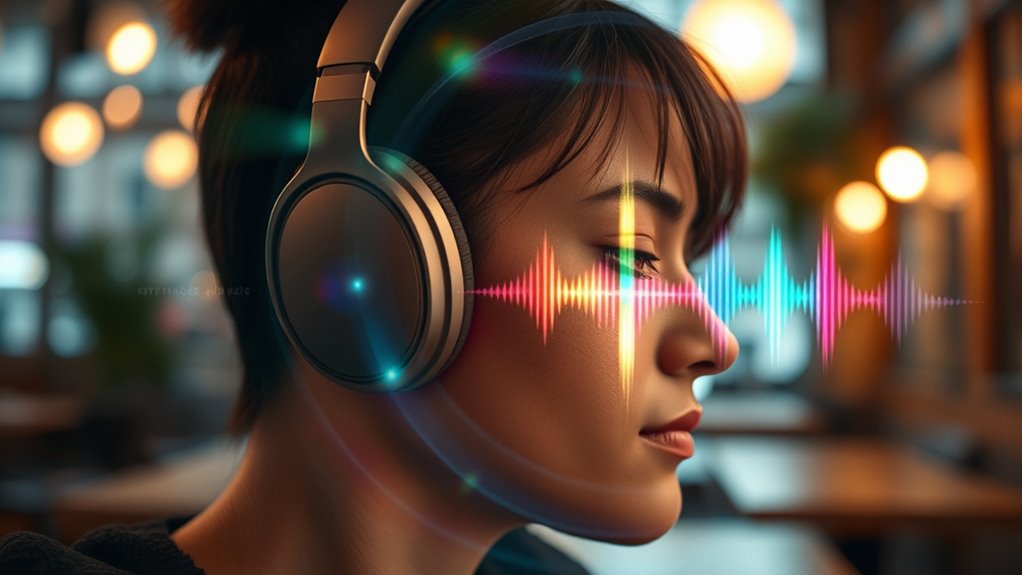

Personalized soundscapes use adaptive audio algorithms to create a tailored listening environment just for you. They analyze your preferences, mood, and surroundings to craft evolving audio experiences, whether you need focused work, relaxation, or energy. These systems respond in real-time, adjusting sounds based on ambient noise and activity, making your audio experience naturally immersive and satisfying. Keep exploring to discover how these innovative sound environments can transform your daily moments.
Key Takeaways
- Personalized soundscapes tailor audio environments based on user preferences, mood, and surroundings for a customized listening experience.
- Ambient algorithms analyze habits, environmental noise, and activity to dynamically adapt sound environments in real-time.
- The system actively responds to environmental cues, amplifying or shifting sounds to enhance relaxation, focus, or energy.
- User preferences, including genres and ambient noises, are incorporated to improve prediction and customization over time.
- Adaptive audio creates immersive, mood-aligned soundscapes that elevate everyday listening into a personalized, engaging journey.
Imagine a world where you can craft your perfect auditory environment, tailored exactly to your mood and surroundings. That’s the power of personalized soundscapes, where technology adapts seamlessly to what you need at any moment. At the heart of this innovation are ambient algorithms, which analyze your listening habits and environment to generate sound environments that feel just right. These algorithms take your user preferences into account, learning over time what kinds of sounds you prefer in different situations—whether it’s calming nature sounds during work or upbeat tunes for a workout. This dynamic adaptation ensures you’re not stuck with a one-size-fits-all playlist but instead experience audio that evolves to match your mood and activities.
Personalized soundscapes adapt to your mood and environment through intelligent ambient algorithms that learn your preferences over time.
When you use personalized soundscapes, you’re engaging with a system that actively listens and responds. Ambient algorithms monitor factors like ambient noise levels, your activity, and even your emotional state, adjusting the soundscape accordingly. If you’re trying to focus in a noisy coffee shop, the system might amplify white noise or gentle instrumental sounds to block out distractions. When you’re relaxing at home, it could shift to soft rain sounds or tranquil melodies based on your preferences. Over time, it learns what kind of sounds help you relax, energize, or concentrate, making the experience uniquely yours. This continuous feedback loop makes the soundscapes feel natural, almost as if they’re an extension of your environment.
Your user preferences play a vital role in shaping these personalized environments. The more you interact with the system, the better it becomes at predicting what will make you feel most comfortable. You might specify your favorite genres, preferred sound intensity, or even the types of ambient noises you find soothing. The system then tailors the soundscapes to match those preferences, guaranteeing a consistent and satisfying listening experience. It’s like having a personal sound designer who understands your tastes and adapts in real-time. This level of customization turns everyday listening into an immersive, mood-enhancing experience that evolves with you.
Ultimately, personalized soundscapes are about giving you control—allowing you to craft an auditory space that reflects your mood, activity, and environment. Thanks to ambient algorithms and an understanding of user preferences, your listening experience becomes more intuitive, engaging, and genuinely personalized. No matter where you are or what you’re doing, you’ll find yourself immersed in sound environments that are perfectly tuned to your needs, making every moment more enjoyable and aligned with your inner state.
Top picks for "personaliz soundscap adaptive"
Open Amazon search results for this keyword.
As an affiliate, we earn on qualifying purchases.
Frequently Asked Questions
How Do Personalized Soundscapes Impact User Concentration and Productivity?
You’ll find that personalized soundscapes boost your focus enhancement by tailoring audio to your preferences, helping you concentrate better. They also reduce distractions, allowing you to stay engaged with your tasks longer. By blocking out background noise and minimizing interruptions, these adaptive audio environments create an ideal setting for increased productivity. Overall, personalized soundscapes help you maintain better concentration and achieve your goals more efficiently.
What Are the Privacy Concerns Associated With Adaptive Audio Technology?
Did you know 81% of users worry about data security when using adaptive audio? Privacy concerns mainly stem from data security issues and the need for explicit user consent. You need to be aware that adaptive audio technology collects personal data to tailor experiences, so ensuring your data is protected and that you give informed consent is vital. Always check privacy policies and security measures before engaging with such personalized sound systems.
Can Personalized Soundscapes Be Integrated With Existing Hearing Aids?
Yes, personalized soundscapes can be integrated with existing hearing aids. Many modern hearing aids feature hearing aid compatibility, allowing them to connect seamlessly with adaptive audio systems. This enables you to enjoy customized soundscape adjustments tailored to your environment. By leveraging soundscape customization, you can enhance your listening experience, making it more natural and comfortable, all while maintaining the convenience of your current hearing aids.
How Do Ambient Environments Influence Adaptive Audio Adjustments?
Ambient environments markedly influence adaptive audio adjustments through environmental cues and contextual awareness. When you’re in a noisy café, the system detects background chatter and adjusts the soundscape to emphasize speech clarity. Conversely, in a quiet park, it lowers ambient noise. Your hearing device constantly monitors these cues, seamlessly tailoring audio to your surroundings, ensuring a comfortable, natural listening experience tailored to each environment.
Are There Health Risks Linked to Prolonged Exposure to Personalized Soundscapes?
Some believe that prolonged exposure to personalized soundscapes could cause ear fatigue or even hearing damage. While current research suggests that listening at safe volumes minimizes risks, extended use might lead to discomfort or temporary hearing issues. To stay safe, keep the volume moderate, take regular breaks, and pay attention to how your ears feel. If you notice discomfort, it’s best to pause and give your ears a rest.
Conclusion
Imagine a world where your audio adapts perfectly to your mood and environment. With personalized soundscapes, that’s becoming a reality. Studies show that 65% of users report increased focus and relaxation with adaptive audio. By customizing your sound environment, you can enhance your daily experience, whether you’re working, unwinding, or commuting. Embrace this innovative technology and transform the way you listen—making every moment truly your own.