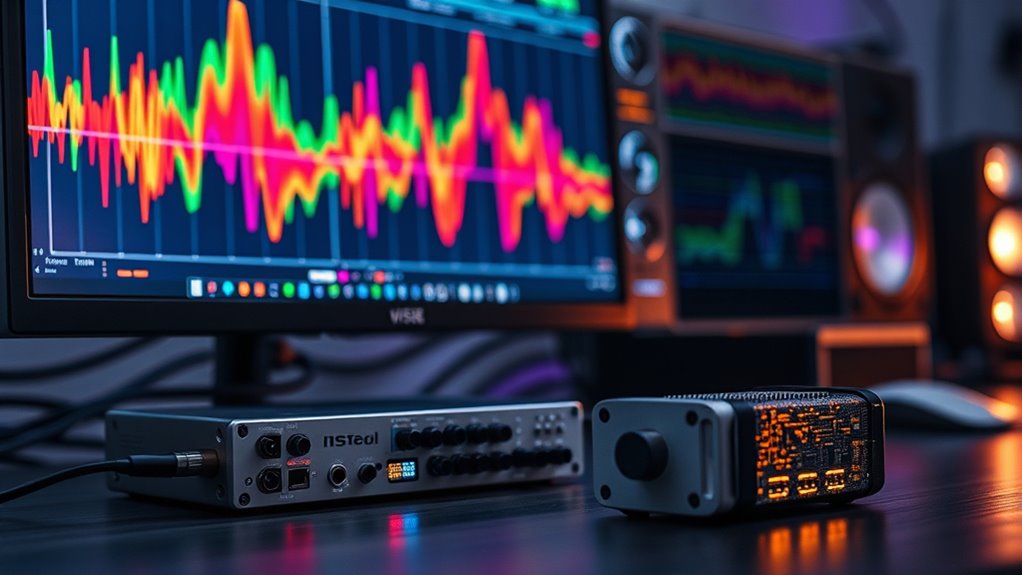
Tools for personalized sound primarily use digital signal processing (DSP) and machine learning to customize your audio experience. DSP adjusts sound parameters like bass, treble, and spatial effects in real time, optimizing clarity and reducing noise based on your environment. Machine learning studies your listening habits to adapt audio output to your preferences and activities. Together, these tools create a highly tailored sound profile that evolves with you. Continue exploring to discover how these technologies can transform your listening experience.
Key Takeaways
- Digital Signal Processing (DSP) tools enable real-time audio adjustments like equalization and spatial effects for personalized sound.
- Machine learning algorithms analyze user listening habits to dynamically adapt audio output to individual preferences.
- Integration of DSP and machine learning allows devices to save and switch between multiple personalized sound profiles seamlessly.
- Advanced audio software combines these tools to optimize sound quality based on environment, mood, and user behavior.
- Future tools leverage AI-driven algorithms for increasingly intuitive, tailored listening experiences beyond traditional audio settings.
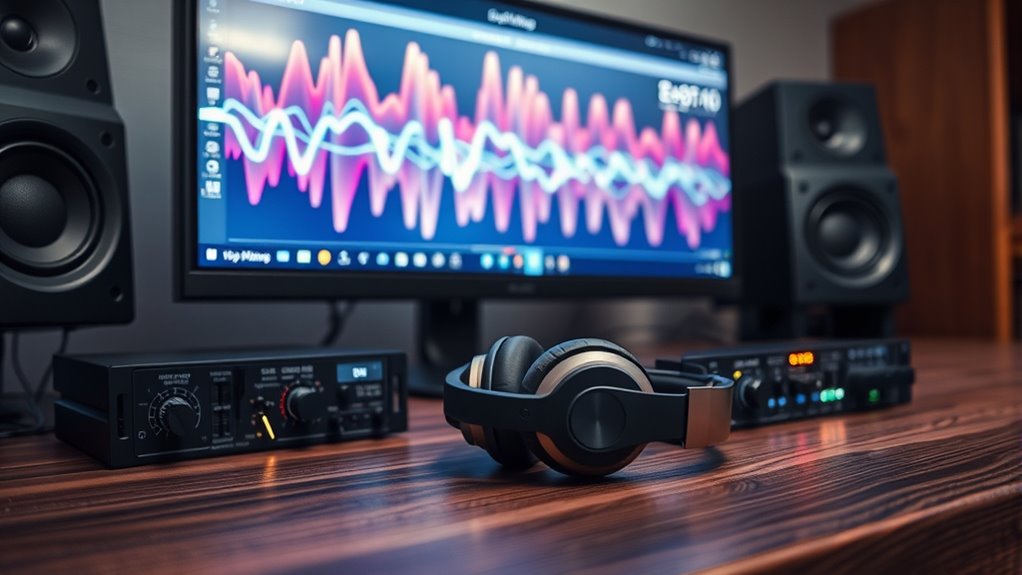
Have you ever wondered how to tailor sound to your unique preferences? With the rapid advancements in audio technology, customizing your listening experience has become more accessible than ever. Tools like digital signal processing (DSP) and machine learning enable you to fine-tune audio based on your individual user preferences, making every song, podcast, or audiobook sound exactly the way you want. Instead of a generic, one-size-fits-all approach, these tools give you the power to craft a personalized sound profile that reflects your taste and listening environment.
Discover how digital signal processing and machine learning personalize your perfect sound experience.
DSP technology plays a vital role in audio customization by allowing precise manipulation of sound signals. It adjusts various audio parameters such as equalization, bass, treble, and spatial effects in real-time. When you use devices equipped with DSP, you can enhance clarity, reduce noise, or boost specific frequencies to suit your hearing preferences. For example, if you prefer deeper bass or crisper vocals, DSP algorithms can automatically optimize the sound output accordingly. This level of control guarantees you get a tailored listening experience, whether you’re in a noisy environment or enjoying music at home.
Machine learning elevates this customization by analyzing your listening patterns and preferences over time. As you use your devices, machine learning algorithms learn your habits, favorite genres, and specific sound preferences. They adapt the audio output dynamically, providing a smarter, more intuitive experience. If you tend to listen to podcasts in the morning, the system might automatically enhance speech clarity and reduce background noise. If you prefer jazz with a warm, rich tone, the system learns to favor those characteristics. Over time, this continuous learning process creates a highly personalized sound profile that feels natural and effortless.
Combining DSP with machine learning results in an intelligent audio environment that responds to your needs. Many modern headphones, smart speakers, and mobile apps integrate these technologies, giving you seamless control over your sound. Instead of manually adjusting settings every time, the system anticipates your preferences and optimizes the audio instantly. You also gain the ability to save multiple profiles for different activities or environments, so switching from a workout playlist to a relaxing audiobook is as simple as a tap.
In essence, these tools empower you to move beyond standard audio experiences. By leveraging user preferences, DSP, and machine learning, you can enjoy a truly customized sound that enhances your enjoyment and comfort. It’s about making technology work for you, delivering audio that perfectly matches your taste, mood, and surroundings. As these technologies continue to evolve, personalized sound will become even smarter, more intuitive, and more tailored to your unique listening journey. Notably, the integration of advanced audio algorithms further enhances the precision and effectiveness of personal sound customization.
Frequently Asked Questions
How Do DSP and Machine Learning Collaborate in Sound Personalization?
You utilize DSP and machine learning together to personalize sound by applying neural filtering, which adapts audio to your preferences, and acoustic modeling that understands your hearing profile. Machine learning analyzes your listening habits, enabling DSP to refine audio output in real-time. This collaboration guarantees the sound is tailored perfectly to your needs, providing a more immersive and comfortable listening experience that adapts dynamically to your environment and preferences.
What Are the Challenges in Developing Personalized Audio Tools?
They say “the devil is in the details,” and developing personalized audio tools is no exception. You face challenges like accurately capturing user preferences and avoiding algorithm biases that skew sound experiences. Balancing technical complexity with user needs is tough, and ensuring privacy adds another layer. You must continuously refine algorithms to respect individual tastes while preventing biases from compromising the authenticity of personalized sound.
Can These Tools Adapt to Real-Time Environmental Changes?
Yes, these tools can adapt to real-time environmental changes using adaptive algorithms that monitor your surroundings continuously. They analyze user preferences and environmental data simultaneously, adjusting sound profiles on the fly to optimize your listening experience. By leveraging machine learning, the system learns from your interactions and environmental shifts, ensuring personalized audio remains clear and tailored regardless of changing noise levels or settings.
How Accessible Are Personalized Sound Tools for Consumers?
Think of personalized sound tools as the keys to your unique auditory world. They’re increasingly accessible, with intuitive user interfaces that make setup and adjustments simple. As more people embrace these innovations, user adoption grows, turning complex technology into a natural part of daily life. You can now customize your listening experience effortlessly, feeling more connected to your environment and music, transforming how you experience sound every day.
What Future Advancements Are Expected in Sound Personalization Technology?
In the future, expect sound personalization to become even more precise through advancements like auditory illusions and psychoacoustic modeling. You’ll experience tailored soundscapes that adapt to your hearing preferences and environment in real-time. These innovations will leverage improved algorithms and hardware, making personalized audio more immersive and accessible. As a result, you’ll enjoy richer, more accurate sound experiences that feel uniquely yours, transforming how you perceive and interact with audio content daily.
Conclusion
As you explore tools like DSP and machine learning for personalized sound, it’s tempting to think they’ll instantly perfect your listening experience. But remember, personalization isn’t just tech—it’s about understanding your unique preferences. Some believe these tools can fully replace traditional hearing means, yet the truth is a blend of both often works best. Keep experimenting, stay curious, and trust that combining science with your personal touch creates the most satisfying sound experience.