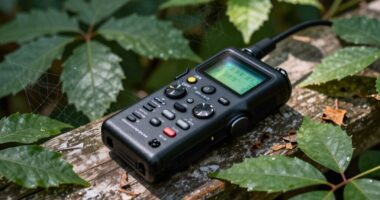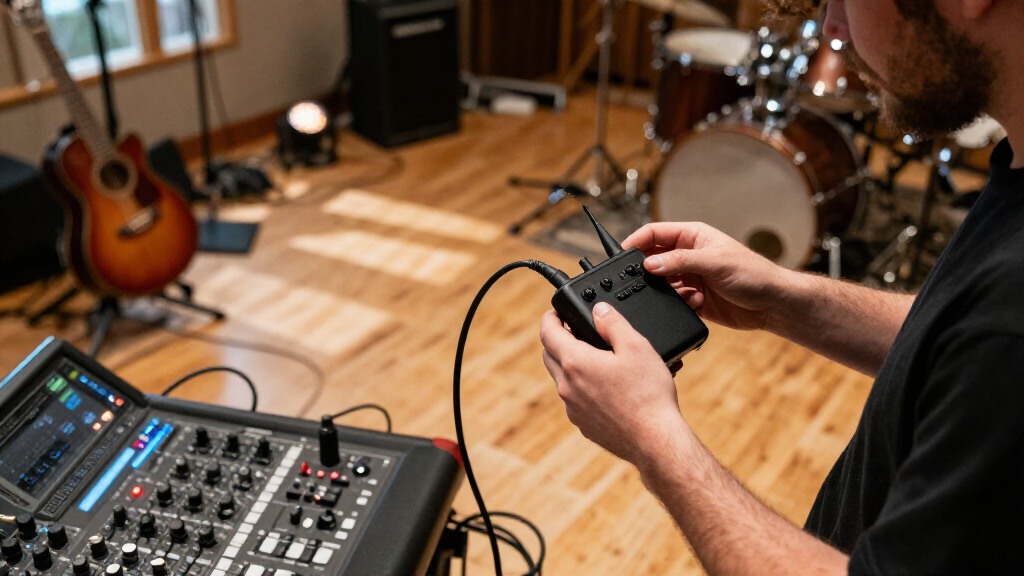
Choosing a wireless microphone system is less about finding one universally better radio band and more about matching the system to the venue, number of microphones, and tolerance for setup work. UHF systems, which operate in regulated portions of the ultra-high-frequency spectrum, are common in live sound and installed production. Many compact 2.4 GHz systems are designed to connect quickly to cameras, phones, or computers, making them attractive to creators and presenters.

Get audio and creator gear delivered free with Prime
- Fast, free delivery on millions of items
- Prime Video, Amazon Music and more included
- Member-only deals all year

Phenyx Pro PTU-7000-4H 4-Channel UHF Wireless Microphone System
- ✔ Channels: 4
- ✔ Selectable frequencies: 40 per channel; 160 total
- ✔ Frequency range: 530–580 MHz

Phenyx Pro PTU-71-2H Dual UHF Wireless Handheld Microphone System
- ✔ Channels: 2
- ✔ Selectable frequencies: 100 per channel
- ✔ Frequency range: Channel 1: 536.57–561.32 MHz; Channel 2: 562.37–587.12 MHz
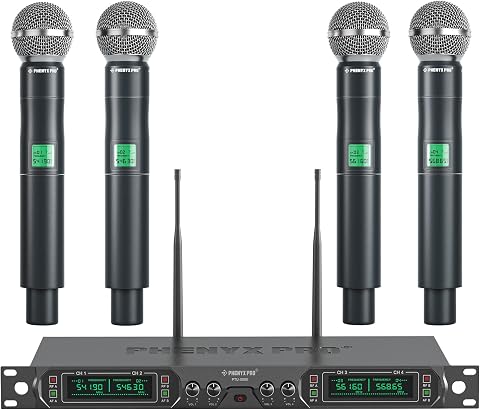
Phenyx Pro PTU-5000-4H 4-Channel UHF Wireless Microphone System
- ✔ Channels: 4
- ✔ Wireless technology: UHF
- ✔ Frequencies: Fixed: 541.9, 546.3, 561.6, and 568.65 MHz
The main tradeoff is control versus convenience. UHF equipment often gives operators more channel choices and coordination tools, which can matter when several microphones share a stage or the radio environment is crowded. A 2.4 GHz kit can be easier to carry and set up, but it shares spectrum with Wi-Fi and other common devices. Choose UHF for demanding live work where coordination matters; choose 2.4 GHz for a small, straightforward setup after checking local conditions and the device’s actual range.
At a Glance
| Criteria | UHF wireless systems | 2.4 GHz wireless systems | Winner |
|---|---|---|---|
| Frequency coordination | Often supports selectable frequencies, scanning, and coordination tools; features vary by model. | Often uses simpler pairing or preset channels; available controls vary. | A |
| Crowded environments | Can offer more room to find usable frequencies, depending on local rules, band, and equipment. | Shares the 2.4 GHz band with Wi-Fi, Bluetooth, and other devices, which may add competition. | A |
| Range and obstacles | Can work well over longer distances with suitable antennas and placement; venue conditions still matter. | Usually adequate for close-range use, but walls, bodies, and interference can reduce performance. | A |
| Setup and portability | Typically needs more planning; receivers and antennas can be larger. | Often compact and quick to connect, especially with camera or mobile kits. | B |
| Multi-microphone use | Usually the stronger choice for coordinated groups and larger systems. | Convenient for a small number of microphones; capacity depends on the system. | A |
| Cost and value | Higher initial cost is often justified for frequent, demanding production. | Often less expensive and a good value when convenience meets the actual use case. | Depends |
Phenyx Pro PTU-7000-4H 4-Channel UHF Wireless Microphone System
For buyers who need four handheld microphones and want room to manage their setup, the PTU-7000-4H has the most complete control set in this comparison. Its receiver offers 40 selectable frequencies per channel, auto scan, and IR sync, so pairing and frequency selection are more guided than on the fixed-frequency PTU-5000-4H. That distinction matters when the system is used in a venue where available UHF frequencies may be crowded.Routing is another advantage. Four individual XLR outputs let a mixer handle each microphone separately, while the mixed 1/4-inch output provides a simpler connection path. The PTU-5000-4H also supplies individual XLR outputs, but lacks the PTU-7000-4H’s listed frequency selection and scan features. Compared with the two-channel PTU-71-2H, this model accommodates a larger group and provides more output options, at the cost of a larger, more involved setup.The headline range reaches 328 feet line of sight, but that figure should be treated as an ideal-condition maximum. Walls, people, and venue-specific interference can shorten practical coverage. This system also requires frequency coordination if several compatible systems will run together; selectable frequencies do not mean every combination can be used without planning. Choose it when four mics and flexible routing are worthwhile, and skip it if two microphones or a simple fixed setup are all you need.
Pros:
- Four channels with 40 selectable frequencies per channel and auto scan.
- IR sync helps pair microphones with the receiver.
- Four individual XLR outputs plus a mixed 1/4-inch output.
- Rack-mount hardware and a metal receiver suit a more installed setup.
Cons:
- Frequency coordination is still needed when using multiple compatible systems.
- The 328-foot maximum is line of sight and can be reduced by obstacles or venue conditions.
- Four channels add setup and equipment needs compared with the two-channel PTU-71-2H.
Best for: Groups, event hosts, or small venues that need four handheld microphones, frequency selection, and separate mixer channels.
Not ideal for: Buyers who only need one or two microphones, want minimal setup, or expect the advertised line-of-sight range in a crowded indoor venue.
Bottom line: We recommend the PTU-7000-4H when four microphones and adaptable frequency and output controls matter more than keeping setup simple.
“We recommend the PTU-7000-4H when four microphones and adaptable frequency and output controls matter more than keeping setup simple.”
Phenyx Pro PTU-71-2H Dual UHF Wireless Handheld Microphone System
The PTU-71-2H suits buyers who need two microphones and would rather avoid the extra channels of the four-mic systems. It includes two handheld dynamic microphones and provides 100 selectable frequencies per channel, plus auto scan and IR synchronization. Those controls give it a practical advantage over the PTU-5000-4H when frequency choice matters, even though the PTU-71-2H cannot serve a four-person lineup.Its cardioid pickup pattern is intended to focus on the speaker or singer and reduce sound arriving from other directions. That can help in karaoke or public-speaking settings, but it does not remove the need to position microphones thoughtfully or manage room noise. The product description also cites a 290–328-foot line-of-sight range; as with the PTU-7000-4H, obstacles and RF conditions may make actual coverage shorter. Its stated battery life of up to 16 hours is longer than the PTU-5000-4H’s up to eight hours, though real runtime depends on use and batteries.This is the most sensible option when two people need wireless handhelds and a straightforward receiver connection is enough. The PTU-7000-4H is a better match for groups needing four separate microphone feeds, and its listed outputs provide more explicit routing flexibility. Frequency bands can also vary in suitability by region, so buyers should confirm local compatibility before ordering. The supplied system does not replace an amplifier, mixer, or speaker.
Pros:
- Two channels with 100 selectable frequencies per channel.
- Auto scan and IR sync assist with frequency selection and pairing.
- Cardioid handheld microphones are designed for vocal pickup.
- Listed battery life is up to 16 hours with included AA batteries.
Cons:
- Two channels cannot cover a four-person microphone lineup like the PTU-7000-4H or PTU-5000-4H.
- The stated operating range depends on line of sight.
- Frequency bands may not suit every region.
Best for: Two singers, presenters, or karaoke users who want selectable UHF frequencies and do not need more than two simultaneous microphones.
Not ideal for: Groups needing three or four microphones, or buyers whose region cannot use the listed frequency bands.
Bottom line: We would choose the PTU-71-2H for two-person use when selectable frequencies matter more than four-channel capacity.
“We would choose the PTU-71-2H for two-person use when selectable frequencies matter more than four-channel capacity.”
Phenyx Pro PTU-5000-4H 4-Channel UHF Wireless Microphone System
When the priority is four handheld microphones with separate feeds, the PTU-5000-4H covers the core need without the additional frequency-management features of the PTU-7000-4H. Its receiver has four individual XLR outputs and individual volume controls, making it possible to send microphones to separate mixer inputs and set their levels independently. That is useful for group vocals or events where each speaker needs a distinct channel.The tradeoff is that its UHF frequencies are fixed: 541.9, 546.3, 561.6, and 568.65 MHz. There is no listed selectable-frequency or auto-scan feature, so buyers have less ability to adjust if a channel conflicts with local RF activity. The PTU-7000-4H costs more in setup complexity but offers scan and selectable frequencies, making it the stronger fit where frequency flexibility matters. The PTU-71-2H offers more frequency choices per channel but cannot provide four simultaneous microphones.Its stated maximum range is up to 260 feet, shorter than the line-of-sight maximums listed for the other two systems. The package includes eight AA batteries rated for up to eight hours, and the receiver needs an amplifier, mixer, PA, or compatible speaker to deliver sound. It is also not intended for operating multiple sets together, which limits expansion. Choose this model for a fixed four-microphone installation or event setup where its frequencies suit the location; look to the PTU-7000-4H if you need more control or plan to coordinate systems.
Pros:
- Four handheld microphones support group vocals and multiple presenters.
- Individual XLR outputs and volume controls allow separate channel routing.
- Metal receiver and included antennas support a conventional installed setup.
- Includes AA batteries, audio cables, and setup accessories.
Cons:
- Fixed frequencies limit adjustment if interference occurs.
- Not intended for operation alongside multiple sets.
- Requires an amplifier, mixer, PA, or compatible speaker for sound output.
Best for: A group or venue needing four handheld mics and individual XLR feeds for a compatible mixer or PA.
Not ideal for: Buyers who need frequency adjustments, plan to run multiple sets together, or need more than the stated line-of-sight range can reliably provide.
Bottom line: We recommend the PTU-5000-4H for buyers who need four separate microphone feeds and can work with its fixed frequencies.
“We recommend the PTU-5000-4H for buyers who need four separate microphone feeds and can work with its fixed frequencies.”
As an Amazon Associate we earn from qualifying purchases.
Key Differences
UHF’s clearest advantage is operational flexibility. Many systems let a sound operator scan for open frequencies, select channels, and coordinate several transmitters. Those tools do not make a system immune to interference, and the usable UHF spectrum differs by location. They do give an experienced operator more ways to respond when a venue’s radio environment changes. For a solo presenter using one microphone, that flexibility may bring little daily benefit; for a production with several performers, it can prevent avoidable dropouts and channel conflicts.
2.4 GHz systems win on ease and compactness. A small receiver that plugs into a camera or phone can be faster to deploy than a rack receiver with antennas and frequency planning. That convenience is valuable for interviews, lessons, and small presentations. The tradeoff is that 2.4 GHz is widely used by consumer wireless devices, and the signal can be affected by congestion, obstructions, and distance. The practical choice depends on the real operating environment, not the band name alone.
Price should follow the job. If a system is used often in venues with multiple microphones, paying more for a well-supported UHF system with coordination tools is usually sensible. If the setup is one or two people, short distances, and quick recording, a reputable 2.4 GHz kit can offer better value. In either case, check the exact model’s frequency range, legal availability where it will be used, battery life, connectors, and support; headline range and channel counts are not guarantees of reliable performance.
Detailed Comparison
Frequency coordination (UHF wireless systems wins — moderate)
UHF wins by a moderate margin for systems that include scanning and selectable frequencies. Operators can look for usable channels and coordinate several transmitters, although the tools and available spectrum vary by model and region. Many 2.4 GHz kits prioritize automatic pairing or preset channels, which is simpler but gives less manual control. For a single mic, the gap may be minor; for a stage with several mics, the control can save setup time and reduce conflicts.
Performance in crowded radio environments (UHF wireless systems wins — moderate)
UHF usually wins by a moderate margin when the operator has suitable frequency options and can coordinate them. The 2.4 GHz band is shared with Wi-Fi and many other devices, so competition can be substantial in busy homes, offices, and event spaces. UHF is not automatically clear: local broadcasters, other wireless microphones, and legal restrictions matter. Check the location and system rather than assuming either band is interference-proof.
Range and obstacles (UHF wireless systems wins — moderate)
UHF has a moderate advantage for longer working distances when the system has appropriate antennas and a clear signal path. Neither band guarantees a specific usable range in a room: people, walls, receiver placement, antenna design, and nearby transmitters all affect results. A compact 2.4 GHz kit is often sufficient for a camera operator standing near the speaker. For large stages or changing performer positions, UHF provides more scope to build a suitable setup.
Setup and portability (2.4 GHz wireless systems wins — moderate)
2.4 GHz wins by a moderate margin for small, mobile recording kits. Compact transmitters and plug-in receivers can be ready quickly, with fewer rack components and less frequency planning. UHF systems can require receiver placement, antenna setup, channel selection, and a sound check. That work is worthwhile in production settings, but unnecessary overhead when recording a short interview or presentation with one microphone.
Using several microphones (UHF wireless systems wins — major)
UHF wins by a major margin for productions that need many wireless channels, provided the particular system supports coordination and enough locally legal frequencies are available. Multiple 2.4 GHz microphones can work, but capacity and coordination vary widely by product, and the band is already busy. For one or two speakers, this difference may not matter. For a panel, band, or theater, it should be a central buying criterion.
Cost and value (moderate difference)
The winner depends on the workload. A 2.4 GHz kit usually costs less and is better value for occasional, short-range use when it meets the needed audio and connector requirements. A UHF system costs more, but the added expense can pay off through coordination options, robust receiver features, and suitability for repeated live use. Paying extra makes sense when a failure disrupts a performance or recording; it is harder to justify for a simple home setup.
UHF wireless systems: Pros and Cons
Pros:
- Often offers selectable frequencies and scanning tools.
- Better suited to coordinated multi-microphone productions.
- Can support longer-range setups with appropriate antennas and placement.
- Broad selection of systems for live sound and installed production.
Cons:
- Usually costs more than basic compact kits.
- May require frequency planning and a more involved sound check.
- Receiver and antenna hardware can be less portable.
- Usable frequencies and legal bands vary by location.
2.4 GHz wireless systems: Pros and Cons
Pros:
- Compact systems can be quick to pair and operate.
- Often costs less for a basic one- or two-person setup.
- Convenient camera, phone, and computer receiver options are common.
- Well suited to close-range interviews, lessons, and simple presentations.
Cons:
- Shares spectrum with common Wi-Fi and other wireless devices.
- May offer fewer manual frequency coordination controls.
- Walls, bodies, and crowded environments can reduce reliability.
- Channel capacity and range differ substantially between models.
Who Should Choose What
Choose UHF wireless systems if:
- You run several wireless microphones for a stage, panel, venue, or event.
- You need to coordinate frequencies as the venue or radio environment changes.
- You work at longer distances and can plan receiver and antenna placement.
- A wireless failure would interrupt a paid performance or production.
Choose 2.4 GHz wireless systems if:
- You record one or two speakers at close range with a camera, phone, or computer.
- Fast setup and small equipment matter more than detailed frequency control.
- Your recording space is predictable and you can check for interference before use.
- You want a lower-cost system for occasional presentations, interviews, or lessons.
Skip both if: Use a wired microphone if the speaker can remain near the recording equipment and reliability matters more than freedom of movement; a cable avoids radio congestion and battery management.
Value for Money
Pay more for UHF when the system will handle multiple performers, frequent events, or venues where radio conditions are uncertain. The extra cost buys useful control only if the model includes the coordination features you need and its frequencies are legal and usable in your region. For a single presenter or creator recording nearby, a reputable 2.4 GHz kit is often the better value: it reduces equipment and setup effort while keeping the initial cost lower. Compare complete systems, including microphones, receiver outputs, batteries, accessories, and support, rather than choosing by price or claimed maximum range alone.
Final Verdict
For live production, several microphones, or work where an interrupted signal carries a real cost, choose a UHF system with suitable scanning and coordination features. Its higher price is justified by greater control over channel planning and more options for building a reliable setup. For close-range interviews, solo creators, and simple presentations, choose a 2.4 GHz kit from a reputable maker if it provides the right connections and performs well in the intended space. The deciding factor is how many microphones must work reliably in the actual radio environment: when the setup is small and predictable, convenience wins; when it is complex or high stakes, coordination wins.
Frequently Asked Questions
Are UHF wireless microphones always more reliable than 2.4 GHz?
No. Reliability depends on the system, local spectrum, obstructions, receiver placement, and other transmitters. UHF often gives operators more frequency coordination choices, while 2.4 GHz can work very well over short distances in a clean environment.
Can I use several 2.4 GHz microphone systems at once?
Some systems support multiple transmitters, but the number that works reliably depends on the product and surrounding wireless traffic. Check the manufacturer’s channel guidance and test the complete setup in the intended venue before relying on it.
Is UHF wireless microphone use legal everywhere?
No. Permitted frequencies and licensing rules differ by country and can change over time. Confirm that the exact system’s frequency range is allowed where you plan to use it.
Which type should a beginner buy?
For a beginner recording one or two people nearby, a compact 2.4 GHz kit is often easier to set up. Choose a UHF system when the work involves live venues, several microphones, longer distances, or a need to coordinate frequencies.