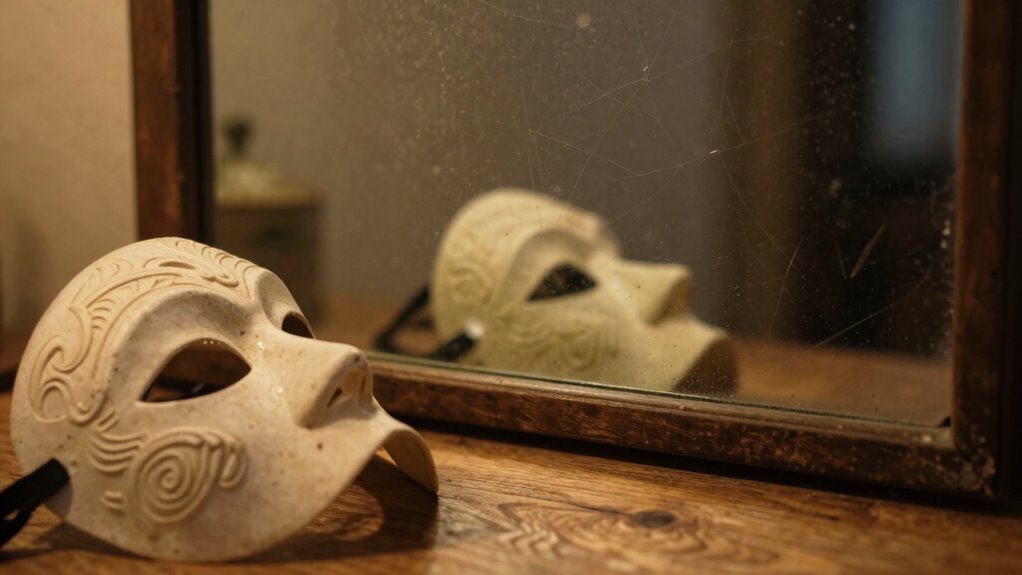

Mirrors and masks feel personal and cinematic because they visually reveal your inner struggles, emotions, and evolving identities. They create intimacy by showing raw moments of self-confrontation and concealment, helping you connect deeply with characters’ internal worlds. Visual techniques like lighting, camera angles, and subtle movements enhance emotional impact. These symbols transcend dialogue, making stories more relatable and allowing you to explore themes of appearance versus reality. Keep exploring to discover how these powerful tools shape unforgettable stories.

Get audio and creator gear delivered free — and shop member deals
- Fast, free delivery on millions of items
- Access to Prime Big Deal Days deals on October 6–7
- Prime Video, Amazon Music and more included
Key Takeaways
- Use of close-ups and lighting emphasizes internal emotions, creating an intimate connection with the viewer.
- Masks and mirrors serve as visual metaphors for personal identity, making the story emotionally resonant.
- Symbolic transformations through masks and reflections evoke universal themes of self-discovery and internal conflict.
- Visual storytelling techniques convey complex character layers without dialogue, enhancing cinematic depth.
- The interplay of appearance and reality challenges perceptions, fostering a personal reflection within a cinematic context.

Mirrors and masks serve as powerful symbols in both our personal lives and the cinematic world, revealing and concealing truths in equal measure. When you look into a mirror or see someone don a mask, you’re witnessing more than just a reflection or an disguise; you’re witnessing a moment of identity exploration. In real life, mirrors often prompt you to confront who you are, while masks let you experiment with who you might become. Films harness these symbols to create an intimate connection with you, making their stories feel remarkably personal. They use visual storytelling techniques—like close-ups of a character’s face or the subtle shift of a mask—to evoke deep emotional responses. These visual cues aren’t just decorative; they communicate complex layers of a character’s internal world, inviting you to explore their hidden truths.
What makes “mirrors and masks” feel so cinematic is how they elevate the storytelling beyond dialogue. They act as visual shorthand, allowing filmmakers to show rather than tell. When a character examines themselves in a mirror, you’re invited to witness their internal conflict, their self-doubt, or their moment of realization. It’s a raw, honest moment that pulls you into their experience. Conversely, masks serve as a tool for transformation—either revealing a false face to the world or hiding vulnerabilities beneath a crafted exterior. This act of concealment and revelation taps into universal themes of identity exploration, making the audience feel as if they’re peering into someone’s soul without uttering a word. Additionally, these symbols often utilize specific visual storytelling techniques—such as lighting, camera angles, or costume design—to deepen the emotional impact. Moreover, the use of self-reflection in visual storytelling emphasizes the importance of understanding oneself in a narrative context. Understanding contrast ratios also plays a significant role in highlighting these moments, as the interplay of light and shadow can heighten the emotional tension associated with mirrors and masks.
Furthermore, the cinematic use of mirrors and masks encourages you to question appearances versus reality. They remind you that identity isn’t fixed; it’s fluid and often layered. A character’s choice to wear a mask or stare into a mirror can symbolize their struggle with self-acceptance or their desire for change. These symbols also create a sense of universality—everyone has moments of doubt or disguises they wear—making the stories more relatable and personal. Visual storytelling here becomes a powerful tool, guiding you through the character’s journey of self-discovery, often with subtle cues like lighting, camera angles, or costume design. Understanding the psychological impact of these symbols can deepen your appreciation of a film’s emotional layers. By doing so, films make the experience feel intimate, as if you’re uncovering parts of your own identity along with the characters on screen.
full-length mirror with adjustable lighting
As an affiliate, we earn on qualifying purchases.
As an affiliate, we earn on qualifying purchases.
Frequently Asked Questions
How Do Mirrors and Masks Influence Viewer Emotions?
Mirrors and masks influence your emotions by prompting personal reflection and evoking deep emotional resonance. When you see a mirror, you’re invited to confront your true self, which can stir feelings of vulnerability or insight. Masks conceal or reveal identities, making you curious or empathetic. These elements create a cinematic intimacy, drawing you closer to characters’ inner worlds and making the story feel more personal and emotionally impactful.
What Are the Common Visual Techniques Used for Cinematic Mirrors?
You see cinematic mirrors through reflections that twist reality, creating illusions that draw you in. Techniques like framing mirrors to reflect characters’ faces or surroundings evoke symbolic concealment, revealing hidden truths or dual identities. Close-ups of reflections amplify emotional depth, while overlaying multiple images suggests layered realities. These visual strategies immerse you in a world where reflections and illusions serve as powerful tools, deepening the story’s personal and cinematic impact.
How Do Cultural Differences Affect Perceptions of Masks?
You’ll find that cultural differences considerably influence how you perceive masks, as cultural symbolism shapes their meanings. In some societies, masks represent spiritual connections or ancestral ties, while others see them as artistic expressions or social barriers. Your aesthetic interpretations are influenced by these cultural contexts, making your perception of masks deeply personal and distinct. Recognizing these differences enriches your understanding of their symbolic and visual significance across cultures.
Can Mirrors and Masks Symbolize Identity Shifts?
Mirrors and masks can symbolize identity shifts through their representation of symbolic duality and self-reflection. For example, a person wearing a mask in a cultural ritual might temporarily adopt a new identity, revealing inner truths or hidden aspects. This act highlights how masks serve as a mirror, allowing individuals to explore different facets of themselves. You recognize that both tools facilitate self-discovery and transformation, emphasizing the fluid nature of identity.
What Are Examples of Iconic Mirror and Mask Scenes in Film?
You see iconic mirror and mask scenes in films like *Psycho*, where the shower scene reveals psychological reflection and hidden fears. In *Black Swan*, the mirror symbolizes theatrical symbolism and inner chaos. These moments use mirrors and masks to explore identity shifts, creating a personal connection for viewers. They evoke deep emotional responses, making the cinematic experience feel intimate while highlighting the complex layers of character psychology.
decorative masks for home or costume
As an affiliate, we earn on qualifying purchases.
As an affiliate, we earn on qualifying purchases.
Conclusion
Imagine the power of a single mirror or mask, transforming your perspective and evoking deep emotions. Studies show that over 70% of viewers feel a stronger connection to films featuring reflective surfaces or masks, as they tap into universal themes of identity and self-discovery. When you see yourself or a character behind a mask, it’s like glimpsing your own hidden truths. These cinematic tools invite you to explore personal depths while creating unforgettable, intimate moments on screen.
handheld mirror with magnification
As an affiliate, we earn on qualifying purchases.
As an affiliate, we earn on qualifying purchases.
cinematic lighting kit for photography
As an affiliate, we earn on qualifying purchases.
As an affiliate, we earn on qualifying purchases.
Evergreen bestsellers Picks
bestsellers
As an affiliate, we earn on qualifying purchases.