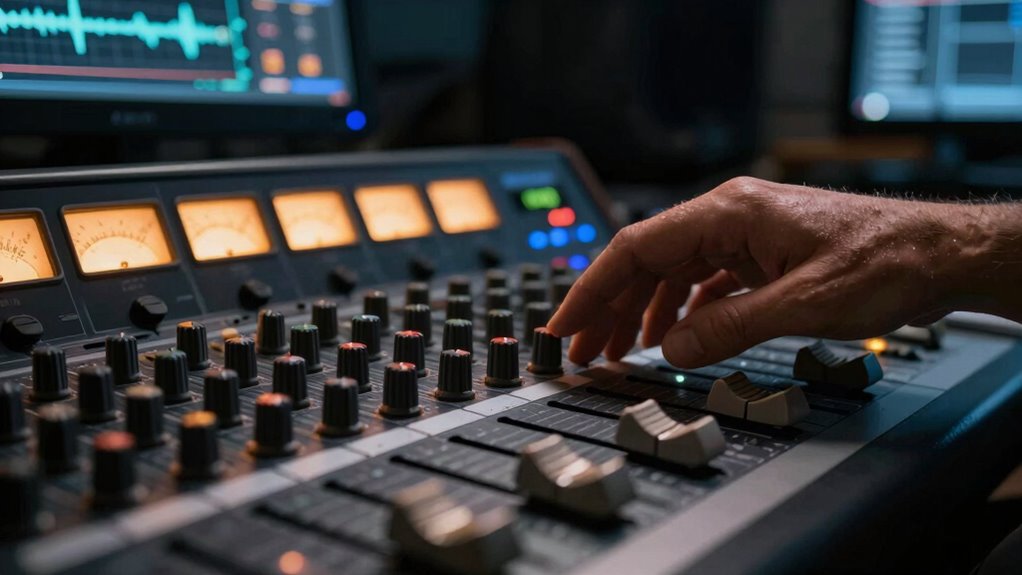

Before you touch the EQ, you should listen carefully to the track’s emotional core, stereo placement, and nuances. Focus on how each element, especially vocals, sits in the mix and how the sound flows as a whole. Pay attention to the naturalness and balance of the recordings. Developing your listening skills helps you make smarter, more musical decisions. If you keep exploring, you’ll discover more ways to fine-tune your mix with intention and confidence.

Get audio and creator gear delivered free with Prime
- Fast, free delivery on millions of items
- Prime Video, Amazon Music and more included
- Member-only deals all year
Key Takeaways
- They listen carefully to the vocal placement and overall balance within the mix.
- They identify how each element interacts and sits in the stereo field before making adjustments.
- They focus on the emotional impact and naturalness of the sound, not just technical details.
- They assess the overall clarity, phase coherence, and frequency balance first.
- They develop keen listening skills to detect nuances that guide effective EQ decisions.

Great producers understand that the key to a polished mix isn’t rushing to the EQ, but first truly listening to the sound. Before grabbing your EQ tools, you need to develop a keen ear for what’s happening in the track. This means tuning in to the nuances of each element, especially the vocals, since they often carry the emotional core of a song. Instead of jumping straight into adjustments, focus on understanding the vocal placement within the mix. Ask yourself: Is the vocal sitting too far back, or is it too forward? Does it feel grounded and natural, or does it seem disconnected from the rest of the arrangement? These questions help you identify what needs attention before making any equalization moves.
Great producers listen first, understanding vocal placement before making EQ adjustments for a natural, cohesive sound.
Creative techniques play a big role here. Instead of defaulting to standard EQ cuts or boosts, experiment with different approaches that serve the song’s vibe. For example, use subtle harmonic enhancements, dynamic filtering, or creative automation to shape the vocal’s presence. These techniques often reveal what’s really necessary, rather than just covering up problems with EQ. You might find that a slight dip in certain frequencies allows the vocal to sit more comfortably, or that a gentle boost in another range clarifies its articulation. The goal is to enhance the natural tone rather than drastically alter it, which requires a careful listening approach. Recognizing the importance of sound placement within your mix helps you make more informed decisions. Developing a strong sense of frequency balance also guides your decisions and ensures the mix remains cohesive. Paying attention to phase relationships can further improve clarity and stereo imaging, leading to a more natural sound. Additionally, understanding how sound interacts in the stereo field can help you achieve a clearer and more balanced mix.
By honing your listening skills, you become more attuned to subtle changes that can greatly impact the overall clarity and emotion of the track. Vocal placement isn’t just about volume; it’s about how the vocal interacts with other elements in the mix. You need to hear how it fits within the stereo field, how it complements the instruments, and whether it maintains clarity without overshadowing other parts. Sometimes, what’s needed isn’t more EQ but a simple adjustment in panning or reverb to better position the vocal. By honing your listening skills, you’ll notice these subtleties rather than jumping to EQ because it’s easier or faster. This attentive approach ensures your choices are intentional and musical, not just technical.
Ultimately, great producers trust their ears first. They resist the temptation to make quick fixes and instead focus on the sound’s story. Listening deeply to the vocal placement and employing creative techniques allow you to craft a mix that feels cohesive and natural. When you start with this careful listening, your EQ decisions become more precise and meaningful, elevating your production from good to great.
studio monitor headphones for mixing
As an affiliate, we earn on qualifying purchases.
As an affiliate, we earn on qualifying purchases.
Frequently Asked Questions
How Do Producers Identify the Key Frequencies in a Track?
You identify key frequencies by using spectral analysis tools like spectrum analyzers, which visually display a track’s frequency content. Listen carefully for frequency masking, where certain sounds overlap and compete, making it harder to isolate individual elements. By analyzing these visual and auditory cues, you can pinpoint dominant frequencies, allowing you to make precise EQ adjustments that enhance clarity and balance in your mix.
What Role Does Context Play Before Applying EQ Adjustments?
You need to take into account the listening environment and your auditory perception before applying EQ adjustments. The context shapes how you interpret frequencies—what sounds clear in one space might be muddy in another. Your auditory perception helps you identify problem areas, but environmental factors like room acoustics influence what you hear. By accounting for both, you make more precise, effective EQ changes that enhance your track’s clarity and balance.
How Do Emotional Elements Influence EQ Decisions?
When making EQ decisions, your emotional intuition guides you to enhance or suppress certain frequencies based on the song’s mood. For example, if a track feels too cold, you might boost warmth by adjusting low mids. Your creative interpretation shapes these choices, allowing you to connect emotionally with the music. Trusting your feelings helps craft a sound that resonates deeply, making your production more compelling and authentic.
Can Hearing Differences Affect EQ Choices?
Yes, hearing differences can affect EQ choices because your auditory perception and frequency sensitivity vary from person to person. When you notice subtle changes in tone or resonance, it influences how you adjust the EQ. Your ears pick up unique nuances, guiding you to sharpen or soften certain frequencies. This personalized perception helps craft a balanced, impactful sound, making your EQ decisions more precise and tailored to the track’s needs.
How Do Producers Distinguish Between Tonal Balance and Mixing Issues?
You distinguish between tonal balance and mixing issues by focusing on specific elements. For tonal balance, you listen for overall frequency distribution, ensuring instruments sit well within the dynamic range. To identify mixing issues, you assess stereo imaging and how elements interact spatially. If certain sounds seem off or unbalanced in stereo space, it’s a sign to adjust. Clear separation and balanced frequencies help achieve a polished mix.
audio spectrum analyzer for music production
As an affiliate, we earn on qualifying purchases.
As an affiliate, we earn on qualifying purchases.
Conclusion
Before you reach for the EQ, listen closely to the track’s core elements—what’s missing or overpowering? Imagine a producer noticing a vocal’s harshness and instead of immediately EQ’ing, they step back and identify it’s a room echo. By understanding what you truly hear, you make smarter decisions. Like mastering a mix, it’s about tuning into your instincts first—trust what your ears tell you before touching that fader.
As an affiliate, we earn on qualifying purchases.
sound editing and mixing software
As an affiliate, we earn on qualifying purchases.
As an affiliate, we earn on qualifying purchases.
Fall Picks
fall essentials
As an affiliate, we earn on qualifying purchases.