
Pre-production saves you more time than fixing mistakes later by preventing issues before they happen. When you plan carefully, you can identify potential bottlenecks, clarify project details, and coordinate with vendors early on. This reduces the need for costly revisions, last-minute changes, or rework during production. By investing time upfront, you avoid the chaos of fixing problems on the fly. Keep going to discover how thorough pre-planning keeps your project on track efficiently.

Get audio and creator gear delivered free with Prime
- Fast, free delivery on millions of items
- Prime Video, Amazon Music and more included
- Member-only deals all year
Key Takeaways
- Pre-production identifies and resolves issues early, preventing delays that would require time-consuming fixes during or after filming.
- Detailed planning aligns team efforts, reducing misunderstandings and rework that extend project timelines.
- Early stakeholder and vendor coordination minimizes last-minute changes and associated time costs.
- Visualizing the entire project helps anticipate problems, avoiding disruptive adjustments during production.
- Establishing a clear budget and schedule ensures resources are allocated efficiently, reducing delays caused by resource shortages or mismanagement.
Have you ever wondered how some projects stay on schedule while others spiral into delays? The secret often lies in the pre-production phase, where essential planning sets the foundation for smooth execution. One of the most important aspects of pre-production is budget planning. When you clearly define your budget early on, you can allocate resources efficiently, avoid costly surprises, and make sure every part of the project is adequately funded. This foresight helps you identify potential bottlenecks or gaps before they become real issues, saving you time spent on last-minute adjustments. Proper budget planning also means you won’t waste time chasing after additional funds or fixing financial mistakes later in the process, which can cause considerable delays. Incorporating financial foresight during this stage ensures a more streamlined process overall.
Clear early budget planning prevents delays and keeps your project on track.
Another key element is talent selection. Choosing the right team members from the start can dramatically reduce the need for extensive revisions or rework. When you carefully vet and select talent early, you make sure everyone understands the project’s scope, style, and deadlines, which streamlines communication and execution. This reduces the time spent on clarifications, corrections, or replacing team members mid-project. Talent selection isn’t just about skills; it’s about finding the right fit for your project’s specific needs, ensuring that everyone is aligned and motivated to meet your timeline. Incorporating strategic planning early on can also help you anticipate potential resource constraints and address them proactively. Additionally, understanding the importance of project scope helps prevent scope creep and keeps the team focused on core objectives from the start.
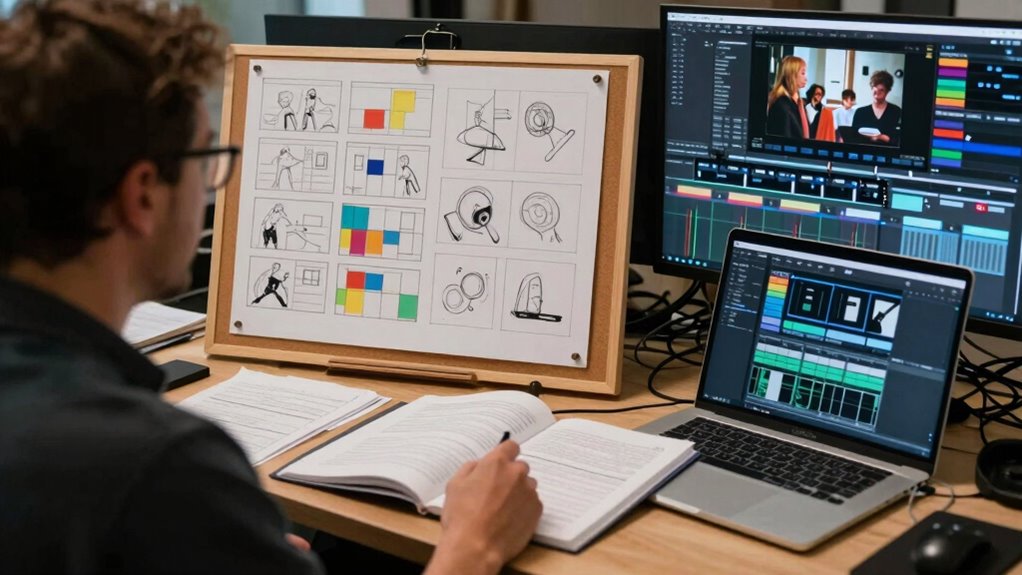
Pre-production also involves detailed planning, which helps you visualize the entire project and anticipate potential issues before they occur. This planning phase includes storyboarding, script development, location scouting, and equipment arrangements—all of which save time during production. When you have a clear plan in place, you minimize confusion and keep everyone on the same page, preventing costly misunderstandings or last-minute changes. Additionally, understanding the scope of water-related activities like aquatics or hydrotherapy can help tailor your plans to incorporate water safety and logistics effectively. Being thorough during this phase also allows you to engage with vendors and suppliers early, preventing delays caused by miscommunication or unpreparedness. Incorporating detailed planning early on can also facilitate smoother coordination with vendors and suppliers, preventing delays caused by miscommunication or unpreparedness. Being thorough during this phase ensures that you’re prepared for unexpected issues, reducing the need for reactive problem-solving later.
film pre-production planning tools
As an affiliate, we earn on qualifying purchases.
As an affiliate, we earn on qualifying purchases.
Frequently Asked Questions
How Do I Start Effective Pre-Production Planning?
To start effective pre-production planning, you should begin with detailed storyboarding to visualize scenes and plan shots. Then, conduct location scouting to find suitable settings and identify potential challenges early on. Create a clear schedule, coordinate with your team, and gather necessary permits. This preparation streamlines filming, reduces surprises, and saves time during production, ensuring a smoother overall process.
What Tools Best Support Pre-Production Organization?
Imagine a cluttered desk, filled with scattered notes, but with the right tools, you streamline pre-production. Use project management software like StudioBinder or Frame.io to organize your schedule, scripts, and shot lists. For budget planning, tools like Movie Magic Budgeting keep costs in check. Location scouting apps like MapAPic or Shot Lister help visualize and select perfect spots, saving time and avoiding chaos on set.
How Does Pre-Production Impact Project Budgets?
Pre-production directly impacts your project budgets by enabling better budget optimization and cost management. When you plan effectively, you identify potential issues early, avoiding costly revisions later. This proactive approach reduces unexpected expenses, keeps your project on track financially, and allows you to allocate resources wisely. By investing time in pre-production, you prevent budget overruns and make certain your project stays within financial limits, ultimately saving you money.
Can Pre-Production Prevent All Production Delays?
Pre-production can’t prevent all delays, but it considerably reduces them through creative collaboration and strategic resource allocation. When you plan ahead, you identify potential issues early, align everyone’s expectations, and streamline tasks. This proactive approach minimizes surprises during production, helping you stay on schedule. While unexpected challenges can still arise, solid pre-production ensures you’re better prepared, making delays less likely and keeping your project on track.
What Are Common Pre-Production Mistakes to Avoid?
Pre-production is like laying a solid foundation—skip or rush it, and everything’s shaky. You should avoid casting errors by thoroughly auditioning actors and confirming their availability early. Also, don’t neglect location scouting; choosing the right spot saves time and prevents surprises during filming. Overlooking these steps can lead to delays and costly reshoots, so invest time now to prevent bigger issues later.
As an affiliate, we earn on qualifying purchases.
Conclusion
Think of pre-production as the blueprint for your masterpiece—a sturdy foundation that keeps chaos at bay. When you plan and prepare upfront, you’re steering clear of costly detours and stormy surprises. It’s like planting seeds in neat rows instead of wandering through a tangled jungle. By investing time early on, you pave a smooth road ahead, ensuring your project flows seamlessly like a well-choreographed dance, saving you from drowning in last-minute fixes and missed deadlines.
As an affiliate, we earn on qualifying purchases.
As an affiliate, we earn on qualifying purchases.
Halloween Picks
halloween
As an affiliate, we earn on qualifying purchases.