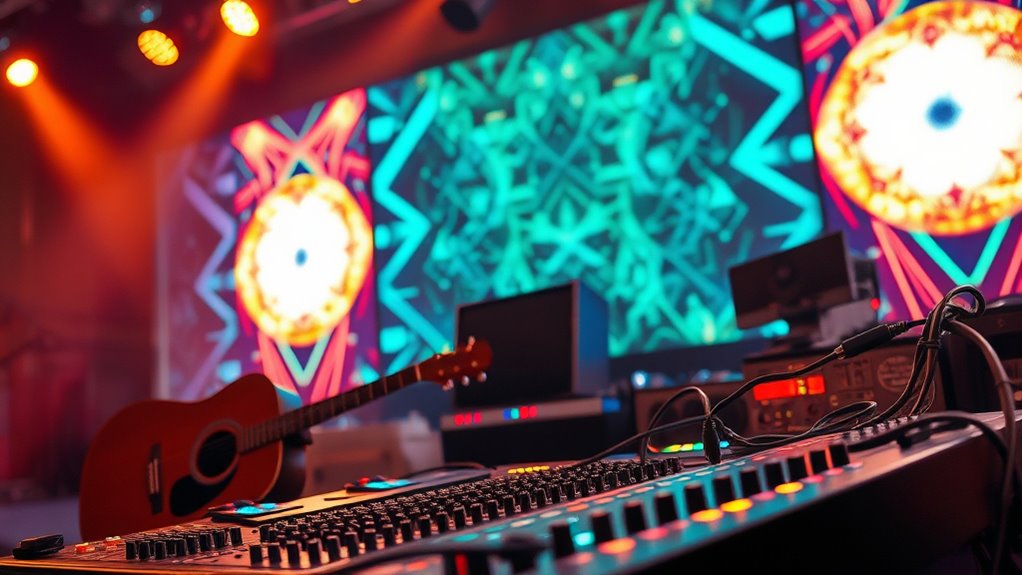
Combining live instruments with electronic production lets you create vibrant, expressive music that mixes organic warmth with digital precision. You can blend the energy of live performance with the flexibility of digital tools, shaping sounds in real-time and adding rich textures. This fusion boosts creativity and emotional impact, allowing for dynamic performances that feel authentic yet innovative. Keep exploring these techniques, and you’ll discover how to craft engaging, layered soundscapes that truly resonate.
Key Takeaways
- Integrate analog instruments with digital effects to create textured, hybrid soundscapes that blend warmth and precision.
- Use real-time MIDI control and looping to enhance live performances with electronic elements.
- Employ dynamic mixing techniques like automation and sidechain compression for seamless integration.
- Balance spontaneity of live play with digital editing to preserve energy and authenticity.
- Focus on artistic expression by merging the emotional depth of live instruments with digital sound-shaping tools.
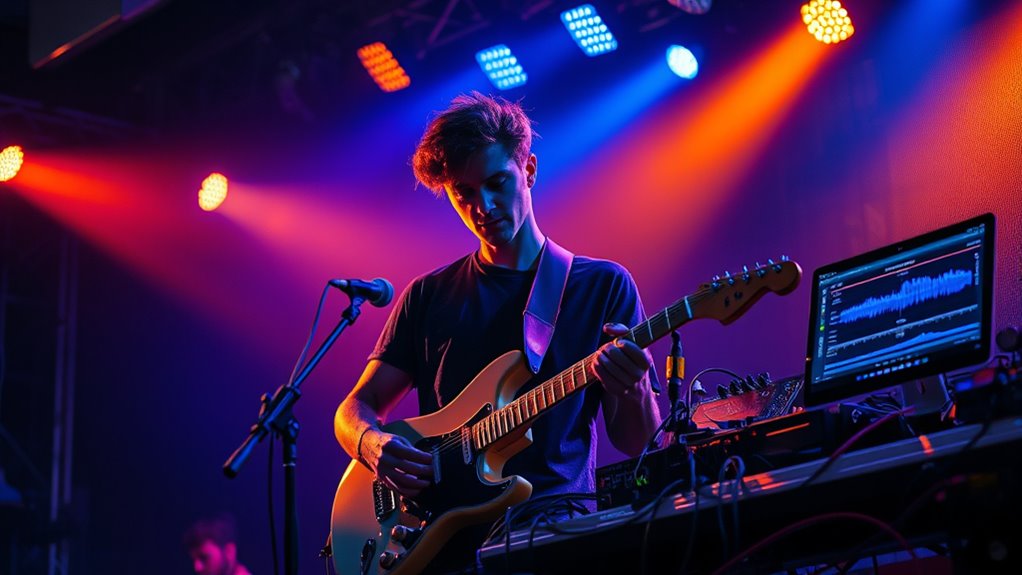
Blending live instruments with electronic production has become a powerful way to create dynamic and immersive music. When you combine the organic feel of traditional instruments with the precision and versatility of digital tools, you open up a world of creative possibilities. This approach, often called analog digital fusion, allows you to harness the warmth and expressiveness of analog gear alongside the flexibility of digital technology. The key to making this work seamlessly lies in understanding performance dynamics—you need to balance the spontaneous energy of live play with the control offered by electronic elements. When done correctly, this fusion can elevate your music, making it more engaging and emotionally compelling.
To effectively merge live instruments and electronic production, you need to pay close attention to how each element interacts in real time. For instance, during a performance, you might have a guitarist improvising over a programmed beat or a vocalist layering live vocals with synthesized textures. The challenge is maintaining a cohesive sound that feels natural rather than disjointed. This is where performance dynamics come into play. You want to guarantee that the live performer’s energy and subtle nuances are preserved, even as digital effects and samples shape the overall soundscape. Using techniques like real-time looping, MIDI control, and dynamic mixing allows you to emphasize the best qualities of both worlds.
Another vital aspect of this fusion is understanding the strengths of your equipment. Analog gear—such as vintage synths, electric guitars, or acoustic instruments—brings warmth, character, and unpredictability to your music. Digital tools, on the other hand, offer precision, endless sound-shaping options, and ease of editing. When you combine them thoughtfully, you get a layered, textured sound that’s rich in detail. For example, you might record a live bass performance and then process it through digital effects to add space or movement, enhancing both the performance dynamics and the overall vibe. Additionally, understanding the importance of sound processing can help you craft a balanced mix that highlights both live and electronic elements effectively.
Furthermore, mastering the art of blending means paying attention to the arrangement and mixing process. You want to highlight the live performance’s spontaneity while integrating electronic elements smoothly. This might involve automating volume levels during a live jam or using sidechain compression to create space for each element. The goal is to craft a performance where electronic and live components complement each other, rather than compete for attention.
Ultimately, combining live instruments with electronic production isn’t just about technical integration; it’s about capturing the energy and emotion of a live performance while leveraging digital precision. When you strike that balance, you create music that’s both authentic and innovative—truly a reflection of the analog digital fusion and performance dynamics at its best.

MOOG Messenger – Next-Gen Monophonic Analog Keyboard Synthesizer with 32 Keys, 64-Step Sequencer, 256 Presets and RES BASS Compensation
Timeless Intuitive Design – Building upon MOOG's iconic monosynths, Messenger features innovative circuits in a portable format, delivering…
As an affiliate, we earn on qualifying purchases.
As an affiliate, we earn on qualifying purchases.
Frequently Asked Questions
How Do I Choose Between Hardware and Software Instruments for Live Performances?
You should choose between hardware and software instruments based on your performance style. If you want a hybrid setup, consider mixing both for flexibility. Hardware instruments offer tactile control and reliability, while software instruments via MIDI controllers let you access a wide range of sounds and easily update your setup. Think about your workflow, portability, and the sound you want to achieve to make the best decision.
What Are the Best Practices for Syncing Live Instruments With Electronic Tracks?
To guarantee seamless harmony, you should prioritize tempo synchronization and timing precision. Use reliable MIDI clock or audio interfaces to keep your live instruments in sync with electronic tracks. Practice extensively, employing click tracks or visual cues to maintain rhythm. Regularly calibrate equipment, and consider employing software or hardware tools designed for real-time synchronization. This meticulous approach helps your live performance flow effortlessly, creating a polished and engaging experience for your audience.
How Can I Prevent Phase Issues When Combining Multiple Microphones and Electronic Sources?
To prevent phase issues when combining multiple microphones and electronic sources, you should focus on proper phase alignment by checking and adjusting the phase of each track. Pay close attention to microphone placement, ensuring mics are positioned to minimize phase cancellation. Use a phase correlation meter to monitor alignment, and if needed, invert the polarity of certain tracks. Regularly listen in mono to catch phase problems early.
What Equipment Is Essential for a Portable Live Electronic-Instrument Setup?
You’ll need a portable audio interface or mixer to connect your instruments and electronic gear seamlessly. Opt for wireless connectivity options like Bluetooth or Wi-Fi to avoid tangled cables and keep your setup flexible. Don’t forget a reliable power management system, such as portable batteries or power banks, to guarantee everything stays powered during your performance. These essentials help you stay mobile, organized, and ready to perform anywhere.
How Do I Adapt My Mixing Techniques for Live Versus Studio Environments?
Ever wondered how to optimize your mix for live shows versus studio recordings? You should focus on live sound optimization by balancing your levels to prevent feedback and ensuring clarity. Use monitor mixing techniques to keep performers heard clearly without muddying the main sound. Adjust your EQ and effects settings on the fly, and remember, live environments demand quick tweaks and adaptability, unlike the controlled studio setting.

Akai Professional MPK Mini MK3 25 Key USB MIDI Keyboard Controller With 8 Backlit Drum Pads, 8 Knobs, Music Production Software and Native Instruments Sound Package (NKS Integration)
Music Production and Beat Maker Essential -USB powered MIDI controller with 25 mini MIDI keyboard velocity-sensitive keys for…
As an affiliate, we earn on qualifying purchases.
As an affiliate, we earn on qualifying purchases.
Conclusion
As you blend live instruments with electronic sounds, the boundary between reality and imagination blurs. You feel the pulse of the drums intertwining with shimmering synths, each note building anticipation. Suddenly, a haunting melody emerges, leaving you on the edge of what’s next. The fusion creates a landscape where sound feels alive, unpredictable, alive with endless possibilities. Keep exploring this sonic frontier—you never know what masterpiece awaits just beyond the next note.

LEKATO Guitar Looper Pedal Effect Pedal with Tuner Function Looper Pedal Loops 9 Loops 40 minutes Record Time with USB Cable and 9V 0.6A Pedal Power Supply Adapter
🔥 9 loops, with a single loop recording as long as 10 minutes single record duration, total recording…
As an affiliate, we earn on qualifying purchases.
As an affiliate, we earn on qualifying purchases.

Focusrite Scarlett Solo 3rd Gen USB Audio Interface for Guitarists, Vocalists, Podcasters or Producers to record and playback studio quality sound
Pro performance with great pre-amps – Achieve a brighter recording thanks to the high performing mic pre-amps of…
As an affiliate, we earn on qualifying purchases.
As an affiliate, we earn on qualifying purchases.