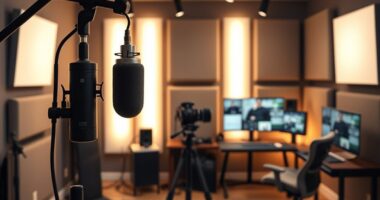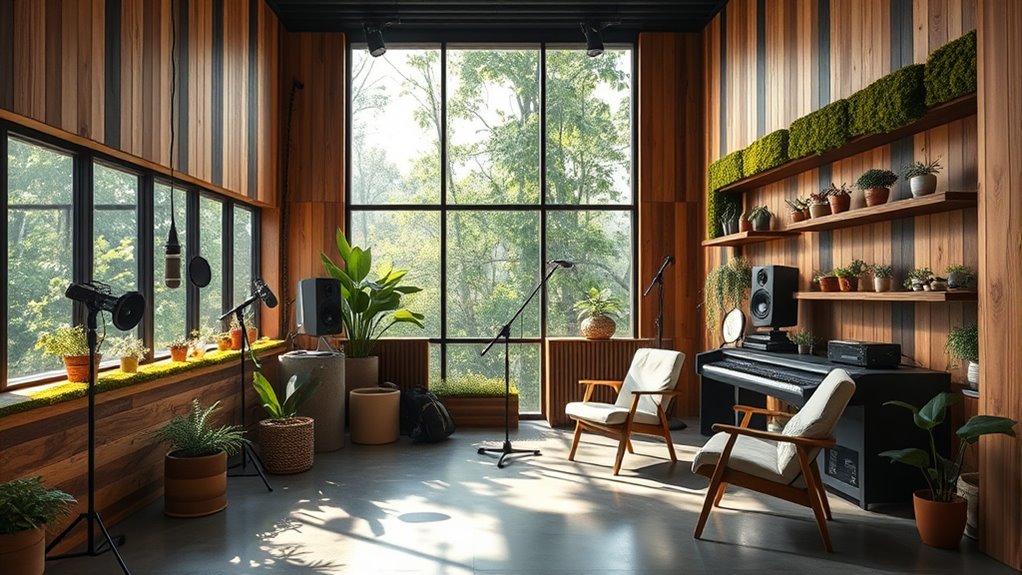

To set up an eco-friendly recording studio, choose sustainable materials like reclaimed wood or bamboo, and install energy-efficient equipment such as LED lighting and low-power devices. Maximize natural light and ventilation to reduce energy use while incorporating indoor plants for improved air quality. Practice eco-conscious operations by recycling, using green cleaning products, and investing in renewable energy sources. Continuing will reveal more practical tips to make your studio greener and more sustainable.
Key Takeaways
- Use sustainable building materials like reclaimed wood and locally sourced components to reduce environmental impact.
- Install energy-efficient equipment and LED lighting with smart controls to minimize energy consumption.
- Design the layout to maximize natural light and airflow, reducing reliance on artificial lighting and climate control.
- Implement recycling, eco-friendly cleaning, and consider renewable energy options like solar panels.
- Educate staff on sustainable practices to ensure ongoing eco-conscious operations.
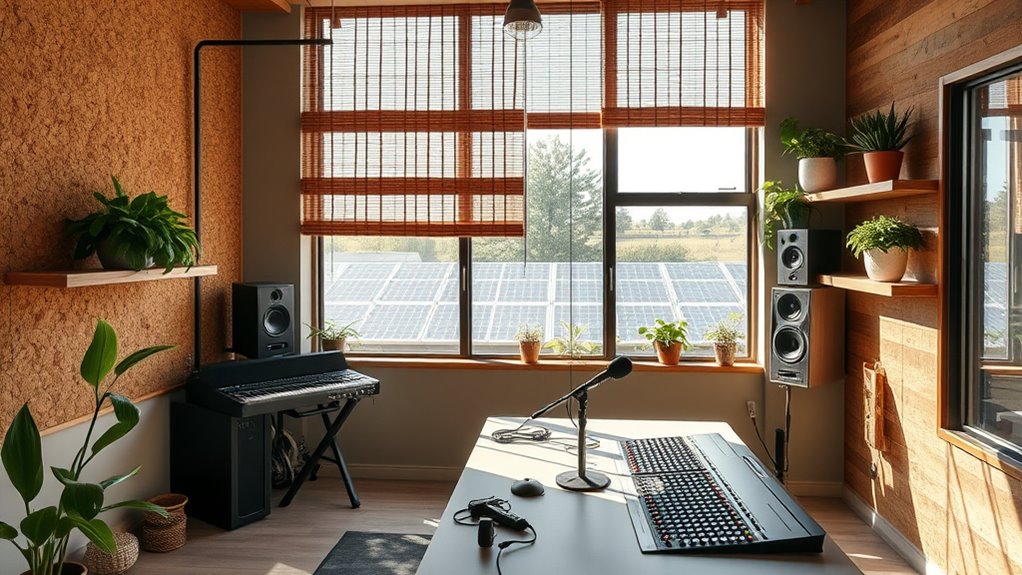
Have you ever wondered how a recording studio can reduce its environmental impact? Creating an eco-friendly space isn’t just about lowering your carbon footprint; it’s about making smarter choices right from the ground up. One of the most impactful steps you can take is selecting sustainable building materials. Instead of traditional drywall or flooring, consider options like bamboo, reclaimed wood, or recycled composite materials. These choices help minimize deforestation and reduce waste, while also giving your studio a unique, warm aesthetic. Using locally sourced materials further cuts down on transportation emissions, making your studio even greener. Additionally, choosing sustainable building materials can significantly enhance the overall environmental footprint of your studio.
Choose sustainable building materials like bamboo, reclaimed wood, and recycled composites to make your studio eco-friendly.
Next, focus on outfitting your space with energy-efficient equipment. High-quality, low-power-consumption microphones, speakers, and computers can considerably cut your energy use without compromising sound quality. LED lighting is another smart choice—it’s long-lasting and consumes a fraction of the energy of traditional bulbs. Installing smart lighting controls allows you to turn off or dim lights when not needed, conserving even more energy. When selecting your gear, look for certifications like Energy Star, which indicate appliances designed to operate efficiently. Combining energy-efficient equipment with proper insulation and soundproofing ensures your studio stays comfortable year-round without overtaxing your heating and cooling systems.
Beyond the equipment and materials, consider the layout and design of your studio to maximize natural light and airflow. Positioning your workspace near windows allows you to rely less on artificial lighting during the day, reducing electricity consumption. Ventilation can be optimized with energy-efficient fans or heat recovery systems that improve air quality without wasting energy. Adding indoor plants can also improve acoustics naturally while purifying the air and creating a healthier environment for you and your clients.
Finally, embrace sustainable practices throughout your studio’s operation. Implement recycling programs for packaging and old equipment, and opt for eco-friendly cleaning products to maintain your space. You might even invest in renewable energy sources, such as solar panels, to power your studio entirely with clean energy. Educating your team about sustainable habits ensures everyone contributes to maintaining an environmentally mindful studio. Every small decision, from material choices to daily routines, adds up to a noteworthy positive impact. By thoughtfully integrating sustainable building materials and energy-efficient equipment into your studio, you’re not just creating a space for great music—you’re also supporting a healthier planet for future generations.

Dejasound Upgraded Studio Recording Microphone with Isolation Shield & Pop Filter – Music Condenser Mic for Podcasting, Singing, Home Studio – Sound for PC, Laptop, Smartphone
【Ready to use Recording Studio Microphone】This studio condenser microphone features a USB output, providing a direct and convenient…
As an affiliate, we earn on qualifying purchases.
As an affiliate, we earn on qualifying purchases.
Frequently Asked Questions
What Are the Initial Costs of Setting up an Eco-Friendly Studio?
You’ll likely spend between $5,000 and $15,000 to set up an eco-friendly studio, depending on your space and materials. Initial costs include installing eco-friendly soundproofing, such as natural fiber panels, and proper studio insulation to improve acoustics. Investing in sustainable equipment and energy-efficient lighting also adds to expenses. While upfront costs are higher, you’ll benefit from lower energy bills and a greener, healthier workspace over time.
How Do Eco-Friendly Materials Impact Sound Quality?
You might worry eco-friendly materials will compromise sound quality, but they actually enhance sound absorption and clarity. These sustainable options don’t sacrifice material durability; instead, they often outperform traditional choices. By carefully selecting eco-friendly materials, you guarantee your studio maintains excellent sound quality while reducing environmental impact. This balance allows you to create a professional, sustainable space without sacrificing the acoustic performance essential for high-quality recordings.
Are There Government Incentives for Green Studio Setups?
Yes, there are government incentives for green studio setups. You can take advantage of government grants and tax incentives designed to promote eco-friendly practices. These programs help offset costs for sustainable materials and energy-efficient equipment, making your eco-friendly studio more affordable. Be sure to research local, state, and federal options, as eligibility criteria vary. Applying for these incentives can markedly reduce your overall investment while supporting environmentally responsible recording practices.
What Are the Best Renewable Energy Sources for Studios?
While exploring greener options, you’ll find solar panels and wind turbines are top choices for studios. Solar panels harness sunlight to generate clean energy, reducing your carbon footprint. Wind turbines, though more suitable for larger spaces, can provide consistent power if your location experiences steady breezes. Combining these renewable sources can create a sustainable setup, allowing you to enjoy high-quality recordings while supporting environmental health and reducing reliance on non-renewable energy.
How Can I Measure the Environmental Impact of My Studio?
You can measure your studio’s environmental impact by tracking its carbon footprint and energy consumption regularly. Start by monitoring electricity usage with smart meters or energy audits, and calculate emissions from your energy sources. Keep records of your studio’s water and waste management as well. Using these data points helps you identify areas to reduce your environmental impact and improve your eco-friendly practices effectively.

Torjim Softbox Photography Lighting Kit, 16'' x 16'' Professional Softbox Lighting Kit with 85W 3000-7500K LED Bulbs, Studio Lights for Photography/Video Recording/Live Streaming/Portraits Shooting
【Illuminate Your Creativity】 Torjim softbox lighting kit is made of high-quality PET fabric and a foldable nylon cover,…
As an affiliate, we earn on qualifying purchases.
As an affiliate, we earn on qualifying purchases.
Conclusion
By embracing eco-friendly practices, you gently nurture a space where creativity and sustainability dance in harmony. Every small change, from energy-efficient equipment to mindful material choices, helps you craft a studio that’s kind to the planet. As you continue this journey, you’ll find that your passion for music grows even brighter, all while leaving a softer footprint behind. In this way, your studio becomes not just a place of sound, but a subtle affirmation to your care for the world around you.

BTF-LIGHTING 5in1 WB5 2.4GHz Tuya WiFi PWM LED Controller Compatible with Alexa/Google Home/Smart Life/Tuya Smart APP Control for Dimming CCT RGB RGBW RGBCCT LED Strip Work with WR01RF WR02RF etc
【5 in 1 Tuya WiFi PWM Controller】WB5=C01W+C02W+C03W+C04W+C05W. C01W=Single Color, C02W=CCT(Dual White), C03W=RGB, C04W=RGBW, C05W=RGB+CCT. This Controller supports PWM…
As an affiliate, we earn on qualifying purchases.
As an affiliate, we earn on qualifying purchases.

NeatiEase Wood Panels for Wall, 4-Piece 96" x 12.6" Soundproof Wood Slat Wall Panel for Interior Wall Decor Noise Cancelling, Wood Acoustic Wall Panels, Sound Absorbing Panel (Rustic Walnut)
Modern and Elegant Design – The wood slat wall panels have been carefully designed to effortlessly transform any…
As an affiliate, we earn on qualifying purchases.
As an affiliate, we earn on qualifying purchases.