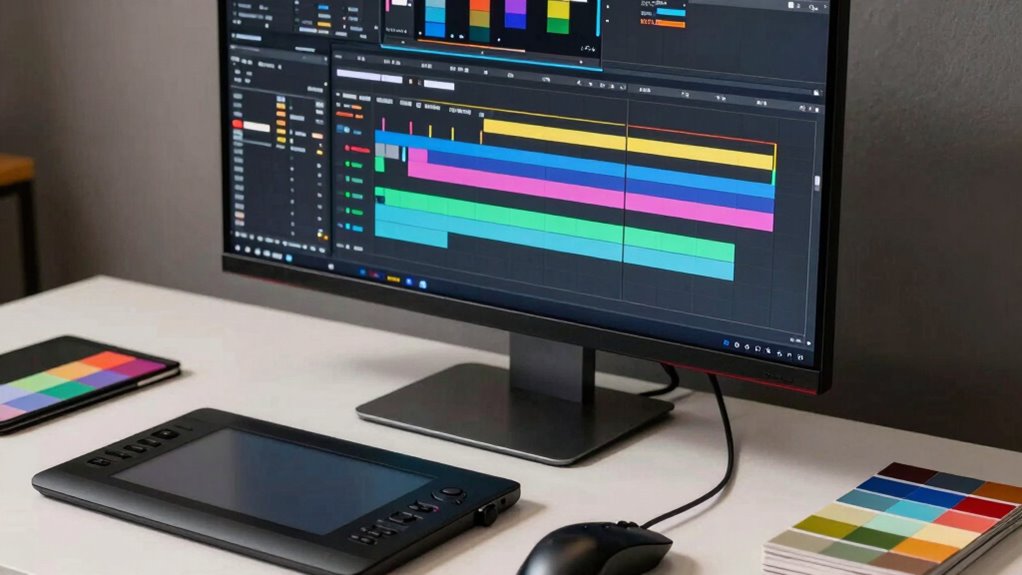

To achieve cleaner edits in dense productions, focus on perfecting both color correction and sound design. Use subtle adjustments to unify shots, set the right mood, and guarantee visual harmony, making cuts seamless and less noticeable. Simultaneously, craft sound layers that mask transitions and reinforce emotion, creating a smooth narrative flow. When these elements work together, your edits become invisible, enhancing storytelling. Keep exploring these techniques to open even more professional finishing touches.

Get audio and creator gear delivered free — and shop member deals
- Fast, free delivery on millions of items
- Access to Prime Big Deal Days deals on October 6–7
- Prime Video, Amazon Music and more included
Key Takeaways
- Use subtle color correction to unify shots and reduce visual clutter in dense scenes.
- Seamlessly mask cuts with sound design to maintain narrative flow and hide transitions.
- Focus on auditory cohesion to complement visual edits and prevent distraction.
- Apply consistent visual and sound techniques to create a cohesive, immersive experience.
- Prioritize refinement and harmony over complex edits for a cleaner, professional look.
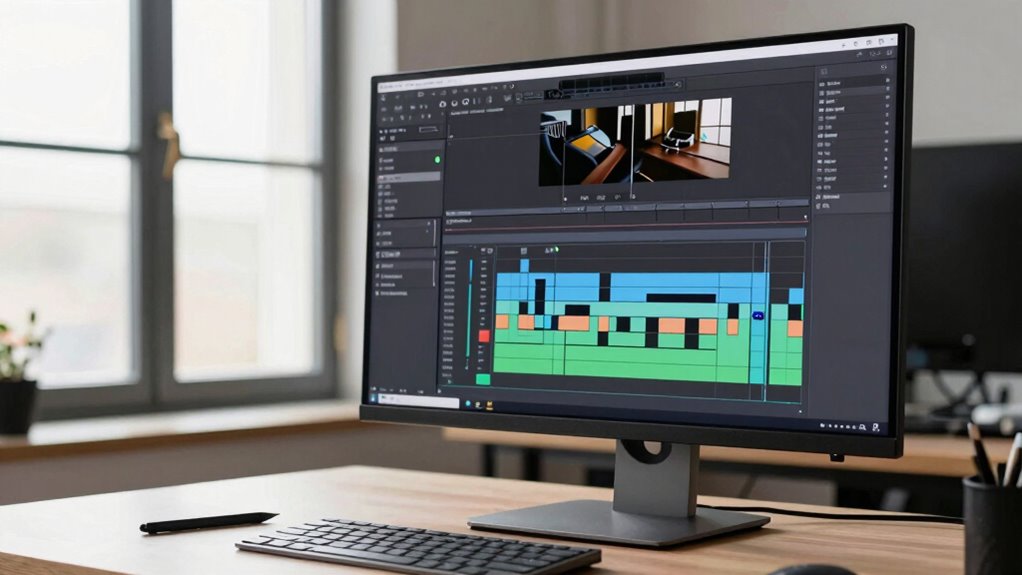
Editing can often feel like steering through a maze, but uncovering the secret to cleaner edits is simpler than you might think. When you’re working with dense productions, every cut, shift, and effect needs to serve the story without creating chaos. The key lies in mastering a few core techniques that help your edits feel seamless and polished. Two essential elements that elevate your work are effective color correction and sound design. These tools aren’t just extras—they’re foundational to creating a cohesive, professional feel.
Color correction is your first line of defense against visual clutter. Dense scenes often have inconsistent lighting or color tones that distract viewers. By carefully adjusting the color palette, you can unify disparate shots, making the sequence flow smoothly. Think of color correction as setting a visual tone that guides the audience’s emotions and attention. It’s not about overhauling every frame but subtly refining hues, contrast, and brightness so that your cuts feel natural. When done well, color correction guarantees that your edits are less noticeable, helping viewers stay immersed without feeling jolted by abrupt visual shifts. Incorporating visual consistency techniques can further enhance the seamlessness of your edits. Paying attention to visual harmony ensures that your entire production maintains a cohesive look, making even complex scenes feel unified. Additionally, understanding the principles of color grading can help you achieve specific moods and atmospheres that support your storytelling. Developing a good sense of color theory can provide you with a more intentional approach to how colors influence mood and perception.
Color correction unifies scenes, guiding viewers’ emotions and ensuring seamless, natural-looking edits.
Sound design is equally indispensable in smoothing out dense edits. Poor audio connections can make even the cleanest cuts stand out awkwardly, disrupting the narrative flow. By integrating sound effects, ambient noises, and dialogue seamlessly, you create an audio landscape that masks the mechanical nature of editing. For example, adding subtle background sounds or adjusting volume levels can make a scene feel more organic, guiding the viewer’s focus without distraction. Sound design also helps emphasize emotional beats, making your edits feel intentional rather than haphazard. Paying attention to sound continuity can make a significant difference in how fluid your edits appear.
Combining these techniques creates a balanced editing approach. When your color correction brings visual consistency and your sound design delivers auditory cohesion, your cuts become invisible, letting the story shine through. The process isn’t about adding complexity but about refining what’s already there. Approach each cut with an eye for color and sound, and you’ll find that even in dense productions, your edits will feel cleaner, more deliberate, and incredibly professional. Remember, the secret isn’t in the complexity but in the harmony you establish through thoughtful adjustments. With practice, integrating color correction and sound design into your workflow will become second nature, transforming challenging edits into seamless storytelling.
color correction software for video editing
As an affiliate, we earn on qualifying purchases.
As an affiliate, we earn on qualifying purchases.
Frequently Asked Questions
What Editing Software Is Best for Dense Productions?
For dense productions, Adobe Premiere Pro stands out as the best editing software. It offers robust tools for color grading, helping you achieve a polished look, and seamless audio synchronization, ensuring your sound matches perfectly. Its powerful timeline handles complex projects efficiently, and collaborative features make teamwork easier. You’ll find Premiere Pro versatile and reliable, making it ideal for managing dense, detailed productions with cleaner edits.
How Long Should a Typical Cleanup Process Take?
A typical cleanup process should take around 10-20% of your total project time, depending on complexity. You can optimize your workflow by organizing your files and setting clear milestones. Allocate enough time for quality assurance, ensuring each edit is precise and seamless. Staying disciplined with your schedule helps prevent rushed work, resulting in cleaner edits and a more polished final product. Consistent workflow management is key.
Can AI Tools Improve Editing Efficiency?
AI tools can substantially improve your editing efficiency through AI integration and editing automation. They quickly identify and fix common issues, streamline repetitive tasks, and offer suggestions for improvements, saving you time and effort. By leveraging these technologies, you can focus more on creative decisions while AI handles technical cleanup. Overall, AI-powered editing tools make dense productions more manageable, ensuring cleaner edits with less manual work.
What Common Mistakes Lead to Messy Edits?
You often mess up edits when you neglect precise audio synchronization and inconsistent color grading. For instance, in a recent project, rushed cuts led to mismatched sound cues and jarring color shifts, making the edit look sloppy. To prevent this, double-check audio sync points and maintain a consistent color palette throughout your scenes. These small steps ensure your edits stay clean, professional, and seamless, even in dense productions.
How Do I Maintain Consistency Across Scenes?
To maintain consistency across scenes, focus on uniform color grading and precise audio synchronization. Use color grading tools to match tones, lighting, and overall mood between scenes, ensuring a seamless visual flow. Simultaneously, double-check audio synchronization so dialogue, sound effects, and music stay aligned throughout. Consistent editing techniques, like using the same method of changeovers and maintaining a steady pace, also help create a cohesive, polished final production.
As an affiliate, we earn on qualifying purchases.
Conclusion
Remember, a stitch in time saves nine. When editing dense productions, take your time with each cut and focus on maintaining flow. Clean edits aren’t just about removing unwanted parts—they’re about preserving the story’s rhythm. Trust your instincts, stay patient, and don’t rush the process. With careful attention, your edits will be seamless, making your project shine. In the end, the smallest details often make the biggest difference.
professional video editing headphones
As an affiliate, we earn on qualifying purchases.
As an affiliate, we earn on qualifying purchases.
As an affiliate, we earn on qualifying purchases.
Halloween Picks
halloween
As an affiliate, we earn on qualifying purchases.