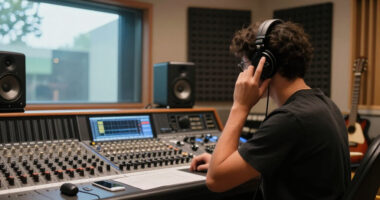

Silence as a musical device is a powerful tool that you can use to shape emotion, create tension, and emphasize key moments. Deliberate pauses or rests allow reflection, build suspense, or highlight a dramatic shift. Silence acts like punctuation, guiding your audience through the narrative and adding depth to your soundscape. When understood and applied strategically, silence injects emotional power into your music—exploring these techniques further will reveal even more ways to enhance your compositions.

Get audio and creator gear delivered free with Prime
- Fast, free delivery on millions of items
- Prime Video, Amazon Music and more included
- Member-only deals all year
Key Takeaways
- Silence functions as a deliberate musical device to create tension, reflection, and emotional depth within a composition.
- Strategic silences act as punctuation, shaping narrative flow and emphasizing key musical moments.
- Dramatic pauses command attention, heighten suspense, or underscore emotional shifts in various genres.
- High-quality sound equipment enhances the emotional impact of silent intervals and ensures their effectiveness.
- Mastering the use of silence allows performers and composers to deepen expressive storytelling and audience engagement.

Silence might seem like the absence of sound, but in music, it’s a powerful tool that shapes emotion and meaning. When you incorporate musical pauses, you give space for anticipation and reflection, allowing your audience to absorb what’s just been played. These pauses aren’t mere gaps; they’re intentional moments that heighten tension or provide relief. For example, a well-placed pause before a final note can build suspense, making the payoff feel more dramatic and impactful. Similarly, a brief silence after a poignant phrase can deepen its emotional resonance, encouraging listeners to process and feel the significance of what they’ve just heard.
Strategic pauses heighten tension and deepen emotional impact in music.
Dramatic silences, in particular, have the power to command attention. When you use a silence strategically, you create a moment of stillness that emphasizes the importance of what’s to come. These silences can serve as a theatrical pause, giving your audience a moment to anticipate the next move or to reflect on the emotional weight of the music. They’re especially effective in genres like classical, jazz, or film scoring, where silence can heighten suspense or underscore tragedy. By carefully controlling the length and placement of dramatic silences, you guide your listeners’ emotional journey, making your performance more compelling and memorable.
You might not realize it, but silence acts almost like a musical punctuation mark. Just as a comma or period adds clarity and rhythm to language, musical pauses and dramatic silences shape the narrative flow of your piece. They provide breathing room, prevent musical overload, and draw attention to specific moments. When you master the art of silence, you’re not just removing sound; you’re actively shaping the emotional landscape of your music. Silence becomes an expressive device, capable of conveying longing, surprise, or even despair, without a single note being played. Additionally, understanding the importance of high-quality equipment and how to effectively set it up can significantly enhance the clarity and impact of these silent moments, ensuring they resonate with your audience.
In essence, silence in music isn’t passive—it’s an active element that interacts with sound to create a dynamic emotional tapestry. Whether through brief pauses or extended dramatic silences, you have the power to influence how your audience experiences your music. When used thoughtfully, silence becomes an essential part of your creative toolkit, enhancing the storytelling and emotional depth of your compositions. Remember, sometimes what you don’t play is just as powerful as what you do.
high-quality studio headphones for music production
As an affiliate, we earn on qualifying purchases.
As an affiliate, we earn on qualifying purchases.
Frequently Asked Questions
How Does Silence Affect Listener Emotions in Music?
Silence in music heightens your emotional impact and boosts your engagement. When you experience pauses or moments of stillness, it creates anticipation and emphasizes upcoming melodies, making you feel more connected. Silence allows your emotions to resonate, giving you space to reflect and intensify feelings. This deliberate use of quiet keeps you attentive and emotionally involved, transforming simple notes into a powerful musical experience that deeply moves you.
Are There Cultural Differences in Perceiving Musical Silence?
Yes, cultural perception influences how you interpret musical silence. In Eastern minimalism, silence often signifies calm and reflection, shaping your emotional response differently than Western cultures, where silence might evoke discomfort or anticipation. Your cultural background guides whether you see silence as a meaningful pause or an awkward gap, affecting how you experience and connect with music on a deeper level.
What Are the Technical Challenges of Incorporating Silence?
You face technical challenges when incorporating silence into music, as it affects the dynamic tension and sonic space. Precise timing is vital to guarantee silence enhances the piece without causing confusion or disruption. You must also control sound levels carefully, so silence feels intentional rather than accidental. Balancing these elements requires skill with your equipment and a deep understanding of how silence interacts with surrounding sounds, creating meaningful emotional impact.
How Does Silence Influence Musical Pacing and Rhythm?
Silence influences musical pacing and rhythm by introducing restraint in composition and creating dramatic pauses that heighten tension or emotion. When you use silence intentionally, you allow listeners to absorb the music’s mood, making shifts more impactful. It slows down or speeds up the flow, guiding your audience’s experience. Incorporating strategic silence helps you craft a more dynamic, engaging piece that emphasizes key moments through well-placed pauses.
Can Silence Be Considered a Form of Musical Expression?
Have you ever felt something powerful in a silent pause? Yes, silence can be a form of musical expression. Silent pauses act as a breathing space, allowing emotion to deepen and giving listeners a moment to reflect. These moments of stillness communicate feelings words can’t, making silence a crucial part of musical storytelling. When you embrace silence, you’re not just hearing music—you’re experiencing its full emotional depth.
professional audio interface for recording
As an affiliate, we earn on qualifying purchases.
As an affiliate, we earn on qualifying purchases.
Conclusion
Silence isn’t just the absence of sound; it’s a powerful tool that can transform your music into an unforgettable experience. When you embrace silence, you create space for emotion to breathe and for your audience’s imagination to soar. Like a whisper that echoes through eternity, silence can speak louder than words. So, don’t underestimate its power—you hold the key to turning simple pauses into moments that resonate for a lifetime.
soundproof acoustic panels for home studio
As an affiliate, we earn on qualifying purchases.
As an affiliate, we earn on qualifying purchases.
digital audio workstation software
As an affiliate, we earn on qualifying purchases.
As an affiliate, we earn on qualifying purchases.
Fall Picks
fall essentials
As an affiliate, we earn on qualifying purchases.