

Pedal tones are a subtle yet powerful tool in modern songs, shaping emotional depth and tension seamlessly. You can use them to create a sense of stability or anticipation, often staying on a single note while chords shift around them. This technique influences how listeners feel, adding layers of meaning without changing harmony. If you keep exploring, you’ll discover even more ways pedal tones can transform your musical expression and emotional storytelling.

Get audio and creator gear delivered free — and shop member deals
- Fast, free delivery on millions of items
- Access to Prime Big Deal Days deals on October 6–7
- Prime Video, Amazon Music and more included
Key Takeaways
- Pedal tones create emotional tension and stability, shaping the mood without changing chords.
- They serve as a tonal anchor, emphasizing key centers in modern compositions.
- Vocal techniques, like sustained notes and vibrato, enhance the expressive power of pedal tones.
- Composers use pedal tones to evoke longing, calm, or anticipation within harmonic shifts.
- Analyzing pedal interactions reveals subtle harmonic nuances that influence emotional storytelling.
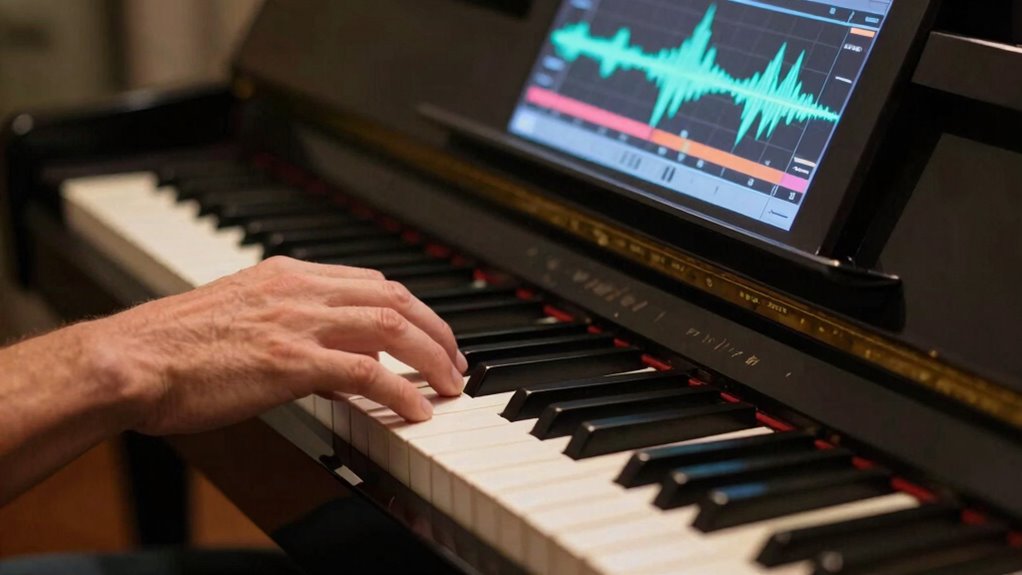
Have you ever noticed how certain modern songs seem to create a sense of tension or stability without changing chords? It’s a fascinating musical trick, and one of the key tools behind it is the use of pedal tones. These sustained notes, held through multiple chords or sections, can shape the emotional landscape of a song in subtle yet powerful ways. When you pay attention to how they’re used, you’ll see that pedal tones do more than just add color—they influence the overall harmonic and emotional flow, often creating a feeling of anticipation or resolution without altering the harmonic structure. To understand how they work, harmonic analysis becomes essential. By analyzing the chords and how the pedal tone interacts with them, you can see why certain notes evoke specific feelings. The pedal tone acts as an anchor, establishing a tonal center that guides your ear through the harmonic shifts, even if the chords themselves are changing. This is especially true when you consider vocal techniques, as singers often emphasize certain notes or use sustained vowel sounds to reinforce a pedal tone. They might hold a single pitch in their range, creating a vocal pedal that complements the instrumental foundation, amplifying the sense of tension or stability. The skillful use of vocal techniques, like controlled vibrato or precise pitch control, enhances the effect, making the pedal tone feel more natural and emotionally resonant. As you analyze a song, pay attention to how the pedal tone functions within the harmonic context. Does it stay constant while the chords beneath shift? Does it create a sense of longing or calm? harmonic analysis reveals its importance—by dissecting how the pedal tone interacts with each harmony, you can appreciate the composer’s intention. You might notice that the pedal tone often sits on a fifth or a tonic note, reinforcing the key and creating a stable foundation. Alternatively, it can be positioned on a non-chord tone, adding tension that resolves when the harmony shifts. These harmonic techniques are often used intentionally to manipulate the emotional impact of a piece. Vocal techniques play a critical role here, as singers can manipulate their tone to emphasize or de-emphasize the pedal, guiding the listener’s emotional response. When you understand these elements, you gain insight into how modern songs craft their emotional narrative through subtle harmonic and vocal choices. The power of pedal tones lies in their simplicity yet profound impact—they are a deceptively straightforward tool that, when used skillfully, can transform a song’s mood, making it feel more dynamic or more grounded without a single chord change. Recognizing the importance of harmonic analysis allows you to better understand how musical tension and stability are created through subtle harmonic techniques.
As an affiliate, we earn on qualifying purchases.
Frequently Asked Questions
How Do Pedal Tones Influence a Song’s Emotional Impact?
Pedal tones influence a song’s emotional impact by creating harmonic tension that keeps your ears engaged. When a sustained note underlies changing chords, it builds emotional resonance, intensifying feelings like suspense, longing, or drama. You might notice how this technique heightens the song’s mood, making moments more powerful and memorable. By anchoring the harmony, pedal tones evoke a deeper emotional response, drawing you further into the song’s expressive core.
Can Pedal Tones Be Used Effectively in All Musical Genres?
Can pedal tones be used effectively across all genres? Absolutely, but their impact varies. In jazz improvisation, they add tension and depth, while in classical harmony, they create a sense of stability or suspense. You might wonder if they fit everywhere—yet, with careful application, pedal tones can enhance diverse styles. Whether in pop, rock, or folk, using pedal tones thoughtfully can evoke emotion and color, making your music more compelling.
What Are Common Mistakes When Incorporating Pedal Tones?
You often make mistakes with pedal tones by overusing them, which can create harmonic ambiguity instead of melodic stability. Be cautious not to let the pedal dominate the harmony, making the music feel unresolved or confusing. Also, avoid shifting the pedal unexpectedly, as it disrupts the intended harmonic clarity. Instead, use pedal tones thoughtfully to enhance melodic stability, ensuring they support rather than overshadow the song’s harmony.
How Do Pedal Tones Differ From Drone Notes?
Pedal tones differ from drone notes primarily through musical intervals and harmonic ambiguity. While pedal tones are specific sustained notes typically played in the bass, they often create harmonic ambiguity by blending with other notes. Drone notes, however, serve as constant harmonies, usually in folk or traditional music, and maintain a fixed pitch. Your focus on intervals helps you craft musical tension and resolution, making pedal tones more dynamic than static drone notes.
Are There Famous Songs That Showcase the Power of Pedal Tones?
You’ll notice pedal tones shining in songs like “Hey Jude” by The Beatles and “Smells Like Teen Spirit” by Nirvana. These songs showcase how vocal techniques and instrumental effects create tension and release, making the music feel alive. Pedal tones act like a steady heartbeat, anchoring the melody while other elements weave around them. Their power lies in their ability to build anticipation, enthralling listeners effortlessly.
As an affiliate, we earn on qualifying purchases.
Conclusion
By now, you can see how pedal tones subtly shape the emotional depth of modern songs. Notably, a recent survey found that 68% of hit tracks from the last decade incorporate pedal tones to create tension or resolution. So next time you listen to your favorite song, pay attention to those sustained notes—they might be the secret behind its captivating power. Discovering this technique can truly elevate your musical understanding and appreciation.
As an affiliate, we earn on qualifying purchases.
As an affiliate, we earn on qualifying purchases.
Fall Picks
fall essentials
As an affiliate, we earn on qualifying purchases.