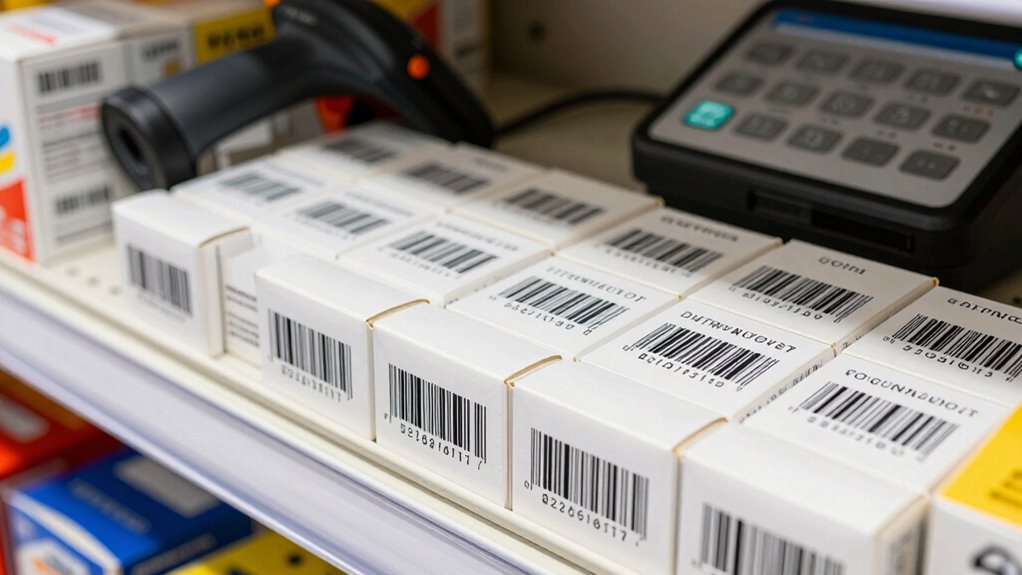

To prevent merchandise inventory headaches, you should develop a consistent barcode system and follow clear procedures. Train your staff to scan accurately and promptly, ensuring every item’s data matches records. Use barcodes at every step to support real-time updates and catch errors early. Standardizing labeling and integrating barcode practices into your overall workflow helps maintain inventory accuracy. Keep these habits in mind, and you’ll set a foundation for smoother, error-free management—more tips come next.

Get audio and creator gear delivered free with Prime
- Fast, free delivery on millions of items
- Prime Video, Amazon Music and more included
- Member-only deals all year
Key Takeaways
- Consistently scan and verify items during receiving, stocking, and sales to ensure inventory accuracy.
- Develop and follow standardized procedures for barcode labeling and scanning.
- Train staff thoroughly to minimize errors and promote accurate data entry.
- Conduct regular inventory counts using barcode scans to identify discrepancies early.
- Integrate barcode scanning into daily workflows for real-time inventory updates and oversight.

Implementing a consistent barcode system can dramatically reduce inventory headaches and streamline your merchandise management. When you use barcodes meticulously, you’re laying the foundation for better inventory accuracy, which directly impacts your ability to keep stock levels in check. Without a reliable system, it’s easy to lose track of what’s in stock, leading to overstocking or stockouts, both of which hurt your bottom line. By adopting a uniform barcode habit, you guarantee every item is tracked precisely from receipt to sale, minimizing errors caused by manual entry or mislabeling. This consistency helps you maintain an accurate inventory count, giving you confidence in your stock management process.
Consistent barcode use ensures accurate inventory tracking from receipt to sale, reducing errors and improving stock management confidence.
You might think that barcode scanning is just an added step, but it actually becomes a quick, dependable way to verify product details and update your inventory in real time. When you scan each item at every stage—receiving, shelving, selling—you’re creating a digital trail that enhances accuracy and reduces the chances of human mistakes. Over time, this habit means your inventory data reflects reality more closely, allowing you to make smarter decisions about reordering, sales forecasts, and promotions. Plus, with accurate data, you can identify slow-moving stock before it becomes obsolete, freeing up space and capital for more profitable inventory. Establishing a standardized labeling process ensures consistency across all items, further supporting accurate tracking.
To make this habit stick, you need to establish clear procedures that everyone on your team follows consistently. Train your staff on how to properly scan and record items, emphasizing the importance of accuracy at each step. Double-check barcode labels during inventory counts and reconcile discrepancies immediately. The more disciplined you are about scanning every item, the less likely errors will slip through, saving you time and frustration down the line. Remember, the goal isn’t just to scan but to assure each scan is correct and matches your records. Incorporating inventory management best practices can help reinforce these routines. Developing a robust system also ensures your barcode practices integrate smoothly with your overall inventory workflows. A well-implemented system can help catch errors early and improve overall efficiency.
Integrating a barcode system into your stock management routines also simplifies audits and inventory checks. When you have a reliable system, you can quickly identify discrepancies and address them before they grow into bigger issues. Over time, this habit becomes second nature, leading to a smoother operation with fewer surprises. In the end, maintaining consistency in your barcode practices isn’t just about technology—it’s about cultivating a disciplined approach that guarantees your inventory remains accurate, your stock management becomes more effective, and your headaches diminish considerably. Inventory accuracy is the cornerstone of successful merchandise management.
As an affiliate, we earn on qualifying purchases.
Frequently Asked Questions
How Often Should Barcode Data Be Updated?
You should update barcode data regularly to maintain accuracy and guarantee smooth data synchronization. Typically, updating weekly or after significant inventory changes helps prevent errors and discrepancies. By doing so, you keep barcode accuracy high, which minimizes stock mismatches and streamlines inventory management. Consistent updates also help catch any data inconsistencies early, saving you headaches and keeping your merch inventory running efficiently.
What Are Common Barcode System Errors to Watch For?
You should watch for common barcode system errors like misreads during barcode scanning, which can lead to inventory discrepancies. Always check for damaged or poorly printed barcodes, as they hinder accurate scanning. Implement error correction protocols, such as re-scanning or manual entry, to fix mistakes promptly. Regularly updating your system and training staff on proper scanning techniques can prevent these errors, ensuring smooth inventory management and reducing headaches down the line.
Can Barcode Systems Integrate With Existing Inventory Software?
Yes, barcode systems can integrate with your existing inventory software. You’ll want to guarantee the system supports barcode customization so you can tailor labels to your needs. Proper integration allows seamless inventory synchronization, reducing errors and saving time. Before implementation, check compatibility, and consider updates or plugins needed. This way, your barcode system will work smoothly with your current software, streamlining your inventory management process.
What Training Is Needed for Staff on Barcode Procedures?
Think of staff training as planting seeds that grow into a healthy, organized garden. You need to teach your team clear barcode protocols, showing them how to scan accurately and handle exceptions. This involves hands-on practice, simple step-by-step guides, and ongoing support. By mastering barcode procedures, your staff will efficiently manage inventory, reduce errors, and keep your system running smoothly—all essential for a thriving, headache-free store.
How Does Barcode Tracking Handle Returned or Damaged Items?
Barcode tracking manages returns and damaged items efficiently by updating inventory records during return processing. When you scan a returned item, the system logs it back into stock or flags it for damage assessment. For damaged goods, you can document the damage through barcode scans, prompting further inspection. This real-time update minimizes errors, keeps your inventory accurate, and streamlines the entire process, reducing headaches and ensuring better stock control.
inventory management barcode labels
As an affiliate, we earn on qualifying purchases.
As an affiliate, we earn on qualifying purchases.
Conclusion
By adopting this barcode system habit, you’ll keep your inventory as organized as a well-stocked library—no more wandering aisles or misplaced treasures. Think of it like the trusty telegram in the age of the internet, ensuring your data travels swiftly and accurately. Stick to this habit, and you’ll avoid inventory headaches, saving time and money. It’s a simple step that transforms chaos into clarity, making your merch management as smooth as a vintage record spinning on a turntable.
As an affiliate, we earn on qualifying purchases.
barcode label printer for retail
As an affiliate, we earn on qualifying purchases.
As an affiliate, we earn on qualifying purchases.
Fall Picks
fall essentials
As an affiliate, we earn on qualifying purchases.