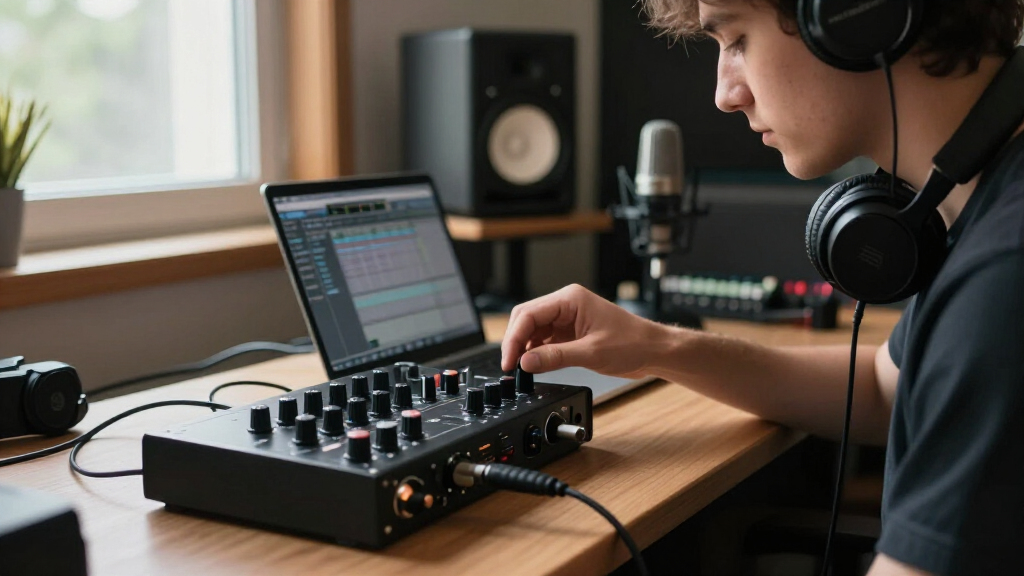

Choosing the right audio interface for music production can significantly impact your recording quality and workflow. The best overall pick, the Focusrite Scarlett 16i16 4th Gen, offers a versatile array of inputs for multi-instrument recording. The Universal Audio Volt 2 stands out for its superior preamps and classic sound, ideal for professional-sounding recordings. Meanwhile, budget options like the Behringer UMC202HD provide solid performance at an accessible price. The main tradeoffs include balancing sound quality, number of inputs, usability, and budget. Keep reading for a detailed breakdown of these options to find the best fit for your music production setup.

Get audio and creator gear delivered free with Prime
- Fast, free delivery on millions of items
- Prime Video, Amazon Music and more included
- Member-only deals all year
Complete the kit


Key Takeaways
- Top-performing interfaces balance high-quality preamps with multiple inputs and outputs.
- Budget models often cut corners on features but still deliver decent sound for beginners.
- Connectivity options like USB-C and MIDI support are crucial for modern workflows.
- Build quality and ease of use differentiate professional-grade interfaces from entry-level options.
- Higher price tags generally correlate with better sound fidelity, lower latency, and additional features.
| Synido USB C Audio Interface for Recording Music, Streaming, Podcasting with XLR, Line Input, 24bit/48kHz, 48V Phantom Power, 2-channel, Silver |  | Best Compact Entry-Level Interface | Compatible Devices: Computer, PC, Laptop, Mac, Macbook Pro, IOS, iPhone, iPad, Android | Supported Software: Any Digital Audio Workstation compatible with Windows / Mac OS | Connectivity Technology: AUX, USB | VIEW LATEST PRICE | See Our Full Breakdown |
| Universal Audio Volt 2 USB Audio Interface |  | Best for Professional-Grade Home Studio Use | Bit Depth: 24-bit | Sample Rate: 192 kHz | Compatibility: MacOS, Windows, iPad, iPhone | VIEW LATEST PRICE | See Our Full Breakdown |
| Focusrite Scarlett 16i16 4th Gen USB Audio Interface for Music Production and Recording |  | Best for Large-Scale Studio Setups | Compatible Devices: Microphone, Instrument, Personal Computer, Headphones, Studio Monitors | Supported Software: All audio recording software | Connectivity Technology: USB | VIEW LATEST PRICE | See Our Full Breakdown |
| Focusrite Scarlett Solo 3rd Gen USB Audio Interface for Guitarists, Vocalists, Podcasters, and Producers |  | Best for Solo Artists and Podcasters | Pre-amps: High-performing with Air mode | Inputs: 2 high-headroom instrument inputs | Sample Rate: up to 24-bit/192kHz | VIEW LATEST PRICE | See Our Full Breakdown |
| Yamaha URX22C 2-in/2-out USB-C Audio/MIDI Interface with 32-bit/192kHz Support |  | Best for Musicians Needing Integrated MIDI and Durability | Audio Resolution: 32-bit/192kHz | Inputs: 2 combo XLR/TRS | Outputs: 2 main TRS | VIEW LATEST PRICE | See Our Full Breakdown |
| Motu M2 2×2 USB-C Audio Interface with XLR-XLR Cable Bundle |  | Best Overall for Professional Sound Quality | Technology: ESS Sabre32 Ultra DAC | Dynamic Range: 120 dB | EIN: -129 dBu | VIEW LATEST PRICE | See Our Full Breakdown |
| Behringer U-PHORIA UM2 Audiophile 2×2 USB Audio Interface with XENYX Mic Preamplifier |  | Best for Beginners and Home Studios | Type: USB Audio Interface | Channels: 2×2 | Mic Preamplifier: XENYX | VIEW LATEST PRICE | See Our Full Breakdown |
| M-AUDIO M-Track Solo USB Audio Interface for Recording, Streaming, and Podcasting |  | Best for Streaming and Content Creators | Audio Resolution: 48 kHz | Inputs: XLR/Line combo with phantom power | Outputs: Stereo RCA, 1/8″ headphone | VIEW LATEST PRICE | See Our Full Breakdown |
| PreSonus AudioBox 96 25th Anniversary USB Audio Interface |  | Best for Portable Recording with Software Bundle | Channels: 2 | Sample Rate: up to 96 kHz | Bit Depth: 24-bit | VIEW LATEST PRICE | See Our Full Breakdown |
| Mackie Onyx Producer 2×2 USB Audio Interface with MIDI |  | Best for High-Resolution Recording and Mobile Use | Resolution: 24-Bit/192kHz | Inputs: 2 combo XLR/TRS | Outputs: 2 main, headphone | VIEW LATEST PRICE | See Our Full Breakdown |
| Audio Interface, 2×2 24-bit/192kHz High-Fidelity Recording for PC/Mac/iOS |  | Best Overall for High-Resolution Versatility | Resolution: 24-bit/192kHz | Inputs: 2 XLR/TRS combo jacks | Phantom Power: 48V | VIEW LATEST PRICE | See Our Full Breakdown |
| Behringer UMC202HD Audiophile 2×2 USB Audio Interface with Midas Mic Preamplifiers |  | Best for Professional Sound with Midas Preamps | Inputs: 2 combination XLR/TRS | Outputs: 2 | Sample Rate: 24-Bit/192kHz | VIEW LATEST PRICE | See Our Full Breakdown |
| PreSonus Studio 24c 2×2 USB Audio Interface with Studio One DAW Software |  | Best for Integrated Production with Software Bundle | Inputs: 2 XLR-¼ combo | Outputs: 2 TRS main, headphone out | Sampling Rate: 192 kHz | VIEW LATEST PRICE | See Our Full Breakdown |
| M-AUDIO M-Track Duo USB Audio Interface for Recording, Streaming, and Podcasting |  | Best Compact for Streaming and Podcasting | Inputs: 2 combo XLR/Line/Instrument with phantom power | Outputs: Stereo 1/4″ main, 1/4″ headphone | Resolution: 48kHz | VIEW LATEST PRICE | See Our Full Breakdown |
| Behringer U-PHORIA UMC404HD Audiophile 4×4 USB Audio/MIDI Interface with Midas Preamplifiers |  | Best for Multi-Input Professional Recording | Number of Inputs: 4 | Number of Outputs: 4 | MIDI I/O: Yes | VIEW LATEST PRICE | See Our Full Breakdown |
| audio interface for music production | Inputs | Outputs |
|---|---|---|
| Synido USB C Audio Interface f | — | — |
| Universal Audio Volt 2 USB Aud | 1 combo XLR/TRS | 1 main TRS |
| Focusrite Scarlett 16i16 4th G | — | — |
| Focusrite Scarlett Solo 3rd Ge | 2 high-headroom instrument inputs | 2 low-noise balanced outputs |
| Yamaha URX22C 2-in/2-out USB-C | 2 combo XLR/TRS | 2 main TRS |
| Motu M2 2×2 USB-C Audio Interf | 2 | 2 |
| Behringer U-PHORIA UM2 Audioph | — | — |
| M-AUDIO M-Track Solo USB Audio | XLR/Line combo with phantom power | Stereo RCA, 1/8" headphone |
| PreSonus AudioBox 96 25th Anni | 2 combo mic/instrument, MIDI I/O | Balanced ¼” TRS, headphones |
| Mackie Onyx Producer 2×2 USB A | 2 combo XLR/TRS | 2 main, headphone |
| Audio Interface | 2 XLR/TRS combo jacks | — |
| Behringer UMC202HD Audiophile | 2 combination XLR/TRS | 2 |
| PreSonus Studio 24c 2×2 USB Au | 2 XLR-¼ combo | 2 TRS main, headphone out |
| M-AUDIO M-Track Duo USB Audio | 2 combo XLR/Line/Instrument with phantom power | Stereo 1/4" main, 1/4" headphone |
| Behringer U-PHORIA UMC404HD Au | — | — |
More Details on Our Top Picks
Synido USB C Audio Interface for Recording Music, Streaming, Podcasting with XLR, Line Input, 24bit/48kHz, 48V Phantom Power, 2-channel, Silver
The Synido USB C Audio Interface stands out for its simplicity and portability, making it ideal for creators who need high-quality sound on the go. Compared to the Focusrite Scarlett Solo, it offers comparable 24-bit/48kHz fidelity but with a more lightweight and user-friendly design. Its support for multiple devices and operating systems enhances versatility, though the lower maximum sample rate limits its appeal for those seeking ultra-high-resolution recordings. The inclusion of professional phantom power supports a wide range of microphones, and its compact size ensures easy transport. However, it requires a third-party ASIO driver for optimal Windows performance, which could be a hurdle for some users. This pick makes the most sense for musicians, podcasters, or streamers who prioritize portability and straightforward setup over advanced features or higher sample rates.
Pros:- High-quality 24-bit/48kHz audio for clear recordings and streaming
- Multiple monitoring modes for versatile use cases
- Supports professional 48V phantom power for dynamic microphones
- Compact and lightweight, ideal for portable use
Cons:- Requires third-party ASIO driver for optimal Windows compatibility
- Limited to 2 channels, which may restrict complex recording setups
Best for: Beginners, mobile content creators, and podcasters needing portable, high-quality audio input
Not ideal for: Advanced producers or studio engineers requiring multi-channel recording and higher sample rates
- Compatible Devices:Computer, PC, Laptop, Mac, Macbook Pro, IOS, iPhone, iPad, Android
- Supported Software:Any Digital Audio Workstation compatible with Windows / Mac OS
- Connectivity Technology:AUX, USB
- Number of Channels:2
- Frequency Response:48 KHz
- Operating System Compatibility:Windows 7 and above, Mac OSX 10.11 and above, Android, iOS 10.0 or above
- Audio Input:Microphone
- Maximum Sample Rate:48 KHz
- Item Dimensions:4.53″D x 5.51″W x 1.77″H
Our verdict“This interface suits newcomers and mobile users who need reliable sound quality without complex features.”
Universal Audio Volt 2 USB Audio Interface
The Universal Audio Volt 2 offers a step up in recording fidelity with its 24-bit/192 kHz resolution, making it well-suited for professional-sounding music production. Unlike the Synido, which is more portable, the Volt 2 emphasizes high-end audio quality and offers vintage preamp emulation, adding character to recordings. The inclusion of UAD plug-ins and compatibility with iOS devices broadens its creative scope, but its need for external power and the requirement of an Apple Lightning to USB Camera Adapter for iPads can complicate setup. Its high sample rate and professional features make it ideal for semi-professional or home studio enthusiasts, but the lack of a built-in battery and portability may limit on-the-move use. This device is better suited for serious producers who prioritize sound quality over mobility.
Pros:- High-resolution 24-bit/192 kHz audio for professional clarity
- Vintage preamp emulation adds desirable character
- Compatible with Mac, Windows, iOS devices
- Access to UAD plug-ins and Luna DAW enhances creative options
Cons:- Requires external power supply, reducing portability
- Needs Apple Lightning to USB Camera Adapter for iPads, adding complexity
Best for: Home studio producers, musicians, and mixing engineers seeking professional-grade sound with vintage character
Not ideal for: Travelers or mobile content creators who need a lightweight, portable interface without external power requirements
- Bit Depth:24-bit
- Sample Rate:192 kHz
- Compatibility:MacOS, Windows, iPad, iPhone
- Requires:External Volt power supply, Apple Lightning to USB Camera Adapter
- Inputs:1 combo XLR/TRS
- Outputs:1 main TRS
Our verdict“Ideal for serious home studio users who prioritize high fidelity and vintage tones over portability.”
Focusrite Scarlett 16i16 4th Gen USB Audio Interface for Music Production and Recording
The Focusrite Scarlett 16i16 4th Gen is designed for users needing extensive input/output options, such as multi-instrument recording or complex routing. Its 16 channels of 24-bit/192kHz audio convert the device into a small digital console, making it a clear choice over the more streamlined Scarlett Solo or Synido for larger projects. While its vast connectivity supports advanced setups, this complexity can overwhelm beginners, and its size demands significant desk space. Unlike the Yamaha URX22C, which offers MIDI alongside audio, the 16i16 provides more I/O but at the expense of portability. This interface is perfect for professional studios or advanced home setups but not ideal for mobile or quick-setup environments.
Pros:- 16 inputs and 16 outputs for advanced routing and multi-instrument setups
- High-quality 24-bit/192kHz conversion for studio-grade sound
- Includes useful software and features like Auto Gain and Clip Safe
- Robust build suited for studio environments
Cons:- Complex interface may intimidate beginners
- Large footprint requires ample desk space
- No built-in microphone or speakers included
Best for: Professional musicians, recording engineers, and producers managing multiple instruments and tracks simultaneously
Not ideal for: Solo artists or hobbyists with limited space and simpler recording needs
- Compatible Devices:Microphone, Instrument, Personal Computer, Headphones, Studio Monitors
- Supported Software:All audio recording software
- Connectivity Technology:USB
- Number of Channels:16
- Frequency Response:125 KHz
- Maximum Sample Rate:192 KHz
- Item Dimensions:6.1″D x 8.65″W x 2.38″H
Our verdict“Best suited for professional studios or advanced users with large multi-input recording requirements.”
Focusrite Scarlett Solo 3rd Gen USB Audio Interface for Guitarists, Vocalists, Podcasters, and Producers
The Focusrite Scarlett Solo 3rd Gen is a dependable choice for solo musicians, vocalists, and podcasters seeking studio-quality sound in a compact form. Its high-quality pre-amps with Air mode boost clarity for vocals and guitar, making it stand out among similarly sized interfaces like the Synido. While its two inputs are sufficient for most solo applications, it falls short for multi-instrument or complex recording needs. Its easy setup and included software make it ideal for beginners or those who want a reliable, straightforward device. Compared with the Yamaha URX22C, which offers MIDI, the Solo emphasizes simplicity and high-quality pre-amps for recording. Its limited I/O, however, makes it less suitable for larger projects.
Pros:- High-performing pre-amps with Air mode for enhanced vocal and guitar clarity
- Studio-grade converters ensure professional sound quality
- Includes popular recording software and effects
- Reliable with a three-year warranty
Cons:- Limited to two inputs, restricting multi-instrument recording
- USB-only connectivity limits mobility in some setups
Best for: Garage musicians, podcasters, and solo performers needing quality sound without complexity
Not ideal for: Multi-instrument or collaborative projects demanding more inputs and outputs
- Pre-amps:High-performing with Air mode
- Inputs:2 high-headroom instrument inputs
- Sample Rate:up to 24-bit/192kHz
- Outputs:2 low-noise balanced outputs
- Included Software:Pro Tools Intro+, Ableton Live Lite, Cubase LE, Hitmaker Expansion
- Warranty:3 years
Our verdict“Perfect for solo artists and podcasters who need high-quality, straightforward recording capability.”
Yamaha URX22C 2-in/2-out USB-C Audio/MIDI Interface with 32-bit/192kHz Support
The Yamaha URX22C combines durable metal housing with high-resolution audio and MIDI I/O, making it a solid choice for musicians and producers who need both audio and MIDI connectivity. Compared to the Focusrite Scarlett Solo, it offers MIDI I/O in addition to audio, broadening its creative potential. Its 32-bit/192kHz support ensures high-fidelity recordings, suitable for professional or semi-professional work. The inclusion of DSP effects for latency-free monitoring enhances workflow, but the limited two-input setup isn’t ideal for multi-instrument recording. Its reliance on USB-C and potentially complex software setup might challenge beginners, but for those comfortable with setup, it offers reliable, high-quality performance.
Pros:- High-resolution 32-bit/192kHz audio and MIDI I/O
- Durable full-metal housing for longevity
- DSP effects for real-time latency-free monitoring
- Cross-platform compatibility with Windows, macOS, iOS
Cons:- Limited to 2 inputs and outputs, restricting multi-instrument setups
- Requires USB-C port and potentially complex software setup
Best for: Musicians and producers who require both audio and MIDI in a durable, portable package
Not ideal for: Beginners or users needing multiple inputs for large multi-track recordings
- Audio Resolution:32-bit/192kHz
- Inputs:2 combo XLR/TRS
- Outputs:2 main TRS
- MIDI I/O:Yes
- Phantom Power:+48V
- Housing:Full-metal
Our verdict“Best for versatile musicians and producers who need reliable MIDI and audio in a durable, portable unit.”
Motu M2 2×2 USB-C Audio Interface with XLR-XLR Cable Bundle
The Motu M2 stands out for its exceptional audio fidelity, thanks to ESS Sabre32 Ultra DAC technology, which surpasses many competitors like the PreSonus AudioBox 96 in sound clarity. Its 120 dB dynamic range and ultra-low noise floor make it ideal for critical listening and high-end recordings. The inclusion of an XLR-XLR cable bundle adds value for users who want a ready-to-record setup. However, its limited I/O options—just 2 inputs and outputs—may restrict more complex recording sessions, and its premium tech means a higher price compared to entry-level interfaces. Still, for those prioritizing top-tier audio quality in a compact form, this interface is a strong choice.
Pros:- Exceptional ESS Sabre32 Ultra DAC for pristine audio
- High 120 dB dynamic range ensures detailed sound capture
- Includes XLR-XLR cable bundle for immediate use
Cons:- Limited to 2 inputs and 2 outputs, restricting multi-mic setups
- Higher cost compared to basic interfaces with fewer features
Best for: Professional musicians and producers needing pristine sound quality in a portable form factor
Not ideal for: Home studio beginners or those needing multiple inputs for larger recording setups
- Technology:ESS Sabre32 Ultra DAC
- Dynamic Range:120 dB
- EIN:-129 dBu
- Inputs:2
- Outputs:2
- Connectivity:USB-C
Our verdict“This interface is best suited for professionals who prioritize audio fidelity over expandability.”
Behringer U-PHORIA UM2 Audiophile 2×2 USB Audio Interface with XENYX Mic Preamplifier
The Behringer U-PHORIA UM2 offers a straightforward setup with a XENYX mic preamp, providing professional-quality sound suitable for new musicians and home recorders. Compared to the M-AUDIO M-Track Solo, this interface delivers a more robust preamp, making it better for capturing vocals and instruments with clarity. Its compact size and USB-powered operation make it highly portable, but the basic feature set—limited to 2 inputs and no onboard effects—may leave advanced users wanting more. The 48 kHz resolution is sufficient for most projects, but pros seeking higher sample rates might need an upgrade. This model is a reliable, budget-friendly choice for entry-level recording.
Pros:- High-quality XENYX mic preamp with 100 dB dynamic range
- Compact, portable design ideal for mobile recording
- Compatible with most DAWs and easy to use
Cons:- Limited to 2 inputs and 2 outputs, restricting complex setups
- Lacks onboard effects or processing options
Best for: Beginner musicians, podcasters, and home recording enthusiasts
Not ideal for: Advanced producers needing multiple inputs, DSP effects, or higher sample rates
- Type:USB Audio Interface
- Channels:2×2
- Mic Preamplifier:XENYX
- Sampling Rate:48 kHz
- Connectivity:USB
- Power:USB-powered
Our verdict“This interface offers solid quality for newcomers seeking simple, reliable recording at an affordable price.”
M-AUDIO M-Track Solo USB Audio Interface for Recording, Streaming, and Podcasting
The M-AUDIO M-Track Solo is designed for versatility, offering 48 kHz resolution and combo XLR/Line inputs with phantom power, making it well-suited for streamers, podcasters, and musicians. Unlike higher-end models like the PreSonus AudioBox 96, it emphasizes ease of use and flexibility, with multiple output options for monitoring. However, its basic feature set means it lacks advanced controls or onboard effects, which might limit more experienced users who want detailed sound shaping. While it supports essential recording needs, those requiring higher sample rates or more inputs should consider more comprehensive interfaces. For quick, clear recordings and streaming, this is a practical choice.
Pros:- High-quality 48 kHz audio resolution for clarity
- Versatile combo XLR/Line input with phantom power
- Multiple outputs for flexible monitoring
Cons:- Limited to basic recording features without advanced controls
- No built-in microphone or instrument preamps beyond combo input
Best for: Content creators, streamers, and beginner musicians needing straightforward recording
Not ideal for: Professional studios or users needing high-channel count and advanced features
- Audio Resolution:48 kHz
- Inputs:XLR/Line combo with phantom power
- Outputs:Stereo RCA, 1/8″ headphone
- Software Included:MPC Beats
- Power:USB
Our verdict“This interface simplifies recording and streaming for content creators who prioritize ease and clarity.”
PreSonus AudioBox 96 25th Anniversary USB Audio Interface
The PreSonus AudioBox 96 stands out for its high-quality mic preamps and 24-bit/96 kHz recording capability, making it a versatile choice for mobile musicians and producers. Its combo inputs support microphones and instruments, with MIDI I/O for added flexibility. Unlike the Mackie Onyx Producer, which offers higher resolution at 192kHz, the AudioBox 96 balances affordability with professional features. The included Studio One Artist and Ableton Live Lite software add value, especially for those starting out. Its USB bus-powered design enhances portability, but with only 2 channels, it’s limited for larger projects. This interface fits users who want quality and portability without sacrificing software support.
Pros:- High-quality Class-A mic preamps for clear recordings
- Supports up to 96 kHz/24-bit for professional sound
- Includes popular recording software for immediate use
Cons:- Limited to 2 channels, restricting larger multi-mic setups
- Potential latency issues on some systems due to USB connection
Best for: Mobile musicians, beginners, and small project producers who want software included
Not ideal for: Large studio environments or users needing more than 2 channels
- Channels:2
- Sample Rate:up to 96 kHz
- Bit Depth:24-bit
- Inputs:2 combo mic/instrument, MIDI I/O
- Outputs:Balanced ¼” TRS, headphones
- Power:USB bus-powered
Our verdict“This interface offers a portable, feature-rich package for beginners and mobile recording enthusiasts.”
Mackie Onyx Producer 2×2 USB Audio Interface with MIDI
The Mackie Onyx Producer 2×2 offers professional-grade 24-bit/192kHz resolution, making it ideal for high-fidelity recordings. Its Onyx mic preamps deliver a warm, transparent sound, comparable to the MotU M2 but with the added benefit of MIDI I/O for hardware integration. The durable build and bus-powered operation make it suitable for mobile setups and studio work alike. However, its 2-input, 2-output configuration may limit larger multi-mic arrangements, and some users might find the USB bus power insufficient on older or less capable computers. Nonetheless, it provides a balanced mix of high resolution, portability, and MIDI connectivity for serious musicians and producers who need portable high-end audio.
Pros:- High-resolution 24-bit/192kHz audio for detailed recordings
- Boutique-quality Onyx preamps with transparent sound
- MIDI I/O for integrating hardware instruments
Cons:- Limited to 2 inputs and 2 outputs, restricting complex setups
- Requires USB bus power, which may be insufficient on some systems
Best for: High-resolution recording artists and mobile producers needing MIDI support
Not ideal for: Producers requiring more than 2 inputs or larger interface configurations
- Resolution:24-Bit/192kHz
- Inputs:2 combo XLR/TRS
- Outputs:2 main, headphone
- MIDI I/O:Yes
- Phantom Power:Yes
- Power:Bus-powered USB
Our verdict“This interface is ideal for musicians and producers seeking high-resolution audio with MIDI connectivity in a portable package.”
Audio Interface, 2×2 24-bit/192kHz High-Fidelity Recording for PC/Mac/iOS
This interface stands out for delivering studio-quality 24-bit/192kHz fidelity in a compact, plug-and-play package, making it ideal for those who prioritize clarity and simplicity. Compared with the Behringer UMC202HD, it offers slightly more refined build quality and a sleeker illuminated design, though it relies solely on bus power without an external supply, which could be limiting for long sessions. Its versatile combo inputs accommodate both microphones and instruments, and the zero-latency monitoring ensures seamless recording. However, its 2-channel limit makes it less suitable for larger setups or multi-mic recordings. The sleek illuminated controls add a professional touch, and USB-C connectivity guarantees fast, reliable performance on modern devices. This pick makes the most sense for solo musicians or home producers who want high fidelity without complex setup.Pros:- High-resolution 24-bit/192kHz audio quality
- Plug-and-play USB-C connectivity, no drivers needed
- Versatile XLR/TRS inputs for microphones and instruments
- Elegant illuminated controls for easy operation
Cons:- Limited to 2 channels, restricting larger setups
- No external power supply, relying solely on bus power
Best for: Solo artists or home producers seeking high-resolution sound with a sleek, easy-to-use interface.
Not ideal for: Pro studios or multi-mic recording setups that require more inputs or external power options.
- Resolution:24-bit/192kHz
- Inputs:2 XLR/TRS combo jacks
- Phantom Power:48V
- Connectivity:USB C
- Built-in Monitoring:Zero-latency direct monitoring
- Additional ports:3.5mm headphone jack
Our verdict“This interface is perfect for solo performers or home studios needing high-fidelity, simple connectivity, and a sleek design.”
Behringer UMC202HD Audiophile 2×2 USB Audio Interface with Midas Mic Preamplifiers
The UMC202HD offers Midas-designed mic preamps and 24-bit/192kHz resolution, making it a strong choice for those who need quality preamps for clear vocal and instrument recordings. Compared to the PreSonus Studio 24c, it provides similar high-resolution audio but without MIDI I/O, which might be a drawback for producers needing MIDI integration. Its zero-latency monitoring and phantom power support versatile recording, yet the 2-in/2-out configuration limits larger multi-mic or instrument setups. The interface’s durable metal chassis is ideal for mobile or studio use, though it requires a USB 2.0 connection, which could limit future compatibility with newer devices. The preamps deliver clean, professional sound, making this a solid pick for project studios focused on high-quality audio.Pros:- High-quality Midas-designed mic preamps for professional clarity
- Supports 24-bit/192kHz high-resolution recording
- Zero-latency direct monitoring
- Rugged metal chassis for durability
Cons:- Limited to 2 inputs and 2 outputs, less suitable for complex setups
- Requires USB 2.0 connection, potentially limiting future compatibility
Best for: Producers and musicians seeking high-quality preamps in a portable, durable interface for solo or duo recordings.
Not ideal for: Producers who require multiple inputs and outputs for complex multi-mic sessions or large bands.
- Inputs:2 combination XLR/TRS
- Outputs:2
- Sample Rate:24-Bit/192kHz
- Phantom Power:+48V
- Connectivity:USB 2.0
- Preamps:Midas-designed
Our verdict“This interface suits musicians and producers who prioritize premium preamp quality and portability for focused recording tasks.”
PreSonus Studio 24c 2×2 USB Audio Interface with Studio One DAW Software
The Studio 24c combines high-quality XMAX-L preamps with included Studio One DAW, making it a compelling choice for producers seeking an integrated recording solution. Compared to the Behringer UMC202HD, it adds the convenience of bundled professional software and MIDI I/O, which broadens creative possibilities. Its 24-bit/192kHz resolution ensures studio-grade audio, but the 2-input configuration limits multi-mic recording. The USB-C bus power supports modern setups, yet it lacks built-in effects or DSP, requiring external processing if needed. This interface is best suited for users who want a seamless connection between hardware and software, especially those starting out with Studio One or looking for a plug-and-play experience.Pros:- High-quality XMAX-L preamps for clear, detailed audio
- Includes professional Studio One DAW software
- Supports MIDI I/O for expanded musical control
- USB-C bus-powered for convenience
Cons:- Limited to 2 inputs and 2 outputs, less suitable for larger projects
- No onboard DSP or effects for real-time processing
Best for: Home studio owners and producers who want integrated software and MIDI support for streamlined workflows.
Not ideal for: Pro studios needing extensive inputs or advanced onboard effects processing.
- Inputs:2 XLR-¼ combo
- Outputs:2 TRS main, headphone out
- Sampling Rate:192 kHz
- Resolution:24-bit
- Power:USB-C bus-powered
- MIDI I/O:Yes
Our verdict“This interface is ideal for home producers who want integrated recording software and MIDI support in a compact, high-resolution device.”
M-AUDIO M-Track Duo USB Audio Interface for Recording, Streaming, and Podcasting
The M-Track Duo is designed for portability and straightforward use, offering 48kHz resolution with two combo inputs for microphones or instruments. It excels for streamers, podcasters, or musicians who need a simple, reliable setup on the go. Compared to the higher-resolution interfaces like the Focusrite Scarlett Solo, it trades some audio fidelity for portability and affordability. Its direct monitoring feature and included MPC Beats software make it easy to start recording immediately. However, the 48kHz limit may not satisfy users seeking professional, high-resolution output, and its basic software bundle may require upgrades for advanced production. This makes it a practical choice for those prioritizing mobility and ease of use.Pros:- Portable and USB powered for mobile use
- High-quality preamps with phantom power
- Zero-latency monitoring with adjustable mix
- Includes MPC Beats software for quick start
Cons:- Limited to 2 inputs and 48kHz resolution, less suited for high-end production
- Basic software bundle may require additional investment
Best for: Podcasters, streamers, and mobile musicians seeking a compact, plug-and-play interface for entry-level recording.
Not ideal for: Producers needing high-resolution audio or multiple input channels for complex recordings.
- Inputs:2 combo XLR/Line/Instrument with phantom power
- Outputs:Stereo 1/4″ main, 1/4″ headphone
- Resolution:48kHz
- Power:USB powered
- Software:MPC Beats included
Our verdict“This interface is ideal for mobile content creators and beginners who need reliable, portable audio recording with minimal fuss.”
Behringer U-PHORIA UMC404HD Audiophile 4×4 USB Audio/MIDI Interface with Midas Preamplifiers
The U-PHORIA UMC404HD offers 4 inputs and 4 outputs with Midas preamps, making it well-suited for multi-mic or multi-instrument sessions. Compared to the 2×2 options like the Behringer UMC202HD or the PreSonus Studio 24c, it provides greater connectivity, ideal for small bands or complex setups. Its 24-bit/192kHz resolution and MIDI I/O support expand creative possibilities, though it’s more complex to operate and may be overwhelming for beginners. The sturdy metal chassis and professional-level preamps deliver high-quality sound, but it requires a USB 2.0 connection and doesn’t include onboard effects, limiting real-time processing. This interface is best for users who need multiple inputs for recording groups or ensembles in a semi-portable format.Pros:- Supports 4 inputs and 4 outputs for versatile recording
- Midas-designed preamps deliver clear, professional sound
- Includes MIDI I/O for expanded control
- Durable, impact-resistant metal chassis
Cons:- Requires USB 2.0 connection, limiting compatibility with newer devices
- No onboard effects or DSP for real-time processing
Best for: Small bands or multi-instrument producers needing multiple inputs and outputs with professional preamps.
Not ideal for: Solo musicians or beginners seeking simple, plug-and-play interfaces with minimal setup.
- Number of Inputs:4
- Number of Outputs:4
- MIDI I/O:Yes
- Resolution:24-Bit/192kHz
- Phantom Power:+48V
- Connectivity:USB 2.0
Our verdict“This interface is best suited for semi-professional setups requiring multiple channels and robust build quality.”
How We Picked
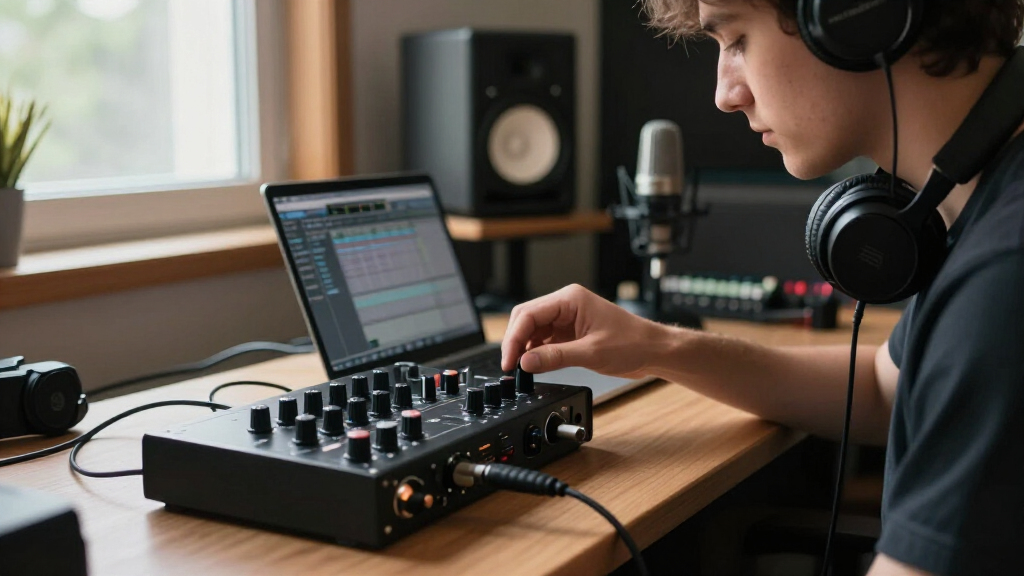
In selecting these audio interfaces, I prioritized key factors that influence music production quality and usability. Performance metrics such as bit depth, sample rate, preamp quality, and latency were central to the evaluation. I also considered build quality, compatibility with popular DAWs, and ease of setup, ensuring that each product provides reliable, studio-quality sound. Value was another critical aspect—balancing features against price to identify options suitable for different budgets. The ranking reflects a combination of technical performance, versatility, and overall user experience, making it easier for buyers to match their specific needs with the best available options.Factors to Consider When Choosing Audio Interface For Music Production
Choosing the right audio interface involves considering several key factors that directly impact your recording experience and final sound quality. Beyond just input and output counts, features like preamp quality, latency, and connectivity options play a vital role in your setup. Understanding these aspects can help prevent common pitfalls, such as overpaying for unnecessary features or choosing a model incompatible with your devices. A thoughtful approach ensures you select an interface that grows with your skills and project demands.Number of Inputs and Outputs
Determine how many instruments, microphones, or MIDI devices you’ll connect simultaneously. If you’re recording a full band or multiple vocals, aim for at least 4 to 8 inputs. For solo projects or streaming, 2 inputs may suffice. Overestimating your needs can lead to unnecessary expense, while underestimating can limit your flexibility. Consider future expansion, as interfaces with additional I/O ports can save you money and hassle later.
Preamp Quality and Sound Fidelity
The quality of preamps directly affects your recording clarity and warmth. Higher-grade preamps, like those from Midas or Focusrite, offer cleaner gain with less noise, essential for professional recordings. Cheaper interfaces might introduce hiss or distortion at higher gains, which can compromise your sound. It’s worth investing more if you prioritize pristine audio, especially for vocals and critical instruments.
Connectivity and Compatibility
Ensure the interface supports your computer or device—USB, USB-C, Thunderbolt, or even iOS compatibility. USB-C interfaces typically provide faster data transfer and lower latency, which benefits real-time monitoring. Compatibility with your DAW and operating system is also vital; some interfaces come bundled with software that can streamline your workflow. Don’t overlook the importance of MIDI support if you use external controllers or synths.
Latency and Performance
Low latency is crucial for real-time monitoring without delays. Modern interfaces with dedicated DSP or optimized drivers can reduce latency, making recording more natural. Check reviews or specifications for latency figures, especially if you plan to record with effects in real-time. Higher-end models tend to outperform budget options here, offering smoother, more reliable performance during complex sessions.
Build Quality and Portability
A sturdy, well-built interface ensures durability, especially if you move your setup frequently. Metal chassis and high-quality connectors reduce the risk of damage and connection issues over time. Portability matters if you perform live or record on the go; compact, bus-powered interfaces are easier to carry but may have fewer features. Balance your need for durability against size and power options.
Frequently Asked Questions
Do I need a professional-grade audio interface for beginner home recording?
Not necessarily. Beginners can start with a more affordable interface that offers decent preamps and good sound quality. Devices from brands like Focusrite or Behringer provide reliable performance without the high price tag. As you grow more experienced and your needs become more complex, you can upgrade to higher-end models. Starting with a solid, budget-friendly interface helps build your skills without overwhelming your initial setup.
Is USB-C better than USB-A for audio interfaces?
USB-C generally offers faster data transfer and lower latency, which can improve real-time monitoring and reduce audio dropouts. Many newer interfaces now incorporate USB-C to future-proof their compatibility. However, the key is ensuring your computer or device supports USB-C; otherwise, you’ll need an adapter. Both connections can deliver high-quality audio, but USB-C provides a slight advantage in performance and convenience.
Can I connect multiple interfaces to increase I/O channels?
While theoretically possible, connecting multiple interfaces is often complex and can introduce driver conflicts or synchronization issues. Most users find that a single, higher-capacity interface with enough inputs and outputs better suits their needs. If you require extensive I/O, look for interfaces with a larger number of channels built-in, such as 8 or 16 inputs, rather than stacking multiple units. This approach is more stable and easier to manage.
How important is MIDI support in a music production interface?
MIDI support is highly valuable if you work with external MIDI controllers, synthesizers, or drum machines. It allows seamless integration with your DAW and hardware instruments, streamlining your workflow. Even if you don’t use MIDI now, having support for it can future-proof your setup as your music production expands. Many budget interfaces omit MIDI, so consider this feature if it’s relevant to your projects.
Should I prioritize portability or studio features?
This depends on your workflow. Portable interfaces are ideal for mobile recording, live performances, or small setups where space is limited. They often have bus-powered operation and compact designs. Conversely, studio-focused interfaces typically offer more inputs, better preamps, and additional connectivity options, suited for fixed-location setups. Consider your primary use case and balance your need for mobility against the desire for expanded features.
Conclusion
For most home producers and hobbyists, the Focusrite Scarlett 16i16 offers a balanced mix of features, sound quality, and affordability, making it the best overall choice. Those seeking a professional sound with premium preamps should consider the Universal Audio Volt 2. Beginners or budget-conscious buyers will find the Behringer UMC202HD provides solid performance without breaking the bank. If portability is key, a compact model like the M-AUDIO M-Track Solo fits the bill. Ultimately, your ideal interface depends on your specific needs—consider your input count, sound quality, and workflow to choose the best fit for your music production journey.
As an affiliate, we earn on qualifying purchases.Columbus Day / Indigenous Peoples' Day Picks
long weekend sales