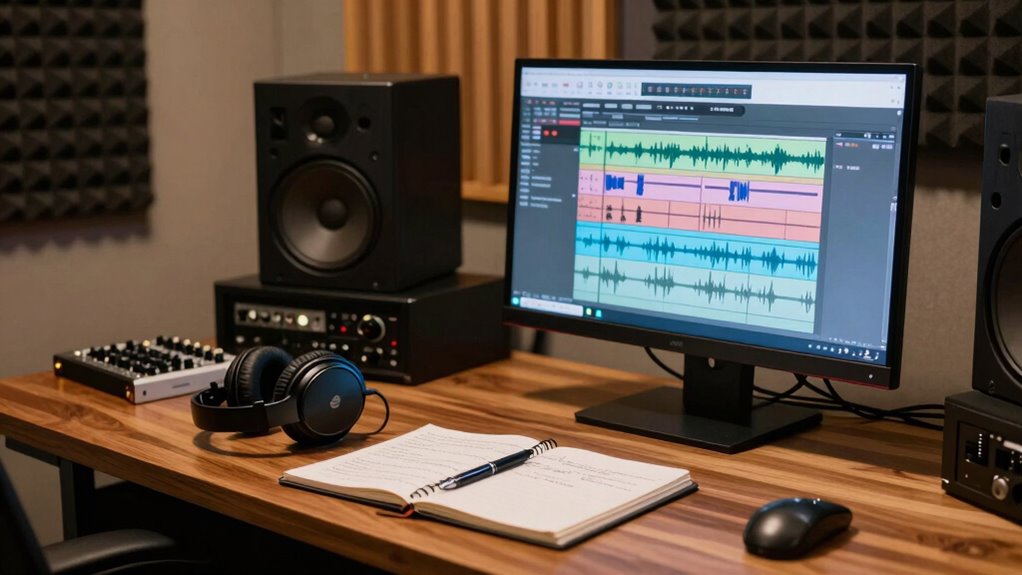

To use reference tracks without copying, focus on analyzing their overall sound, balance, and qualities like stereo image and frequency distribution, rather than copying specific elements. Use spectrum analyzers and critical listening to identify areas for improvement in your mix, then apply those insights creatively. Keep your artistic voice intact by understanding the principles behind the reference track’s sound. If you want to explore more ways to enhance your mixes authentically, keep going.

Get audio and creator gear delivered free with Prime
- Fast, free delivery on millions of items
- Prime Video, Amazon Music and more included
- Member-only deals all year
Key Takeaways
- Use reference tracks as guides for understanding frequency balance and stereo imaging without aiming to replicate exactly.
- Focus on analyzing specific elements like bass or vocals to inform your mix, rather than copying the overall sound.
- Develop your ear through critical listening and comparison to identify what makes a track engaging and balanced.
- Employ spectrum analyzers and visual tools to guide sound shaping, ensuring adjustments enhance your unique artistic voice.
- Learn the principles behind reference tracks’ sound, then apply those insights creatively to maintain originality.
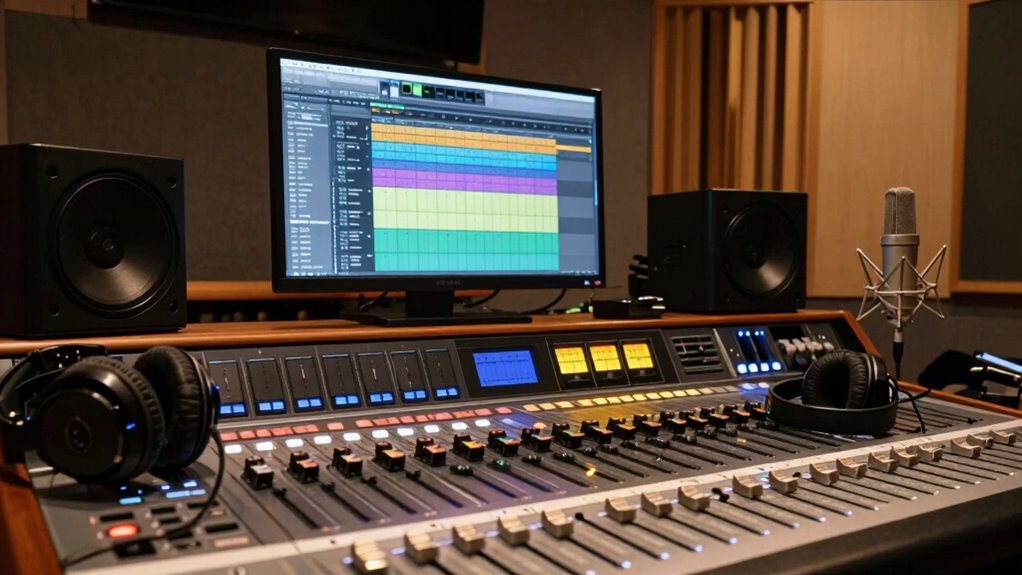
Using reference tracks is a powerful way to improve your mix, but it’s vital to learn how to do so without copying them outright. One effective approach is analyzing the frequency spectrum of your reference tracks. This means examining the distribution of bass, midrange, and treble frequencies to understand their balance and how they contribute to the song’s overall feel. When you analyze the spectrum, you get a clear picture of what makes the reference track sound polished and professional. You can then compare these characteristics to your mix, identifying areas that need adjustment without mimicking the track note for note. This process helps you develop an ear for frequency balance, allowing you to enhance your mix’s clarity and cohesion while maintaining your unique style. Additionally, understanding how digital concepts influence sound can deepen your ability to make informed adjustments. Recognizing frequency response patterns can also help you better interpret how the reference track shapes its sound. Developing a critical listening approach is essential for discerning subtle differences and making meaningful improvements. Incorporating perceptual cues can further refine your ability to identify what makes a mix sound engaging and balanced. Furthermore, practicing comparative listening can sharpen your skills in distinguishing nuances between your mix and the reference, leading to more precise adjustments.
Analyzing reference tracks’ frequency spectrum helps develop your ear for balance and enhances your mix’s clarity without copying.
While referencing, it’s vital to focus on maintaining originality. Instead of trying to replicate every element of the reference track, use it as a guide to inform your decisions. For instance, if the reference track has a punchy bass, you might aim to improve your own bass frequencies but avoid copying the exact sound or pattern. Remember, your goal is to learn from the reference, not imitate it. By doing so, you preserve your creative voice and guarantee your mix stands out. It’s about understanding the principles behind the reference track’s sound—like how frequencies are balanced or how the stereo image is crafted—then applying those principles in a way that complements your own music.
To make the most of reference tracks, listen critically. Switch between your mix and the reference, focusing on specific elements like the low end, vocal presence, or stereo width. Use tools like spectrum analyzers to visualize these aspects, but don’t become overly fixated on exact replication. Instead, let the analysis guide your adjustments, such as EQ or panning decisions, without feeling the need to copy the reference track’s exact settings. This approach keeps your production authentic and fresh, while still benefiting from the insights a well-chosen reference provides.
Ultimately, the key to using reference tracks effectively is balance. Analyze the frequency spectrum to understand their strengths, but always prioritize your own artistic voice. With practice, you’ll develop a keen ear for what works, and your mixes will improve without losing the originality that makes your music unique.
spectrum analyzer for music mixing
As an affiliate, we earn on qualifying purchases.
As an affiliate, we earn on qualifying purchases.
Frequently Asked Questions
How Do I Choose the Right Reference Tracks for My Project?
You choose the right reference tracks by focusing on genre alignment and sonic consistency with your project. Listen carefully to songs that match your style, paying attention to elements like tempo, energy, and overall vibe. Make certain the tracks reflect the sound you’re aiming for, helping you set a clear benchmark. This way, you can compare your mix objectively and ensure your project stays true to your artistic direction.
Can Reference Tracks Influence My Creative Process Negatively?
Yes, reference tracks can influence your creative process negatively by creating creative dependency, making you rely too much on them instead of trusting your instincts. This can lead to a loss of originality, as you might unconsciously mimic elements rather than develop your unique sound. To avoid this, use reference tracks as guides, not templates, and focus on expressing your personal style without copying their specifics.
Should I Use Multiple Reference Tracks Simultaneously?
Yes, you should use multiple reference tracks simultaneously. It helps you compare different genre elements and find the right balance. By doing so, you can match the mood more effectively across tracks, ensuring your project aligns with your desired vibe. Just be careful not to mix too many, as it might cause confusion. Focus on key similarities to maintain consistency without losing your unique creative touch.
How Often Should I Revisit My Reference Tracks During Production?
You should revisit your reference tracks about every 20 to 30 minutes during production. Studies show that frequent listening habits help maintain your focus and guarantee your mix stays aligned with your target sound. Your revision frequency is key—regularly comparing your work to your reference tracks keeps you on track and prevents drift. Make it a habit to pause and assess, ensuring your mix evolves consistently without losing sight of your initial inspiration.
What Are Common Mistakes to Avoid When Using Reference Tracks?
Avoid overgeneralizing when using reference tracks; don’t treat them as strict templates, or you might stifle your creativity. Ignoring genre nuances is a common mistake—each style has specific characteristics that should influence your mix. Keep a clear focus on your unique project, and use reference tracks as guidelines, not rules. This way, you maintain originality while benefiting from proven standards, ensuring your production remains authentic and engaging.
studio monitor speakers for mixing
As an affiliate, we earn on qualifying purchases.
As an affiliate, we earn on qualifying purchases.
Conclusion
Think of your reference track as a lighthouse guiding your creative voyage. Instead of copying its light, you use it to navigate through foggy waters, adjusting your course while keeping your unique vessel afloat. Let it illuminate your path without anchoring you down. When you steer with intention, your music becomes a ship that’s true to your vision yet inspired by that guiding beacon—shining brightly in its own right, forging a distinctive journey across the vast ocean.
As an affiliate, we earn on qualifying purchases.
reference track comparison software
As an affiliate, we earn on qualifying purchases.
As an affiliate, we earn on qualifying purchases.
Halloween Picks
halloween
As an affiliate, we earn on qualifying purchases.