

Sync licensing means getting permission to use music in videos, ads, or shows without legal trouble. It involves clear agreements with song owners—like writers, publishers, and artists—and maintaining track of all permissions. The process ensures your project stays legal and can make money. If you want to understand how to do this smoothly and avoid legal jargon, you’ll find tips and steps to guide you through the basics. Keep going to learn more.

Get audio and creator gear delivered free — and shop member deals
- Fast, free delivery on millions of items
- Access to Prime Big Deal Days deals on October 6–7
- Prime Video, Amazon Music and more included
Key Takeaways
- Understand that sync licensing is about getting permission to use music in videos or media projects legally.
- Focus on clear, simple steps: identify rights, get permissions, and keep records.
- Know that rights include songwriters, publishers, and recording artists, often requiring separate agreements.
- Use professionals, like music lawyers or licensing experts, to simplify complex deals.
- Keep detailed records of all licenses and permissions to stay legally protected and organized.
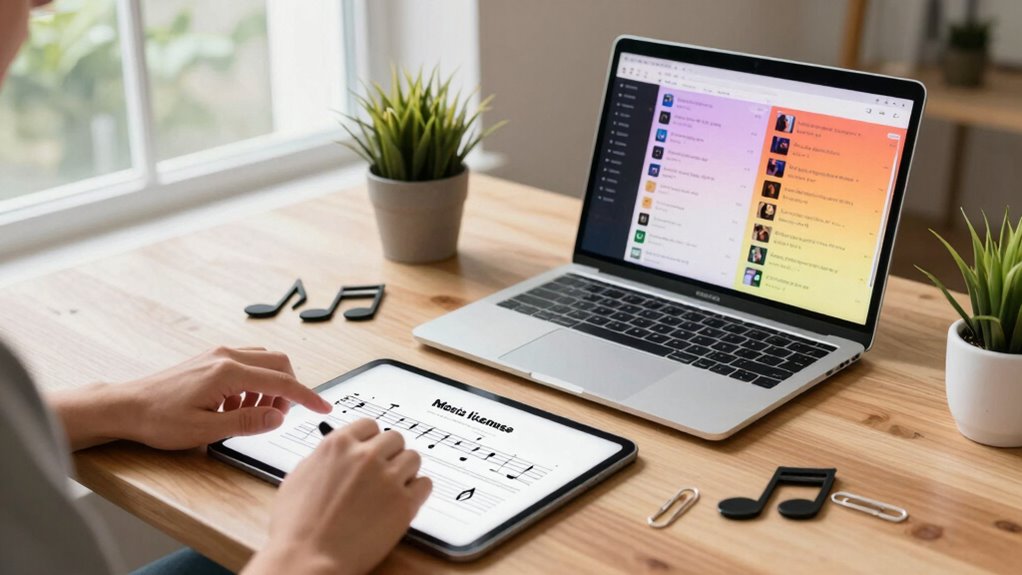
If you’re just starting out in music licensing, understanding sync licensing is essential to turning your songs into revenue. Sync licensing involves getting permission to use your music in visual projects like TV shows, movies, commercials, or online videos. The key is knowing how to navigate the process without getting tangled in legal jargon. At the core of this process is music clearance and rights management. Music clearance means obtaining the necessary permissions from all rights holders, including songwriters, publishers, and recording artists, before your music can be legally used. Rights management, on the other hand, involves keeping track of who owns what and ensuring that all necessary licenses are in place.
Understanding sync licensing and rights management is crucial to legally monetizing your music in visual media.
When you’re approaching a potential license, you need to be sure that your rights are clear. This means confirming that you have the authority to license the song for commercial use and that no other rights holders could block the deal. You don’t want to run into legal trouble later, which can happen if permissions weren’t properly secured. To do this efficiently, you should develop a good understanding of your rights as a creator and how to manage them. This may include registering your songs with a performance rights organization (PRO) to keep track of your rights and royalties. PROs help in rights management by collecting fees when your music is played publicly and ensuring you get paid. Additionally, leveraging electric bikes and generators can be part of sustainable energy projects, similar to how understanding your rights helps sustain your music licensing efforts.
When it comes to music clearance, it’s important to be thorough. You’ll need to identify all rights involved—both the composition rights (lyrics and melody) and the master rights (the actual recording). Sometimes, licensing a song requires separate agreements for these rights. It’s wise to work with a licensing professional or a music lawyer who can help you handle these details, especially if the project involves multiple rights holders. They can help you draft or review licensing agreements, making sure you’re protected and that all rights are properly assigned. Understanding the concept of rights management is fundamental to avoiding disputes and ensuring smooth licensing transactions. Utilizing proper licensing procedures can also streamline the process and prevent delays or legal complications.
Managing rights and clearing your music might seem complicated at first, but it becomes easier once you understand the basics. Always keep detailed records of every license, permission, and agreement you secure. This documentation is your proof that you have the legal right to use the music in a specific way. Having clear documentation ensures that you can defend your licensing decisions if disputes arise. Staying organized and understanding the importance of rights management and music clearance ensures you can confidently license your music, avoid legal issues, and generate revenue from your creative work.
music rights management software
As an affiliate, we earn on qualifying purchases.
As an affiliate, we earn on qualifying purchases.
Frequently Asked Questions
How Much Does Sync Licensing Typically Cost?
Sync licensing costs vary widely depending on your project and the song. Typically, you’ll negotiate royalties in licensing agreements, which can range from a few hundred to thousands of dollars. Major rights holders may demand higher fees, while independent artists often accept lower rates. You’re actively involved in royalty negotiations to reach a fair agreement, ensuring you understand the licensing terms and costs before finalizing any deal.
Can Independent Artists License Their Music Easily?
Yes, as an independent artist, you can license your music with ease, especially through straightforward music distribution platforms. These tools help you share your sounds and secure sync licensing, opening doors to diverse opportunities. Remember, clear royalty collection is key; it guarantees you get paid for your creativity. With the right resources, you can confidently connect your music to media, maximizing exposure and earnings without the legal labyrinth.
What Is the Difference Between Sync Licensing and Master Rights?
Sync licensing gives you permission to use your music in visual media, while master rights refer to the ownership of the original recording. When you license your music sync rights, you often negotiate licensing agreements and royalty payments based on how the music is used. Master rights are about who owns the recording itself, affecting how royalties are paid and how the music can be licensed or reused in future projects.
How Long Does the Licensing Process Usually Take?
The licensing process usually takes anywhere from a few days to several weeks, depending on the complexity of the project and how quickly you secure music clearance. During this time, you’ll handle negotiations and confirm royalty payments. Be patient, as delays can happen if rights aren’t clear or if multiple parties are involved. Prompt communication speeds things up, ensuring you get licensed music without unnecessary hold-ups.
Do I Need a Lawyer to Handle Sync Licenses?
You don’t necessarily need a lawyer to handle sync licenses, but it’s highly recommended to protect your interests. A lawyer can help you understand licensing agreements and guarantee you’re fairly compensated with accurate music royalties. They also clarify legal jargon and negotiate terms. While you can handle small deals yourself, consulting a legal expert helps avoid costly mistakes, giving you peace of mind in managing licensing agreements and maximizing your earnings.
sync licensing agreement templates
As an affiliate, we earn on qualifying purchases.
As an affiliate, we earn on qualifying purchases.
Conclusion
Now that you know the basics, you’re ready to delve into sync licensing. Remember, over 80% of music licenses are granted for TV and film use, showing just how essential this revenue stream is for artists. Don’t let legal jargon scare you—understanding the process gets easier with practice. Keep learning, stay organized, and seize opportunities to have your music featured. Your next big sync success could be just a license away!
As an affiliate, we earn on qualifying purchases.
performance rights organization membership
As an affiliate, we earn on qualifying purchases.
As an affiliate, we earn on qualifying purchases.
Halloween Picks
halloween
As an affiliate, we earn on qualifying purchases.