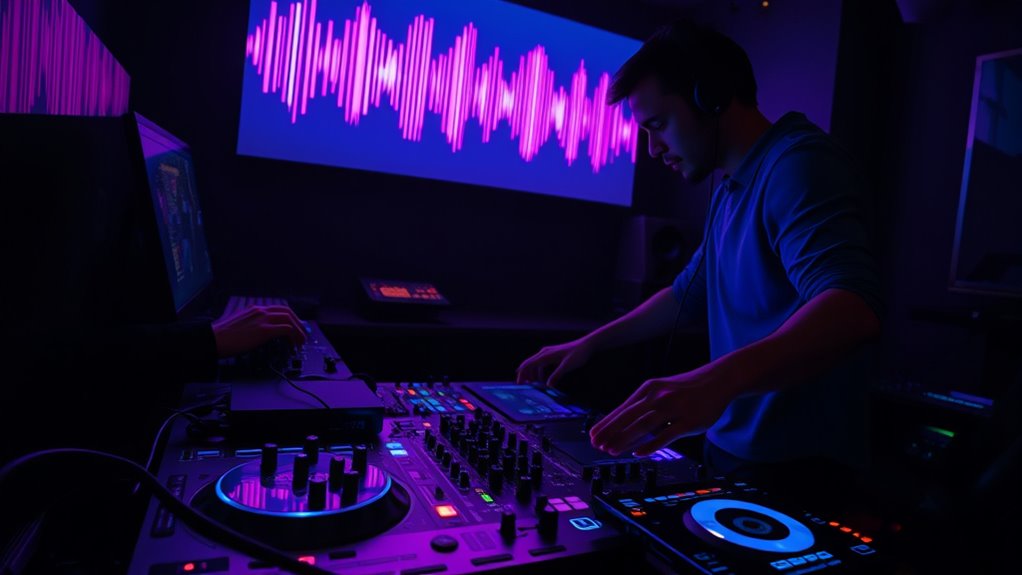
By integrating loop-based production into your live shows, you can improvise freely, layering sounds in real time to create dynamic textures. Using synthesizer programming and sound design helps craft unique, expressive tones that resonate with your audience. This approach encourages experimentation, allowing you to modify effects and build complex arrangements spontaneously. With the right setup, your performances become more engaging and personalized, transforming standard acts into immersive experiences—keep exploring to open even more creative possibilities.

Get audio and creator gear delivered free with Prime
- Fast, free delivery on millions of items
- Prime Video, Amazon Music and more included
- Member-only deals all year
Key Takeaways
- Loop-based production enables real-time layering and improvisation, creating dynamic and unique live performances.
- Synth programming and sound design are essential for crafting personalized textures during live sets.
- Seamless technical setups with reliable hardware/software facilitate intuitive control and improvisation.
- Live looping encourages experimentation, allowing performers to modify effects and layers spontaneously.
- Integrating loops enhances audience engagement by delivering immersive, expressive, and evolving soundscapes.
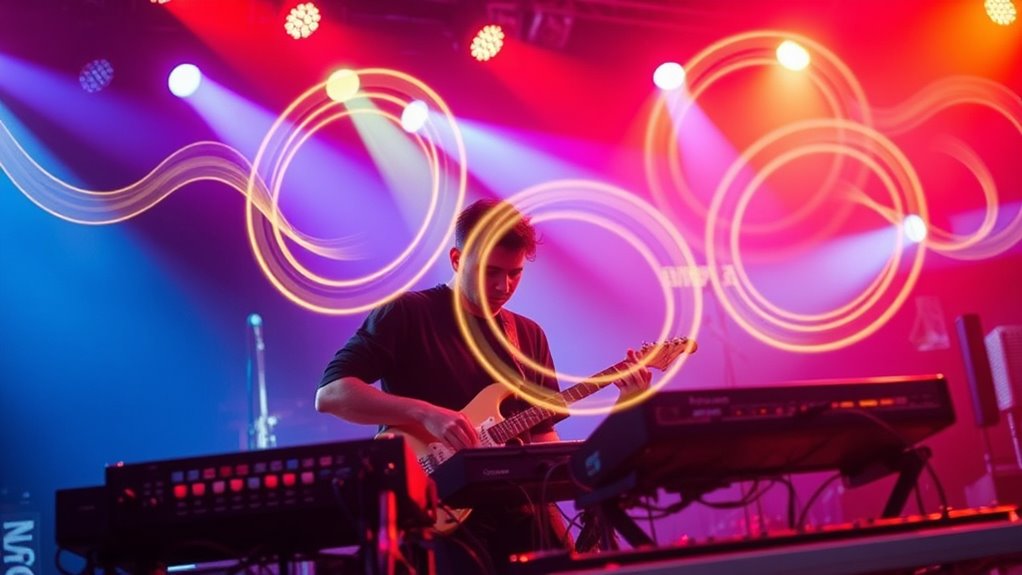
Loop-based production has revolutionized how artists create and perform music by enabling them to layer sounds in real-time. When you explore this approach, you find yourself able to build complex textures and arrangements on the spot, transforming the studio process into a live, dynamic experience. Synth programming plays an essential role here, as it allows you to craft unique sounds and textures that can be manipulated during performance. By designing your own synth patches, you gain a personalized palette that enhances your live sets, making them more expressive and engaging. This process of sound design becomes integral to your improvisational techniques, since you’re not limited to pre-recorded parts but can adapt and evolve your sounds in the moment.
Looping and synth programming unlock dynamic, improvisational live performances filled with unique textures and personalized soundscapes.
As you integrate loop-based production into live performance, improvisation becomes a key skill. Instead of sticking rigidly to a pre-planned arrangement, you experiment freely, layering loops, triggering samples, and modifying effects on the fly. Your ability to improvise with loops means that every performance can be unique, driven by your instincts and the energy of the crowd. You might start with a simple beat or melody, then gradually build complexity as you respond to the vibe of the room. This improvisational approach keeps your sets fresh and spontaneous, allowing you to explore different sonic territories without losing cohesion. It’s all about staying flexible and trusting your instincts, using your knowledge of synth programming to quickly adapt your sounds and create new combinations.
Moreover, the seamless integration of loop-based production with live performance hinges on your technical setup. You’ll need reliable looping hardware or software that allows real-time control over loops, effects, and synth parameters. This setup gives you the freedom to manipulate your sounds intuitively, fostering a fluid improvisational flow. As you become more comfortable, you’ll discover new ways to layer your synth patches, experiment with different effects, and respond musically to the audience. The key is to maintain a balance between spontaneity and control, ensuring your performance remains cohesive while still feeling organic and alive.
Additionally, understanding the role of sound design in synth programming enhances your capacity to craft compelling textures for live improvisation. Mastering this aspect allows you to create more nuanced and expressive performances that resonate deeply with your audience. Ultimately, mastering this fusion of loop-based production and improvisational techniques elevates your live shows. It transforms the act of performing into a creative dialogue, where your synth programming skills and spontaneous ideas intertwine. You’re not just reproducing tracks; you’re crafting a unique, immersive experience that resonates with your audience, making each performance memorable. This approach empowers you to push musical boundaries, blending technology and intuition in ways that keep your performances fresh, compelling, and deeply personal.
As an affiliate, we earn on qualifying purchases.
Frequently Asked Questions
How Do Loop-Based Setups Differ Across Musical Genres?
You’ll notice that loop-based setups differ across genres through genre-specific techniques and stylistic adaptations. For example, electronic music often uses repetitive loops to create hypnotic textures, while hip-hop relies on sampling and layering loops for rhythmic complexity. In rock, loops might enhance live improvisations or fill gaps, tailoring the approach to each genre’s unique sound. Your understanding of these differences helps you craft performances that resonate authentically with your style.
What Are Common Technical Challenges in Live Looping?
You often face challenges with loop stability, which can cause your recordings to glitch or drift out of sync during performances. Gear compatibility is also essential; not all devices work seamlessly together, leading to latency or connectivity issues. To avoid these problems, make certain your equipment is well-matched and regularly maintained. Practice thoroughly to keep your loops tight, and consider using high-quality gear specifically designed for live looping to minimize technical hiccups.
How Can Artists Ensure Seamless Transitions Between Loops?
Think of your loops as a well-rehearsed dance; smooth progression require perfect loop synchronization. To guarantee seamless shifts, practice improvisation techniques that focus on timing and dynamics. For example, use visual cues or tap your foot to keep rhythm consistent. Record and analyze your performances to identify and correct timing issues. With consistent practice, you’ll master fluid transitions, making your live loops feel like a natural, enthralling improvisation.
What Equipment Is Essential for Professional Live Looping?
You need a high-quality loop pedal with reliable loop recording and playback features. A multi-instrument setup allows you to layer sounds seamlessly, so choose versatile instruments like a guitar, keyboard, or vocals. Master loop pedal techniques to facilitate smooth transitions, like overdubbing and undo functions. Additionally, consider a MIDI controller for more control, and good monitoring equipment to hear your loops clearly during live performance.
How Do Audiences Typically Respond to Live Loop-Based Performances?
Audience engagement in live loop-based performances is usually highly positive, as it creates an intimate and dynamic experience. Your audience often responds emotionally, connecting deeply with the layered sounds and spontaneous creativity. They appreciate the authenticity and skill involved, which keeps them captivated and involved. Your performance’s energy can evoke excitement, awe, or even nostalgia, making the experience memorable and fostering a strong emotional connection with your audience.
synthesizer sound design software
As an affiliate, we earn on qualifying purchases.
As an affiliate, we earn on qualifying purchases.
Conclusion
By blending loop-based production with live performance, you create a dynamic, seamless experience that captivates your audience. Embrace the saying, “Practice makes perfect,” and keep exploring new techniques to refine your craft. The more you experiment and integrate these elements, the more natural your performances become. Remember, consistency and passion are key—so stay committed, and you’ll turn your creative visions into unforgettable live shows.
As an affiliate, we earn on qualifying purchases.
As an affiliate, we earn on qualifying purchases.
Halloween Picks
halloween
As an affiliate, we earn on qualifying purchases.