
To create immersive ambient and drone soundscapes, start by layering textures like soft drones, field recordings, and harmonic elements. Use reverb thoughtfully to shape space, making sounds feel distant or vibrant. Experiment with digital synthesis to craft unique textures and blend them seamlessly, balancing layers for clarity. By manipulating reverb and textures carefully, you can build a rich environment that evokes emotion and depth. Continuing your exploration will reveal personalized techniques for enthralling sound environments.
Key Takeaways
- Layer diverse textures like drones, field recordings, and harmonic elements to build immersive, multi-dimensional soundscapes.
- Use reverb strategically to create spatial depth, adjusting decay times for intimacy or vastness.
- Combine digital synthesis with natural sounds to craft unique ambient textures tailored to the environment.
- Balance volume, frequencies, and effects to prevent muddiness and maintain clarity in layered textures.
- Experiment with timing and reverb manipulation to add movement and dynamic interest within the drone and ambient layers.
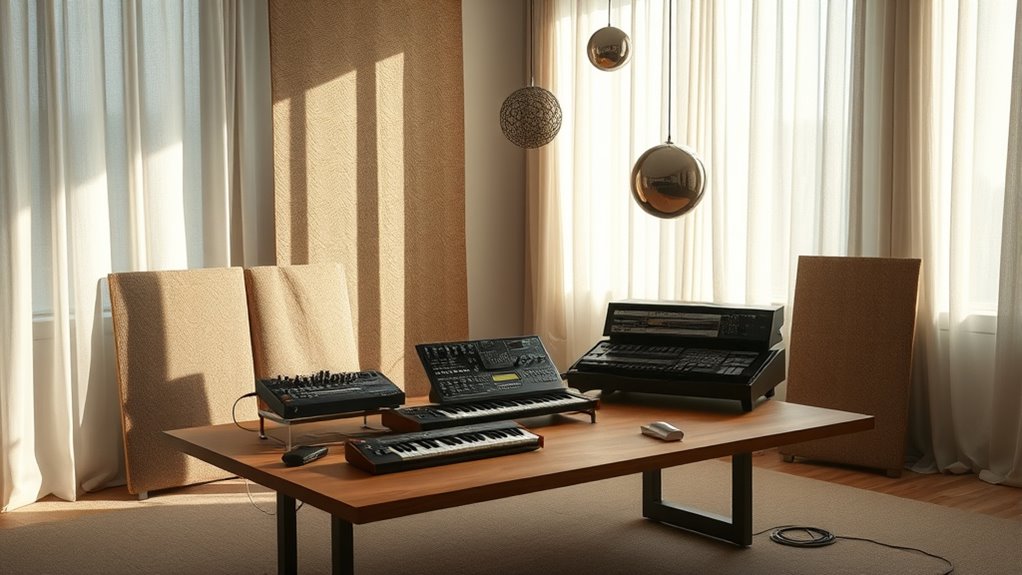
Have you ever wondered how to transform an ordinary space into an immersive experience? Creating compelling soundscapes hinges on your ability to layer textures thoughtfully and utilize reverb effectively. When you start building a sonic environment, think of it like painting with sound—each layer adds depth, dimension, and emotion. Begin by selecting a variety of sounds that complement each other, such as soft drones, gentle field recordings, or subtle harmonic textures. As you layer these textures, pay attention to their frequencies, dynamics, and spatial qualities, ensuring they blend seamlessly without becoming muddy. This process of layering textures allows you to craft a rich, immersive atmosphere that captures the listener’s attention and draws them into the space you’re creating.
Layer textures thoughtfully and use reverb to craft immersive, emotional soundscapes that draw listeners into a vivid sonic environment.
Utilizing reverb is essential in shaping the space within your soundscape. Reverb mimics the natural echoes and reflections that happen in real-world environments, helping your sounds blend more naturally and feel like they are part of a larger, cohesive environment. You can experiment with different reverb settings—long decay times for a vast, open feel, or shorter ones for intimacy and closeness. Applying reverb selectively to certain sounds can create focal points or a sense of depth, making some textures feel distant and others vibrant and upfront. This spatial manipulation transforms flat, dry sounds into dynamic, atmospheric layers that evoke emotion and mystery. When you combine layered textures with carefully applied reverb, you can craft a soundscape that is both expansive and detailed.
In addition, exploring digital sound synthesis can help you craft unique textures that fit your environment perfectly. To achieve an immersive experience, consider how each element interacts within the space. For instance, a sustained drone with a lush reverb can serve as a foundation, anchoring the environment. Over this, you might add subtle textures—like distant wind or faint metallic echoes—that are also processed with reverb to maintain cohesion. Play with the timing and intensity of reverb to create movement and variation, so the soundscape never feels static. Remember, less is often more; overusing reverb can muddy your mix, but strategic placement enhances clarity and depth. The goal is to craft a space where sounds overlap naturally, creating a sense of environment that feels alive and engaging.
In the end, your success hinges on your ability to balance these elements—layering textures thoughtfully and utilizing reverb to shape space. With practice, you’ll learn to manipulate these tools intuitively, turning simple sounds into immersive worlds that captivate and transport your audience. Creating soundscapes is an art of subtlety and precision, where every layer and echo contributes to a larger, more compelling experience.
![Sonicware Liven Ambient Ø [Soundscape Synthesizer] 4-Layer Ambient Generator for Drone, Pad, Atmos & Noise—Delay, Reverb, Wavetable Synth, Portable with Built-in Speaker & Battery Power](https://m.media-amazon.com/images/I/510LWm5mSJL._SL500_.jpg)
Sonicware Liven Ambient Ø [Soundscape Synthesizer] 4-Layer Ambient Generator for Drone, Pad, Atmos & Noise—Delay, Reverb, Wavetable Synth, Portable with Built-in Speaker & Battery Power
- 4-Layer Ambient Sound Generation: Creates evolving drone, pad, atmosphere, noise
- Blendwave Modulation Synthesis: 6 structures x 32 waves for undulating tones
- Noise Layer with Sampling: 8 nature sounds, stereo sampling, noise blending
As an affiliate, we earn on qualifying purchases.
As an affiliate, we earn on qualifying purchases.
Frequently Asked Questions
How Do I Start Experimenting With Ambient Soundscapes?
To start experimenting with ambient soundscapes, you should practice mindful listening to tune into subtle sounds around you. Use experimental techniques like layering recordings, manipulating effects, or playing with silence to create textures. Don’t be afraid to explore unconventional sources or tools, such as field recordings or synths. Trust your intuition, and let your ears guide you as you craft immersive, evolving sound environments.
What Equipment Is Essential for Creating Drone Textures?
Think of your gear as your palette for painting sound. You’ll need a good synthesizer or loop pedal, audio interface, headphones, and possibly a effects processor. Essential equipment for creating drone textures includes modulation techniques like slow LFOs and granular sound design tools. These help you craft evolving, immersive soundscapes. With the right gear, you can shape endless textures, turning simple sounds into vast, atmospheric worlds.
How Can I Incorporate Field Recordings Into My Soundscapes?
You can incorporate field recordings by layering nature sounds like wind or water with urban recordings such as city traffic or footsteps. Use editing software to trim, loop, or blend these sounds seamlessly into your drone textures. Experiment with reverb and pitch shifting to create immersive atmospheres. By combining these recordings thoughtfully, you craft rich, dynamic soundscapes that evoke specific moods or environments.
What Are Common Pitfalls to Avoid in Ambient Composition?
To avoid pitfalls in ambient composition, steer clear of overusing reverb, which can muddy your sound and reduce clarity. Also, watch out for excessive repetition that might make your piece monotonous. Instead, vary textures and dynamics subtly to keep interest alive. Focus on creating evolving soundscapes rather than static loops, ensuring each element complements the overall atmosphere without overwhelming the listener.
How Do I Balance Multiple Layers Without Cluttering the Mix?
Balance burdens by blending bass and treble tones, avoiding clutter and creating clarity. Use stereo separation to give each layer its space, preventing frequency masking. Keep subtle sounds soft and prominent sounds precise, so layers don’t compete. Regularly toggle between full and solo views, ensuring no element overwhelms. You’ll find that fine-tuning frequencies and spacing sparks a spacious, seamless soundscape, where every layer lives comfortably without chaos.

Donner Reverb Guitar Pedal, Verb Square Digital Reverb 7 Modes Room, Hall, Church, Spring, Plate, Studio, Mod, True Bypass
- Effects Modes: 7 Reverb modes including Room to Mod
- Circuit Design: Digital with true bypass for transparency
- Build Quality: All-aluminium alloy for durability
As an affiliate, we earn on qualifying purchases.
As an affiliate, we earn on qualifying purchases.
Conclusion
As you explore these ambient and drone techniques, you realize the possibilities are endless. Each soundscape you craft holds secrets waiting to be uncovered, layers that beckon deeper listening. Will you push boundaries further or settle into familiar textures? The journey into creating immersive sound worlds isn’t over—it’s just beginning. With every new piece, you edge closer to uncovering the mysteries hidden within the silence, leaving you enthusiastic to discover what’s next in this sonic landscape.

Ears To The Ground: Adventures in Field Recording & Electronic Music
As an affiliate, we earn on qualifying purchases.
As an affiliate, we earn on qualifying purchases.

As an affiliate, we earn on qualifying purchases.